Try our novelties and bestsellers!»





Active ingredients in cosmetics, Cosmetic treatments, Aesthetic cosmetology, Skin care at home
Mela-Ginseng – Korean ginseng root extract
Aug
Ginseng (Panax ginseng) is a perennial herb found on the Korean peninsula, northeastern China and Japan. It has been known in traditional medicine for up to 5,000 years, with records of its use dating back some 2,000 years. Today, ginseng is considered one of the most valuable medicinal plants, and its effects are versatile and effective.
The Latin name Panax, which can be translated as “healer of all things”, did not arise by accident. Traditional medicine points to ginseng’s actions such as improving cognitive abilities, mood and quality of life. Ginseng is also credited with aphrodisiac properties. Scientific research is unlocking the secrets of ginseng’s effectiveness by pointing out the active substances present in it and explaining their effects. The main group of pharmacologically active substances are ginsenosides, which are chemically triterpenoid glycosides, i.e. a combination of sugar groups with terpenoids. In their structure, it is possible to identify a non-sugar component, the so-called aglycone (usually of steroidal structure) and a sugar component (usually made of glucose, arabinose or xylose) called glycone. A number of health-promoting activities of ginsenosides have been demonstrated, such as anti-inflammatory, anti-oxidative stress and depigmentation and anti-ageing effects, as well as wound healing and antidepressant effects (You and Cho 2021). The active constituents of the extract interact with GABA receptors, which translates into sedative, calming, anti-anxiety, relaxation and sleep-inducing effects. In turn, an increase in choline acetyltransferase activity in the hippocampus results in stimulation of the nervous system, thereby improving memory. The anti-ageing effect of ginseng extracts has been shown for the photo-ageing process, which is linked to an increase in metalloproteinase activity. One of the main components of ginseng extract is ginsenoside Rb3. Studies show that ginsenoside Rb3 reduces the levels of reactive oxygen species and the synthesis and secretion levels of the metalloproteinases proMMP-2 and proMMP-9.
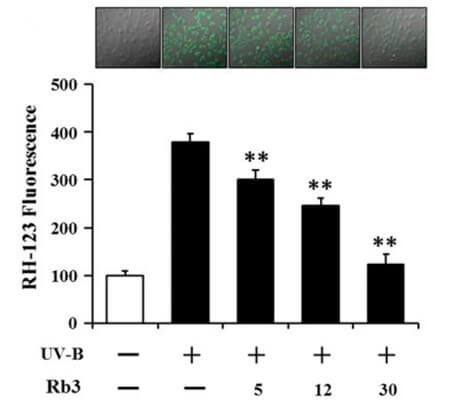
Figure 1. Effect of ginsenoside Rb3 on the level of reactive oxygen species in UV-B-exposed keratinocytes (source Oh et al. 2016).
Rb3 ginsenoside restores normal glutathione levels, which are reduced under UV-B irradiation. In addition to the previously indicated properties, its cardioprotective activity has been demonstrated (Oh et al. 2016). Neuroprotective activity related to GABAA receptor activation has also been demonstrated. A number of studies have observed significant ginsenoside-mediated inhibition of melanogenesis. The main mechanism indicated is inhibition of tyrosinase activity. A clinical study of the properties of a ginsenoside Rb3 formulation was conducted on a group of 19 women aged 18 to 45 years with phototype 3 to 4. The study was performed on half of the face, compared to placebo in a double-blind study. Status was assessed after 28 and 54 days. Significant skin brightening was observed after 28 and 56 days. Also significant is the lack of cytotoxicity shown for extracts with concentrations ranging from 0.004 to 0.4% (Shin et al. 2017). Importantly, ginsenoside Rb3 is not toxic to skin cells and does not cause irritation. With this safety profile and known effects, ginseng extract can be used to brighten and whiten skin, evening out skin tone.

Figure 2. Inhibition of melanogenesis under the influence of ginseng extracts (source: test results from the active ingredient manufacturer)
Scientific research proves that the belief in the versatile and powerful action of ginseng is true, so it is worth taking advantage of its strength and valuable properties. Thanks to the combination of centuries-old tradition and modern science, we gain safe and effective cosmetic ingredients to improve the appearance and condition of our skin.
Deep skin renewal with a wealth of active ingredients
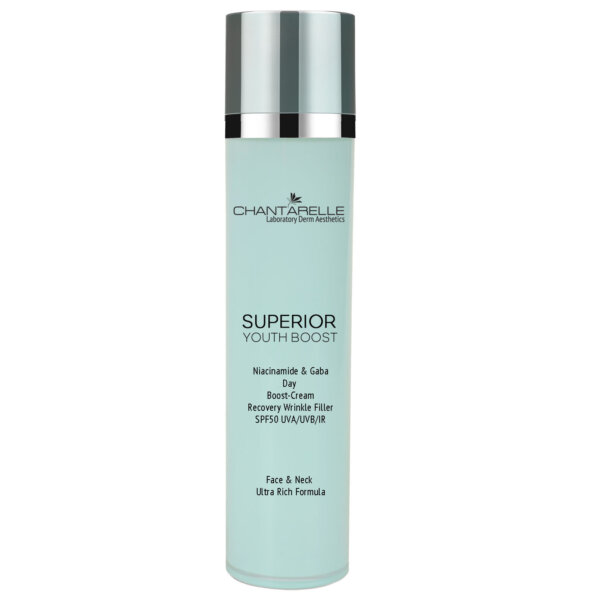
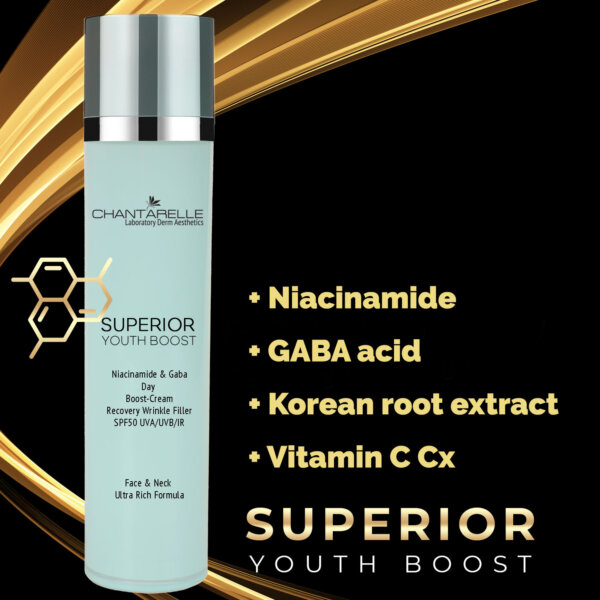
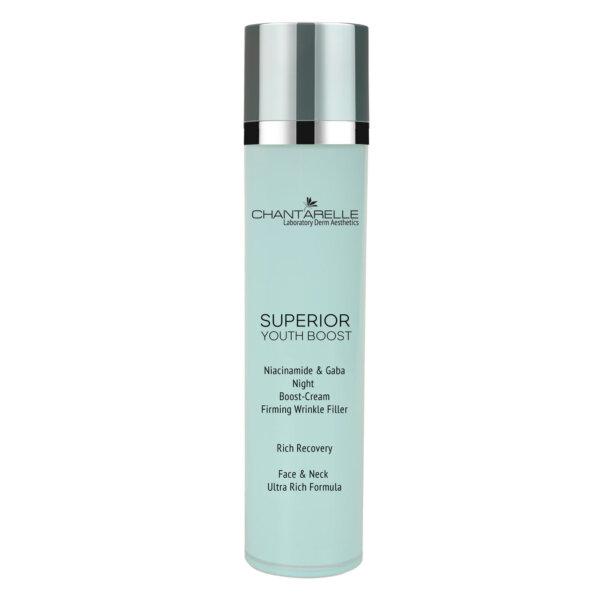
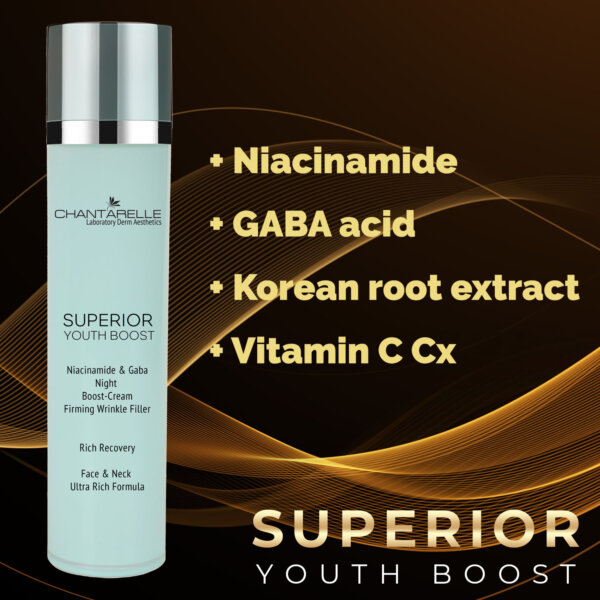
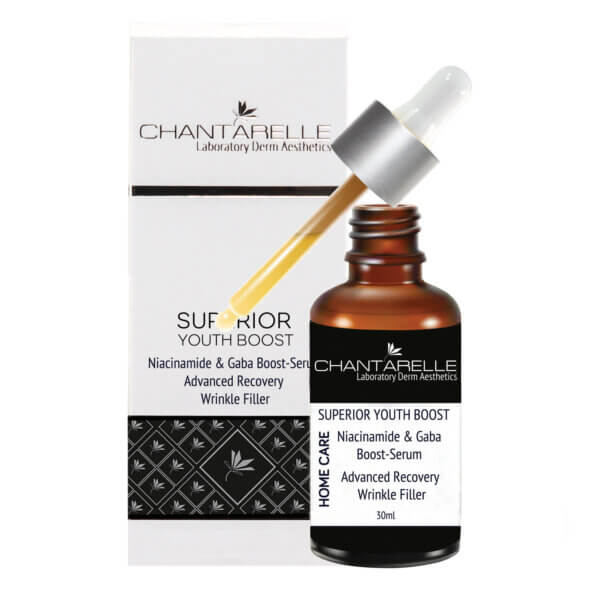
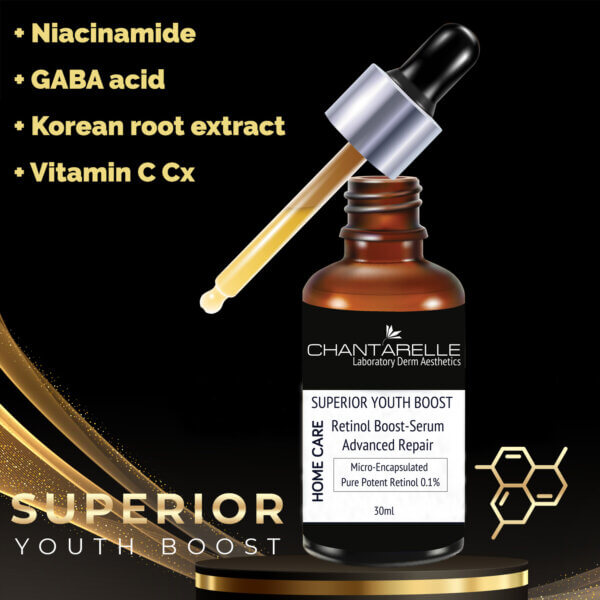
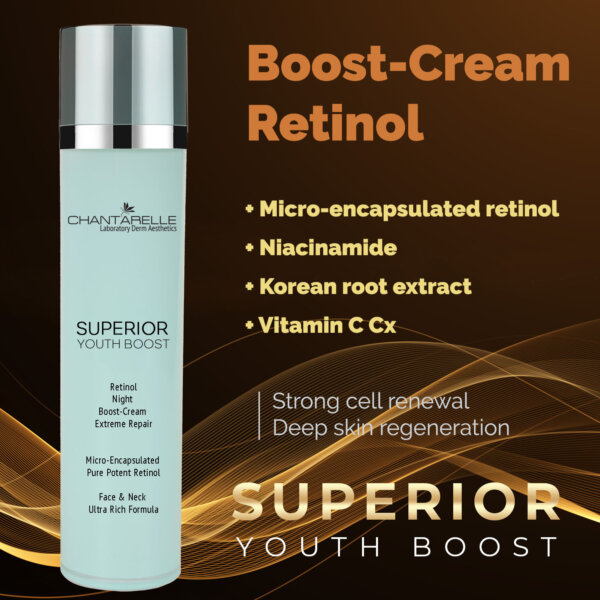
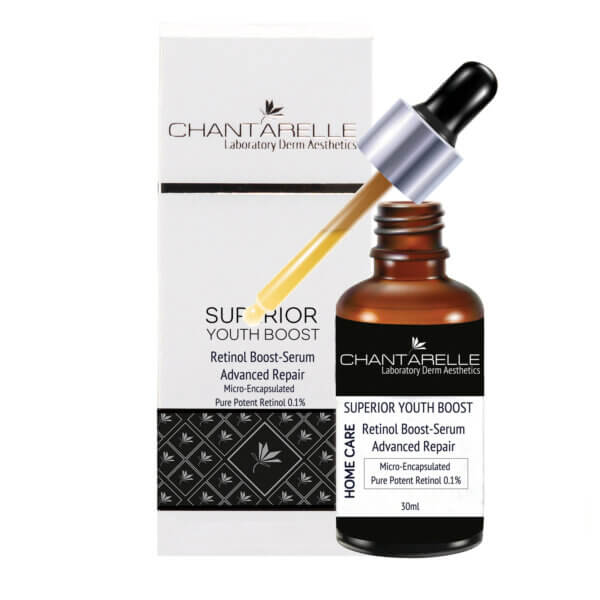
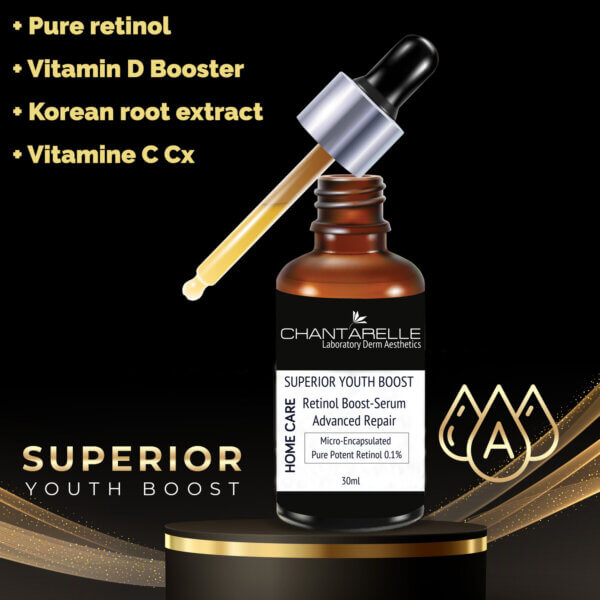
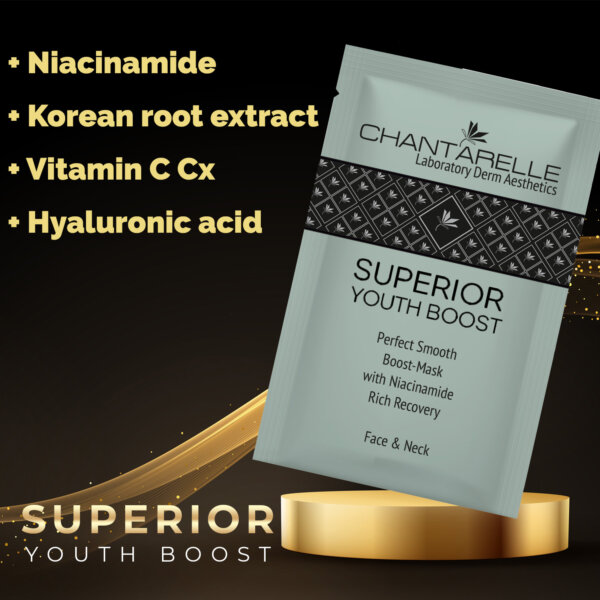
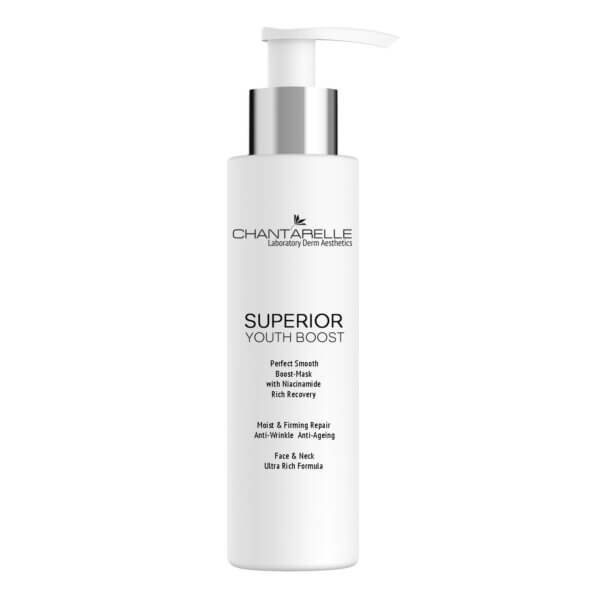
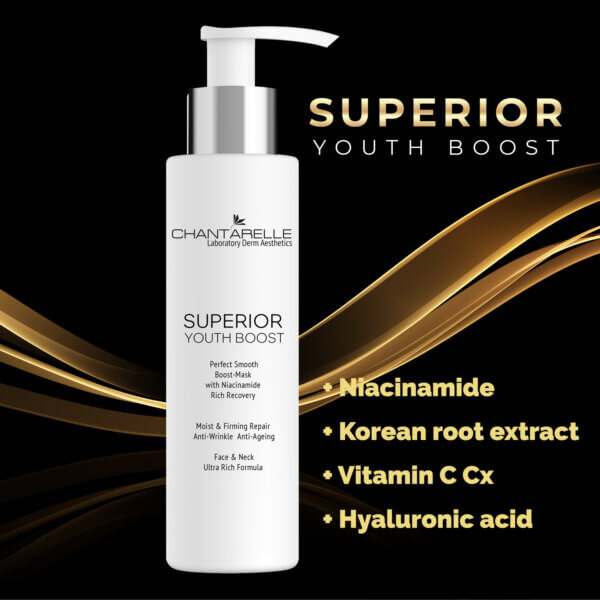
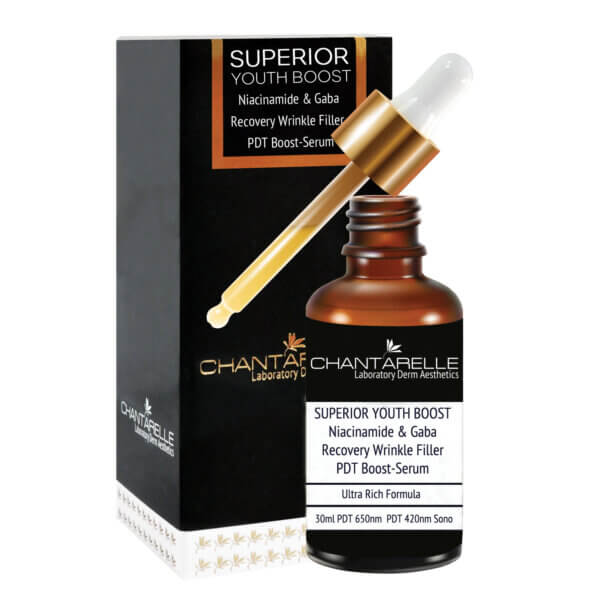
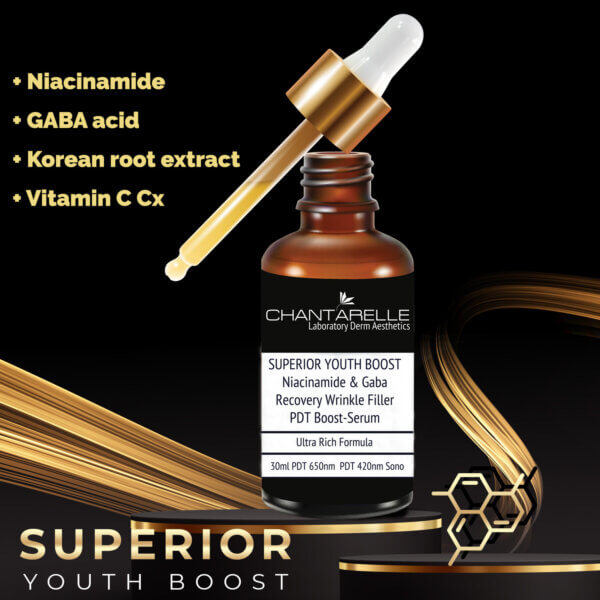
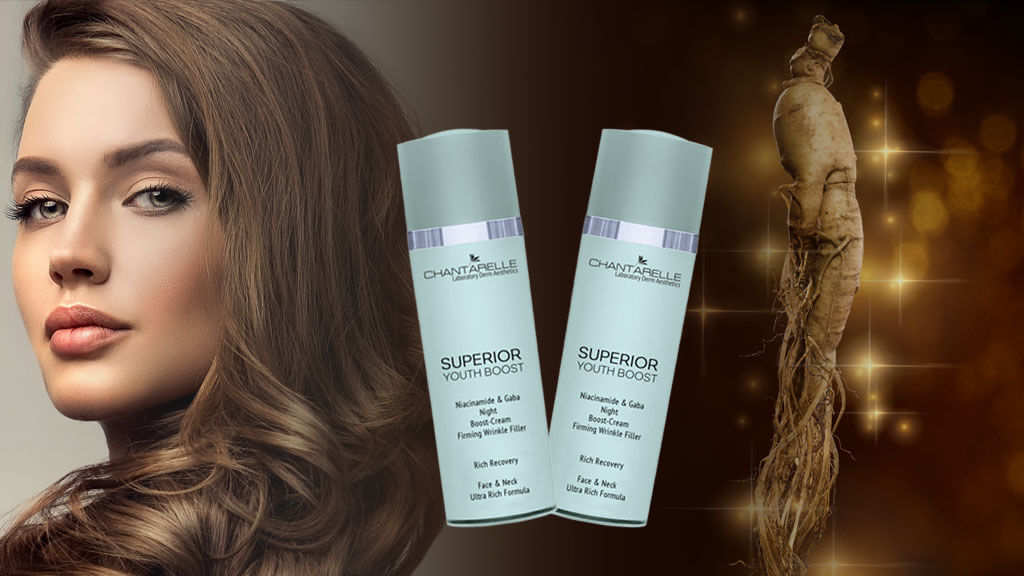
The powerful dermo-cure SUPERIOR YOUTH BOOST was developed in Chantarelle laboratories for the stimulation of cell renewal, collagen synthesis, strengthening of skin structure, reduction of hyperpigmentation and sebum regulation. The formulations contain a rich formula of active ingredients, among them Mela-Ginseng – or Korean ginseng root extract. The treatment and home care preparations produce spectacular rejuvenating effects: filling in wrinkles, regaining elasticity and firmness, lightening discolouration and restoring healthy colour, regulating keratinisation and smoothing and moisturising. The stimulating effects of the treatment are multiplied by the PDT laser application.
 Dr Marcin Wasylewski
Chantarelle expert, biotechnologist and university lecturer
Literature
- Oh, S. J., Oh, Y., Ryu, I. W., Kim, K., & Lim, C. J. (2016). Protective properties of ginsenoside Rb3 against UV-B radiation-induced oxidative stress in HaCaT keratinocytes. Bioscience, biotechnology, and biochemistry, 80(1), 95-103.
- Shin, S., Lee, J. A., Son, D., Park, D., & Jung, E. (2017). Anti-skin-aging activity of a standardised extract from Panax ginseng leaves in vitro and in human volunteers. Cosmetics, 4(2), 18.
- You, L., & Cho, J. Y. (2020). The regulatory role of Korean ginseng in skin cells. Journal of Ginseng Research.