Try our novelties and bestsellers!»






Dermatology, Cosmetic treatments, Skin care at home
Discolouration – a common problem in cosmetic surgeries
Nov
One of the most common problems cosmetologists and dermatologists deal with is hyperpigmentation. Post-inflammatory hyperpigmentation, age spots, lentigines or simple freckles are most commonly diagnosed in cosmetic surgeries.
Pigmentation is a change in skin colour caused by an increase or decrease in the production of melanin. Melanin is the pigment that is responsible for the colour of our skin, hair and the colour of the irises of our eyes. Excessive accumulation of melanin in the epidermis is called melanosis. The melanin pigment is produced by melanosomes and transferred to the cells of the squamous layer of the epidermis. It is interesting to note that their amount is similar in all races of people worldwide. In contrast, the darker skin colour is the result of more active melanocytes.
We know of two types of melanosis skin:
- melanocytic – an increase in melanin as a result of an increase in the number of melanocytes (lentigo).
- melanocytic – occurs when melanin is excessively produced by melanocytes without an increase in the number of melanocytes themselves (osteoma).
Stages of melanogenesis
- Melanin synthesis. Melanin is synthesised from the amino acid tyrosine in a series of consecutive oxidation reactions.

- Distribution of pigment on the epidermis. As melanin matures, melanosomes move from the central part of the melanocyte to its protuberances and from there to the basal keratinocytes.

Cosmetic skin lightening
Skin discolouration lightening involves two main approaches:
- Action on the transport cell (keratinocytes) – exfoliating treatments aimed at accelerating the renewal of the cellular composition of the epidermis and replacing keratinocytes with a large number of pigment granules – with cells less “charged” with pigment. It is for this purpose that chemical peels are used.
- Action on the production cell (melanocytes) – agents that reduce the intensity of melanogenesis. For this purpose, topical depigmenting preparations are used, which contain special ingredients with an established mechanism of action.
- Tyrosinase inhibitors (hydroquinone, bio-hydroquinone, arbutin, flavonoids, hydroxycoumarins, kojic acid, licorice root extract, mulberry extract, peptides).
- Inhibitors of melanosome transport (nicotinamide, soy, peptides).
- Substances with cytotoxic effects on melanocytes (azelaic acid, mequinol, monobenzone, N-acetyl-4-S-cysteaminylphenol, peptides).
- Antioxidants (vitamin C, vitamin E, green tea, α-lipoic acid).
- Other substances (a-hydroxy acids, ß-hydroxy acids, pyruvic acid, resorcinol, retinoids).
- Apply preparations that have a milder effect, but that do not damage the skin or weaken its protective structures.
- Apply long-term therapies to reinforce the effects and consolidate them.
- The effectiveness of depigmenting preparations increases when we combine different treatment techniques and compositions of different preparations.
Active depigmenting ingredients
There is currently an intensive search for depigmenting substances capable of having a strong direct effect on the hyperpigmentation itself, but without interfering with the pigmentation of the surrounding skin. Always remember – adherence to photoprotection is a mandatory condition for skin with hyperpigmentation!
How to take care of skin with hyperpigmentation?
Skin pigmentation is a very complex physiological process. Pigmentation, on the other hand, is an extremely significant psychological problem for many people. A comprehensive depigmentation programme should be implemented, including both in-office treatments, home care products and photoprotection. It is important to remember that most bleaching preparations are skin irritants. Our treatment recommendations:
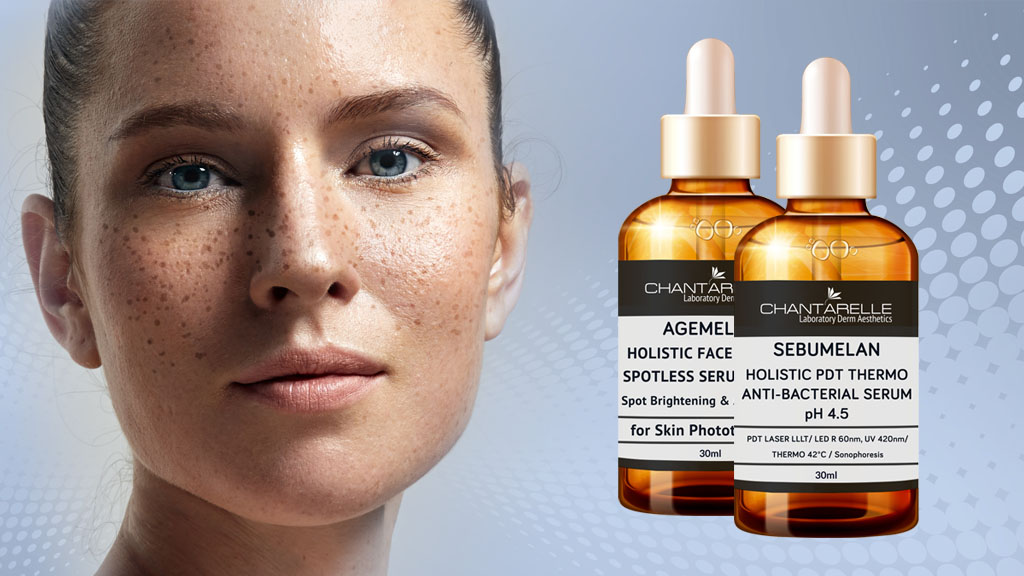
Chantarelle brightening treatments
The Agemelan Holistic and Sebumelan Holistic programmes are aimed not only at reducing hyperpigmentation, but also at improving the condition of the skin and strengthening its protective function. A weakening of this function leads to the appearance and strengthening of pigmentary changes, and contributes to the recurrence of hyperpigmentation. These holistic treatment lines aim to rejuvenate, hydrate, increase skin elasticity, strengthen, as well as reduce hyperpigmentation and even out skin tone.
 dr Khrystyna Shekhovtsova
Chantarelle expert, dermatologist and aesthetic physician