Try our novelties and bestsellers!»






Aesthetic cosmetology, Dermatology
Cellulite – how does it form, what are the types?
Oct
The normal course of processes in adipose tissue is influenced by its blood supply. Stagnation leads to the growth of the adipose tissue layer. Usually each adipocyte is surrounded by an extensive network of capillaries. Cellulite develops due to impaired circulation.

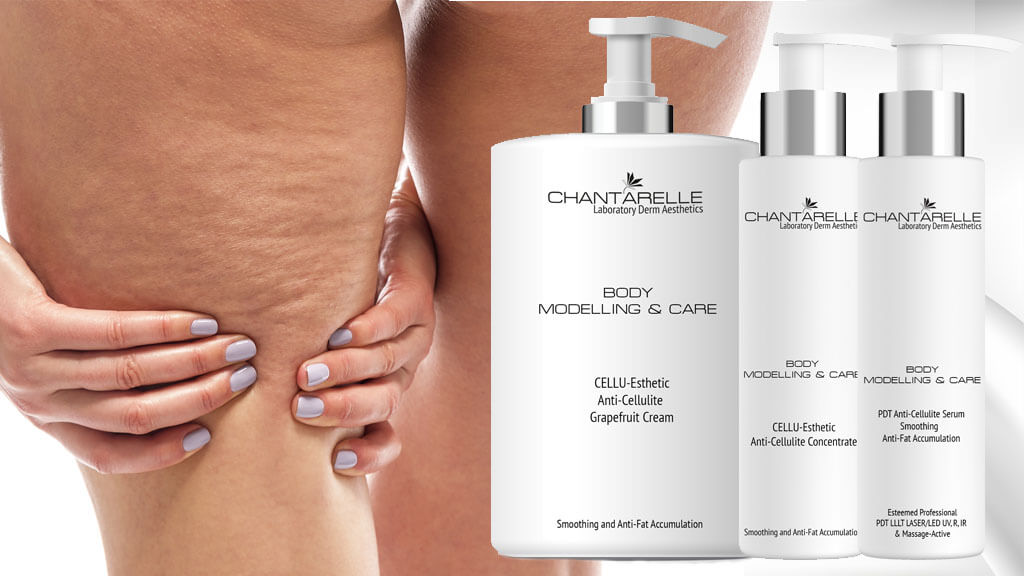
Eight out of ten women suffer from cellulite! Cellulite is a particular condition of subcutaneous fatty tissue, leading to a whole range of aesthetic defects.
Cellulite is a condition of subcutaneous fatty tissue, leading to a whole range of aesthetic defects.
- Stadium I cellulite – the skin is smooth, with no major changes. Cellulite is only visible when the skin is squeezed.
- <>Stadium I cellulite.
- Stadium II cellulite – skin is smooth when lying down, but when muscles are tight, when skin is squeezed or when standing, cellulite is visible. Skin elasticity is reduced, fat cells enlarge and microcirculation is affected.
- Stadium III cellulite – there is an increasing loss of skin tone. Cellulite is visible in any position. Nodules can be felt, veins become dilated, pain occurs.
- Stadium IV cellulite – nodules and thickening (formed by the fusion of smaller nodules) are visible in any body position and with loose muscles. The skin is heavily undulated and fibrosis of the connective tissue also occurs. The lesions press on blood vessels and nerves, causing pain.

As cellulite develops, the following processes occur in the subcutaneous tissues:
- disorders of circulation
- metabolic disorders
- adipocyte hypertrophy
- rebuilding of connective tissue elements with thickening and fibrosis processes (“orange peel”)

Cellulite in women and men
Women’s skin is more prone to cellulite.
- In women, the connective tissue forms vertical columns.
- In women, the connective tissue forms vertical columns.
- In men, the connective tissue is formed transversely.

 dr Khrystyna Shekhovtsova
Chantarelle expert, dermatologist and aesthetic physician