Try our novelties and bestsellers!»





Active ingredients in cosmetics, Cosmetic treatments, Aesthetic cosmetology
Lactic acid in chemical peels
Sep
Lactic acid is an alpha hydroxy acid (AHA) of moderate potency. It plays an important role in biochemical processes. It is produced by lactic acid bacteria of the Lactobacteriaceae family. It is also produced during intensive exercise in our muscles, and its presence causes them to become acidified, resulting in reduced performance. What is different, however, is the post-exercise pain known as ‘sours’. Lactic acid comes in two varieties, but only one is of metabolic importance and that is L-lactic acid.
Use of lactic acid
Lactic acid is used in cosmetology and aesthetic medicine, and its effects are varied. Lactic acid derivatives are being investigated for use in the treatment of cosmetic skin defects such as acne scars (Beer 2007, Sachdeva 2010) acne atrophies (Sadove 2009) and keratinisation disorders (Wehr et al. 1986). In low concentrations (up to 10%) lactic acid has a moisturising effect – it is one of the main components of the NMF, or natural moisturising factor (Harding and Rawlings, 2000) and thus influences skin hydration and hydration, allowing the epidermis to maintain normal moisture levels. Furthermore, lactic acid by influencing ceramide biosynthesis improves the barrier function of the epidermis (Rawlings et al. 1995). In higher concentrations (usually 30-50%), it shows an exfoliating effect. Peels containing lactic acid also have, in addition to their ability to exfoliate the epidermis, a skin pigmentation-enhancing effect. It has been shown to be effective in cases of chloasma (Sharquie et al. 2005, 2006). Other studies indicate efficacy for facial hyperpigmentation (Vavouli et al. 2013). These properties are due to the properties of lactic acid to accelerate epidermal transformation, as well as through direct inhibition of melanin synthesis in melanocytes (Usuki et al. 2003). Lactic acid has also shown the ability to increase epidermal thickness by increasing levels of procollagen I and collagen I. Due to these properties, it is considered suitable for use to rejuvenate skin with photodamage (Yamamoto et al 2003).
Lactic acid in cosmetic treatments
Lactic acid is therefore very often used in chemical peel treatments because it effectively stimulates collagen and elastin production, stimulates hydration and elasticity, smooths wrinkles, lightens spots and discolouration, smoothes scars and stretch marks, regulates keratosis, cleanses and shrinks skin pores. In summary, lactic acid is a mildly effective agent for achieving an all-round improvement in skin condition: hydration, firmness and colour. Chantarelle’s chemical peels contain lactic acid in formulations with concentrations ranging from 10% (in acid mace) to 80% (in medical peels). These treatments are dedicated in particular to three skin types: oily, seborrhoeic skin, with dilated pores, polluted skin, with a tendency to the formation of blackheads; skin lacking elasticity, with wrinkles, dry, grey skin, without radiance and healthy colour, and skin with discolouration and spots, also scars, stretch marks, structural imperfections.
 dr Marcin Wasylewski Chantarelle brand expert
Literatura:
– Beer K. A Single-Center, Open-Label Study on the Use of Injectable Poly-l-lactic Acid for the Treatment of Moderate to Severe Scarring from Acne or Varicella. Dermatologic Surgery. 2007 Dec 1;33(s2). – Harding CR, Rawlings AV. 2000. Effects of Natural Moisturizing Factor and Lactic Acid Isomers on Skin Function. – Rawlings AV, Davies A, Carlomusto M, Pillai S, Zhang K, Kosturko R, Verdejo P, Feinberg C, Nguyen L, Chandar P. Effect of lactic acid isomers on keratinocyte ceramide synthesis, stratum corneum lipid levels and stratum corneum barrier function. Archives of dermatological research. 1996 Jun 1;288(7):383-90. – Sachdeva S. Lactic acid peeling in superficial acne scarring in Indian skin. Journal of cosmetic dermatology. 2010 Sep 1;9(3):246-8. – Sadove R. Injectable poly-L-lactic acid: a novel sculpting agent for the treatment of dermal fat atrophy after severe acne. Aesthetic plastic surgery. 2009 Jan 1;33(1):113-6. – Sharquie KE, Al-Tikreety MM, Al-Mashhadani SA. Lactic acid as a new therapeutic peeling agent in melasma. Dermatologic surgery. 2005 Feb 1;31(2):149-54. – Sharquie KE, AL-TIKREETY MM, AL-MASHHADANI SA. Lactic acid chemical peels as a new therapeutic modality in melasma in comparison to Jessner’s solution chemical peels. Dermatologic surgery. 2006 Dec 1;32(12):1429-36. – Stiller MJ, Bartolone J, Stern R, Smith S, Kollias N, Gillies R, Drake LA. Topical 8% glycolic acid and 8% L-lactic acid creams for the treatment of photodamaged skin: a double-blind vehicle-controlled clinical trial. Archives of dermatology. 1996 Jun 1;132(6):631-6. – Usuki A, Ohashi A, Sato H, Ochiai Y, Ichihashi M, Funasaka Y. The inhibitory effect of glycolic acid and lactic acid on melanin synthesis in melanoma cells. Experimental dermatology. 2003 Oct 1;12(s2):43-50. – Vavouli C, Katsambas A, Gregoriou S, Teodor A, Salavastru C, Alexandru A, Kontochristopoulos G. Chemical peeling with trichloroacetic acid and lactic acid for infraorbital dark circles. Journal of cosmetic dermatology. 2013 Sep 1;12(3):204-9. – Wehr R, Krochmal L, Bagatell F, Ragsdale W. A controlled two-center study of lactate 12 percent lotion and a petrolatum-based creme in patients with xerosis. Cutis. 1986 Mar;37(3):205-7. – Yamamoto Y, Uede K, Yonei N, Kishioka A, Ohtani T, Furukawa F. Effects of alpha-hydroxy acids on the human skin of Japanese subjects: The rationale for chemical peeling. The Journal of dermatology. 2006 Jan 1;33(1):16-22.
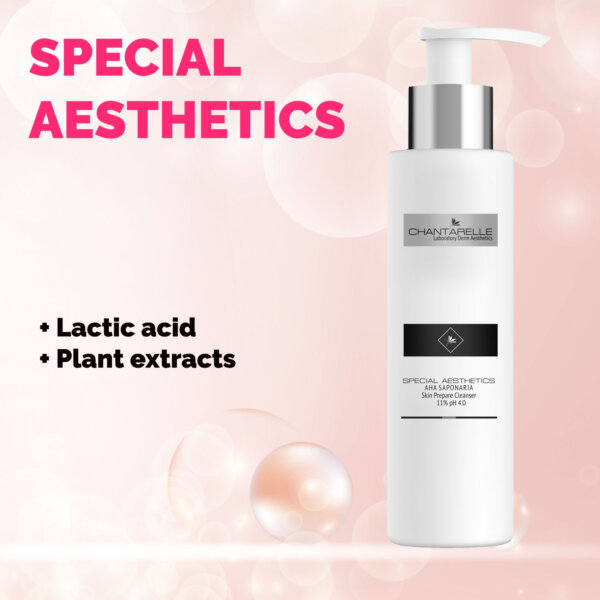
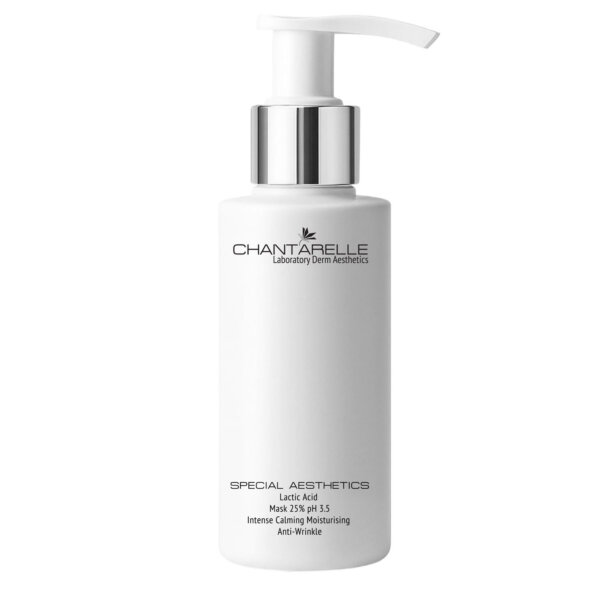
Lactic acid in Chantarelle cosmetics