Try our novelties and bestsellers!»






Active ingredients in cosmetics
Skin Matrix – slows down the cell ageing clock
May
As with all organs of our body, the skin is also subject to an irreversible ageing process dependent on internal and external factors (Kohl et al. 2011). These factors include hormonal balance, diet, physical activity, UV radiation, oxidative stress, climate and many others.
Internal factors affecting ageing
Among the internal mechanisms, the most important are telomere shortening, mutations of mitochondrial DNA, oxidative stress and decreased hormone levels. In addition, the skin is exposed to external factors particularly ultraviolet radiation, which causes premature ageing. Extrinsic ageing has several parallels at the molecular level: formation of reactive oxygen species and induction of matrix metalloproteinases. The accumulation of fragmented collagen fibres inhibits neocollagenesis and is responsible for further degradation of the extracellular matrix. Of the factors mentioned above, it is worth looking at the processes associated with telomeres. Telomeres are polynucleotide sequences found on the terminal fragments of chromosomes. Their function is to protect telomeres from damage. Telomeres shorten during each cell division, which is associated with cell ageing. The enzyme telomerase, which counteracts telomere shortening, is crucial in these processes.
Flavonoids – how do they work on the skin?
How can we modulate these processes, consequently delaying the appearance of the signs of skin ageing? A number of scientific studies point to the beneficial effects of compounds called flavonoids. These substances have a number of properties, such as antioxidant and anti-inflammatory effects. A rich source offlavonoids are plants such as Scutellaria baicalensis from the order jaspers. This family of plants includes more than 7,200 species belonging to more than two hundred genera. Many species in this family contain active ingredients that have found use in medicine and cosmetics. Scutellaria baicalensis is found in China, Korea, Mongolia and Siberia. In traditional Chinese medicine, it is considered one of the primary medicinal plants. Modern science has isolated a number of therapeutic substances from this plant such as baicalein, baicalin, wogonin, norvogonin, oroxylin A and β-sitosterol. The antioxidant activity of flavonoids derived from Scutellaria baicalensis has been demonstrated in scientific studies (Gao et al. 1999). The anti-radical activity is important in regenerative processes and anti-ageing activities. Furthermore, one of the flavonoids, Baicalin, has also been shown to effectively protect human skin fibroblasts from oxidative damage and slow down the photo-ageing process. The anti-ageing mechanism of action of Baicalin may be related to the slowing of telomere shortening and the regulation of ageing-related genes such as p66Shc, p53, p16, c-myc, MMP-1, and TIMP-1 (Min et al 2014).
Skin Matrix in Nutri Maxx cosmetics
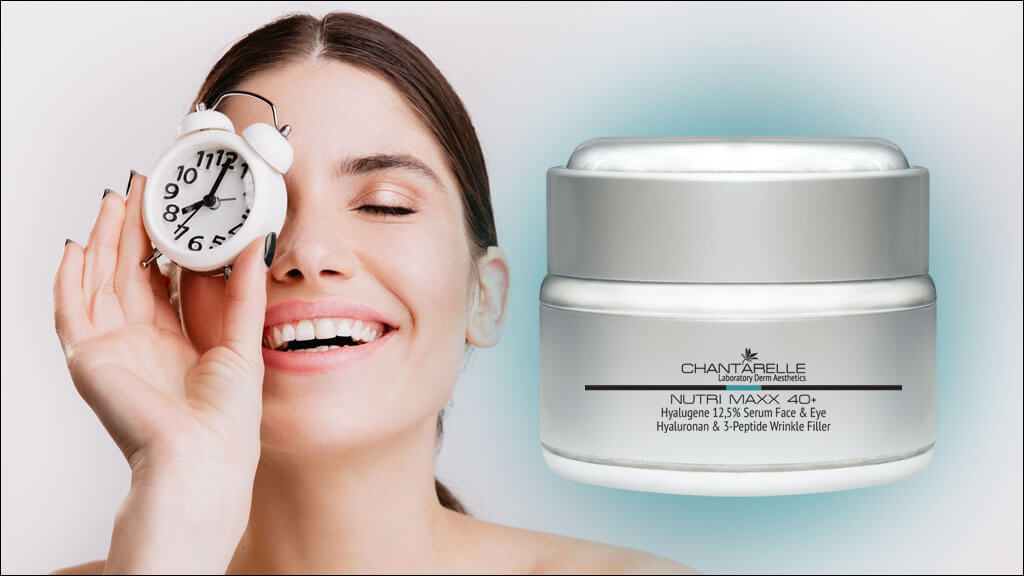
To say that there is a grain of truth in every legend is not enough. Today, traditional Chinese medicine goes hand in hand with the latest scientific discoveries to ensure our skin looks healthy and youthful. We don’t have to travel to China in search of these ingredients either – just reach for the Nutri Maxx cosmetics line produced in the laboratories of Chantarelle. The products contain the ingredient Skin Matrix – which slows down the ageing process of our skin cells.
 Dr Marcin Wasylewski
CHANTARELLE Laboratory Derm Aesthetics expert
Literature:
– Gao Z, Huang K, Yang X, Xu H. Free radical scavenging and antioxidant activities of flavonoids extracted from the radix of Scutellaria baicalensis Georgi. Biochimica et Biophysica Acta (BBA)-General Subjects. 1999 Nov 16;1472(3):643-50, – Kohl E, Steinbauer J, Landthaler M, Szeimies RM. Skin ageing. Journal of the European Academy of Dermatology and Venereology. 2011 Aug;25(8):873-84. – Min W, Liu X, Qian Q, Lin B, Wu D, Wang M, Ahmad I, Yusuf N, Luo D. The effects of baicalin against UVA-induced photoaging in skin fibroblasts. The American journal of Chinese medicine. 2014;42(03):709-27.