Try our novelties and bestsellers!»







Cosmetic treatments, Aesthetic cosmetology
All about feet
Aug
Summer is a time when women shed heavily covering footwear and opt for lightweight ballet flats and sandals. Do we always do this so willingly? Do we always have something to boast about? The most neglected feet are usually those burdened all day long by uncomfortable, heavy and poorly ventilated shoes and those that lack proper care and hygiene. This is why dermatologists’ and podiatrists’ offices are so frequently visited with a wide variety of foot problems.
What foot problems do we know about?
Excessive foot sweating
This problem affects around 3% of the population. Our feet have nearly six times the number of sweat glands in relation to the entire body surface. There are approximately 600 of them per 1 cm².
- Excessive sweating is usually dependent on our genes.
- Improper perspiration is not a problem.
- Inadequate grooming and lack of hygiene can also lead to increased perspiration.
- Inadequate care and lack of hygiene can also lead to increased perspiration.
- Inappropriate footwear and socks disrupt the thermoregulation of our skin. Some people’s reasons for excessive foot perspiration are inadequate diet and hormonal disturbances during menopause and puberty. Increased sweat production affects the condition and quality of the skin on the feet. The body starts to defend itself by creating thickened skin. And over time, it takes on a yellow colour and loses its elasticity – as a result, it starts to crack and keratinise.
Fingerprints / moles
Corns affect nearly 100% of the population.
- Usually their presence is to some extent genetically determined. For some people, corns develop despite regular prophylaxis, while for others, they occur occasionally despite a lack of basic hygiene or prophylaxis.
- Corns appear as a result of constant friction or pressure on the skin, most often by ill-fitting footwear. Corns often do not cause pain or even the slightest discomfort at first. Over time, however, this can change. They take the form of grey-yellow-coloured bumps and usually occur on the heels or under the big toe of the foot.
Nickles
These are corns-like cutaneous formations that are mainly located on the toes.
- Corns are formed by pressure, resulting in an increase in the number of horn cells. This results in the formation of a hard pus, commonly called a root, which penetrates deep into the tissue. Most often, their presence causes intense pain resulting from pressure on nerve endings.
Brows commonly known as warts
They are a very common problem usually occurring in children and those in contact with an infected person. The appropriate prevention in this situation is to avoid contact with the diseased person. Young mothers and their pre-school children are a very common group of people suffering from this disease.
- They arise through infection with HPV1 or HPV2. Therefore, very often the infection occurs despite the lack of immunosuppression. There are two types of warts:
- Deep, which are painful lesions that occur in small numbers and usually require longer and intensive treatment. Warts of this type cause inflammation. HPV 1 leaves an immune footprint in the body, so reinfection is rare.
- Superficial, or confluent non-painful lesions, also known as mosaic warts. The lesions are long-lasting and very often recurrent. In some cases, the lesions regress spontaneously without treatment, in which case the Arthus phenomenon, or darkening of the lesions, occurs, which is the first sign of the disease going away.
foot fungus
It is very common in children and athletes.
- The most common cause is inadequate foot hygiene after spending time in a swimming pool, sauna or public showers. The resulting lesions take the form of erythematous and exfoliative foci. The lesions are accompanied by blisters and exudates. Mycosis fungoides usually arises from tissue infection by the fungi Trichophyton rubrum and Trichophyton mentagrophytes. Lesions usually occur in the interdigital space between the third and fourth and fourth and fifth toes. The exfoliative variety of this disease is equally common on other areas of the foot skin. This variety is very often accompanied by nail fungus.
Increasing nails
This is one of the more underestimated foot problems encountered by podiatrists and dermatologists. An initially harmless situation very often ends in the surgical removal of the ingrown nail.
- An ingrown nail is caused, among other things, by improper trimming of the nails and cuticles of the nail shaft.
- In some cases, ingrown nails can also be caused by fungal infections, overweight, physical trauma, ill-fitting footwear or a genetic pathology of the nail, as a result of which it grows in the wrong direction. The ingrowth of the nail into the skin tissue initially causes redness, swelling and slight pain. With time, the symptoms increase and bleeding, intense pain and pus secretion develop. The most effective solution in this case is a proper pedicure treatment or in the office of a podiatrist.
Dry, rough feet
The primary symptom of excessively dry feet is flaking, burning, itching and roughness. The colour of the skin changes, and can take on various shades of grey, white and yellow.
- Usually, dry skin is caused by inadequate care, lack of hygiene and circulatory disorders.
- As a result of a malfunctioning circulatory system, nerve damage occurs to the sweat and sebaceous glands, which regulate the skin’s moisture content. This is a problem that is very often underestimated, and often leads to dangerous consequences. As a result of excessive dryness of the feet, a so-called cleft can form, which leads to severe inflammation and bleeding, which can even result in a dangerous bacterial infection.
Diabetic foot
One of the complications of diabetes that can occur in nearly 10% of diabetics.
- As a result of inadequate or no treatment, blood vessels are damaged. Through overgrowth and lack of elasticity, ischaemia of the tissue occurs. At the same time, as a result of diabetes, thrombocytes in the blood start to aggregate and form blockages, which also causes additional tissue hypoxia. This process results in necrosis of the tissue, which can lead to amputation of the foot.
Heel spur
- This is an inflammation of the junction between the heel bone and the heel tendon.
This foot condition should be managed by physiotherapy and rehabilitation measures
Adequate foot care
Despite many genetic predispositions, we can avoid most of the foot conditions described above. We can minimise the likelihood of their occurrence through proper care, well-chosen footwear and socks and, if necessary, a visit to a podiatrist, dermatologist and cosmetologist.
Inappropriate footwear is one of the main causes of corns and calluses, among others. Footwear that is too small causes pressure, whereas footwear that is too big causes friction. In both cases, a skin formation can result, which causes unpleasant sensory and aesthetic sensations. The problem of ill-fitting footwear mainly affects children, as their shoes are bought over the top. It also happens that children wear them after their older siblings and additional pressure is created as a result of the different shape of the foot.
Lack of ventilation of the feet through proper shoes or through socks created from materials that are difficult to ‘breathe’ can be a major problem. Permanently moist foot skin is an ideal environment for bacteria and fungi to thrive. In order to minimise the development of ringworm or bacterial infections, care should be taken with the right footwear.
Basin / sauna are breeding grounds for fungi and many bacteria, although they do not have to be avoided. However, direct contact of the foot with the ground should be strictly avoided in these areas. It is also advisable to apply an anti-fungal cream once prophylactically after each use of the pool.
Inadequate diet also has a very strong effect on our body, including the skin. A poorly balanced diet can affect the tendency to keratosis, dry skin and brittleness and breakage of the nails, which can mean they ingrown more quickly.
Hormonal disturbances during the menopause can contribute to a deterioration in skin quality and sweat gland function. A similar situation occurs during puberty. Hormone replacement therapy can help treat foot conditions.
Chantarelle podiatry treatments
Foot problems are nothing to be ashamed of, everyone has struggled with this problem at least once. That is why it is so important to use the services of podiatrists, dermatologists, cosmetologists and pedicurists. Proper diagnosis of the problem is essential. There are many therapeutic methods ranging from minimally invasive massage to physiotherapy to laser treatments. Several treatments from the Chantarelle range are dedicated to the skin of the feet:
PDT Black Essential reduction of the discomfort of “heavy feet”. – also for diabetic foot. The PDT Black Essential treatment is particularly recommended for so-called “heavy legs” and also for diabetic foot. It has an anti-edematous, decongestant, soothing and vascular strengthening effect. Application of preparations with PDT laser light / LED light / sonophoresis.
Effects of treatments:
- reduction of the discomfort of “heavy legs” and swelling
- improved efficiency of the lymphatic and vascular system
- reduction of so-called “spider veins” and strengthening of blood vessels.
- improvement of skin structure by stimulating collagen fibres and preventing degradation
- increased cellular energy – improvement of skin elasticity and colouring
- reduction of discolouration of lower limbs resulting from venous insufficiency
- soothing and alleviating symptoms of irritation
Lactic and glycolic acid treatments
An effective solution for locally thickened skin is the use of systematic exfoliation. As a result of friction, the skin builds up superfluous tissue much more quickly, which is unsightly through dryness, roughness and a yellow-white colour. CHANTARELLE cosmetologists recommend exfoliation treatments with lactic or glycolic acid with indications for very dry skin, flaky skin with a “peeling effect”, keratinised skin, skin with keratinisation disorders, skin with hyperpigmentation and spots, also with scars and other structural imperfections of the skin.
Treatment effects:
- removal of dead epidermal cells
- stimulation of hydration and production of elastic fibres
- significant improvement in the degree of hydration, reduction in the feeling of dryness of the feet
- brightening of skin tone, reduction of discolouration of various origins, including post-sun discolouration
- reduction of scars and other imperfections
- regulation of epidermal keratinisation
Chantarelle podiatric cosmetics
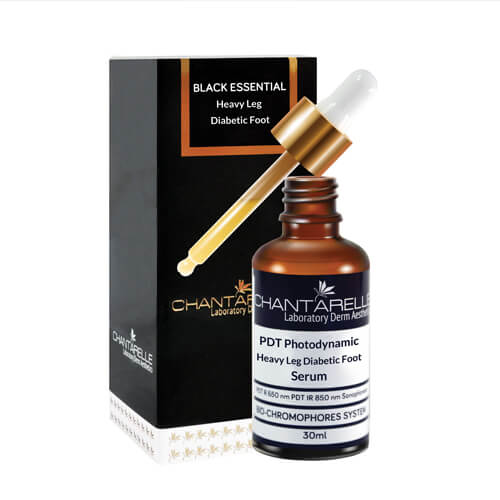

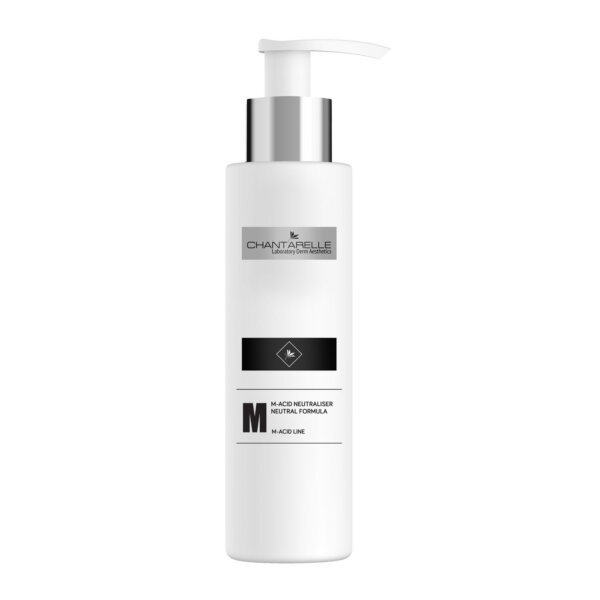

Cosmetic M-acids
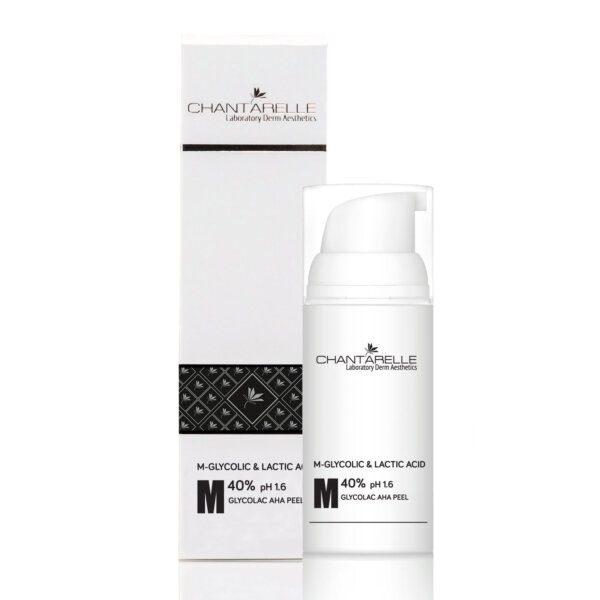
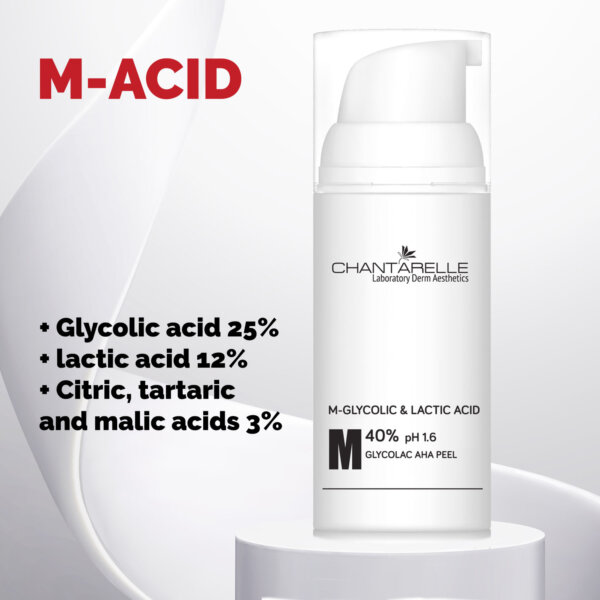
Cosmetic M-acids
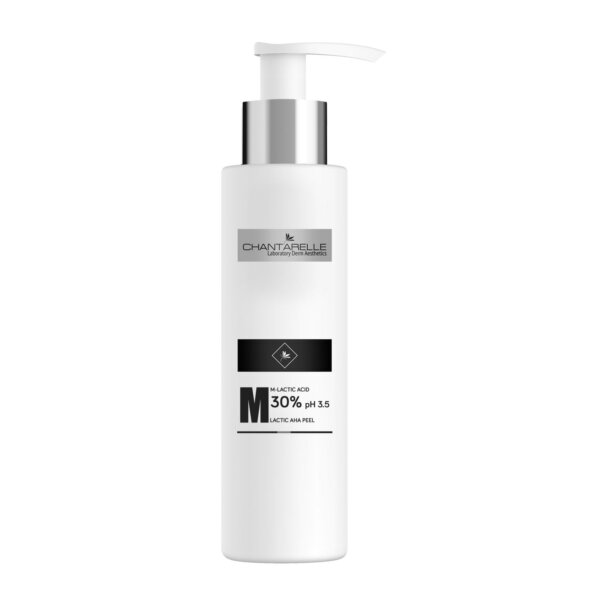

Cosmetic M-acids