Try our novelties and bestsellers!»







Aesthetic cosmetology
Classy rivals

Mar
The story of two extraordinary women, Elizabeth Arden and Helena Rubinstein, who created the greatest cosmetic consortia of the first half of the 20th century. At the time financial giants, today on the margins of the industry. Why did this happen?
Success is not only about the efficient investment of resources, but also about the management of human capital. “Colours of War” – a book by Linda Woodhead about two of the biggest personalities in the beauty industry who built their empires over a combined 50 years by working up a sweat, terrorising their closest colleagues with their perfectionism and ruthless pursuit of their chosen goal. Elizabeth Arden and Helena Rubinstein were among the first women to achieve in the cosmetics industry what men could only dream of, Thanks to their intuition and brilliant sense of the needs of the emerging cosmetics market, they achieved fame, glamour and enormous wealth, building cosmetic empires with a global reach that their male predecessors had not managed to achieve. With their innovative cosmetics and the way they were promoted, they blazed a trail in the marketing of colour cosmetics, created hundreds of lipsticks, powders, creams and, above all, a new ideology of “being beautiful through make-up”, which in the puritanical realities of the early 20th century only actresses could get away with. Neither of them had a degree in marketing, cosmetology, management or economics; both had an innate visionary sense of investing in the right time and place, unerringly sensing women’s demand for these and not other articles or cosmetic treatments.
Women of success
Arden and Rubinstein never met, which didn’t stop them from hating each other heartily and competing for the favours of female clients until their deaths. For Madame Rubinstein, Arden was always ‘that woman’, Madame for Arden was ‘the other’. We find many similarities in their biographies. Both came from poor, large families, from which they nevertheless derived analytical skills and the perseverance to pursue their goals. It is no secret that both were perfectionists and workaholics, wealth-oriented ruthless bussineswomen. Arden was a capricious employer sacking people for any misdemeanour, which is why Arden’s career was said to be a ‘walk through a revolving door’. Madame, on the other hand, was extremely stingy, buying overpriced stockings for 90 cents, modestly paying even dedicated long-term employees, while owning a lavish mansion decorated head to toe with works by Dali, Degas, Chagall, Klee and Picasso, a collection of creations, pearls and jewellery estimated at the time at $50million. She, of course, included all her image expenses in her business expenses, for which she received tax refunds from the NY IRS. Both were brilliant financial strategists and stock market players. Madame would start her day with stock market analyses personally instructing her brokers to make appropriate trades. Thanks to her masterful moves, Miss Arden made as much as $6 million during the Wall Street crash. Multimillionaires, beauty empresses and rulers of armies of tens of thousands of specialists in their syndicates. At the same time, extremely lonely, twice divorced women, with no contact with their own children, devoting all their energy to their careers, unable to arrange their lives with men, probably using their power in revenge to perform the act of a praying mantis against their male colleagues, driving them to the brink of a nervous breakdown with their constant modifications of plans and their ostentatious lack of satisfaction with their still insufficient financial results. None of them were beautiful, their photos were subject to far-reaching retouching, but they had a classy, distinguished air about them, draped in diamonds, dressed in sable, they commanded the respect and esteem of the world’s business elite.
Helena Rubinstein
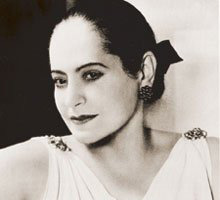 Madame Rubinstein was born in Krakow, Poland, into the family of a Jewish merchant, where she learned calculus, how to make transactions, and how to look after an oil shop. She is said to have done this better than her father. There she also assimilated her own mother’s golden maxim: “Women influence the world through love. Cream will make you beautiful, to be beautiful is to be a woman,” she wrote in her diary published before her death. This idea later became the basis of Rubinstein’s marketing based on a holistic concept of beauty. This cream was supposedly created according to a top-secret recipe by the Hungarian pharmacist Lyskusky, given to Madame’s mother by the famous Polish actress Helena Modrzejewska. However, this was one of the romantic legends that Madame invented to market her image. Nevertheless, it was true that all eight of Madame Rubinstein’s daughters had flawless skin. Many years later, Chaja, as Helena was called in the family home, probably believed herself what she described in her biography, that she was the daughter of a banking tycoon and lived in a wealthy district of Krakow and that it was there that she studied medicine. Of course, this is not true, as at that time women did not yet have access to higher education. However, this story was a perfect fit for the self-proclaimed, albeit not unfounded, title of beauty scientist, as she made herself known at the height of her career to the New York press.
In 1902, at the age of 18, Madame went to visit her family in Australia, where, after long and boring months spent in the hot countryside, the local women, with sun-damaged complexions, became interested in the secret of the young Polish woman’s obsessive avoidance of the sun, keeping her skin alabaster and delicate. Madame, of course, seized her chance and imported a cream from exotic Poland, from which she developed a new recipe and the “Valaze” was created – the cream that secured her first hundred thousand dollars. Those were the days when the most you could get in the shops was soap and rice powder, and a woman using lipstick was called a hussy. As it would turn out years later, the cream in question had none of the secret ingredients in it. However, the market niche was discovered and orders soon began to pour in, including from New Zealand and soon also from England. Already in 1905, Madame opened her first beauty salon in Paris. European market exploration followed at lightning speed – London, Vienna, the major capital cities and the most fashionable resorts of Europe soon followed. In 1914, after the outbreak of war, she reached overseas to compete on the New York battlefield against the unbeatable Elizabeth Arden, quickly becoming a dangerous adversary with salon branches in major American cities. The epicentre of the war, however, was on New York’s Fifth Avenue, where rivals outdid each other with innovations in their world’s most luxurious beauty salons.
Elizabeth Arden
 Elizabeth Arden, or rather Florence Nightingale Graham, was born in poor Ontario, Canada to a descendant of Scottish immigrants. Following family tradition, she attended nursing school and also worked briefly as a dental assistant. In 1909, however, the opportunity arose to emigrate to her brother, who had settled in New York, which Florence eagerly seized. She started out as a cashier in the beauty salon of the then ruler of the cosmetics industry, Eleonor Adair, where she acquired knowledge of skin care and cosmetic manufacturing. As early as 1910, she set up her own business and, as the saying goes, quickly outgrew her master, or rather, she ruthlessly used all the experience she had gained there and the ideas of her rival. Little did she know that she would soon face a far more demanding opponent on the battlefield, with whom she would fight for the palm of cosmetic supremacy, going head-to-head for the rest of her life. Miss Arden, as she was called in society, skilfully created her image. She coloured her biography to such an extent that she ostentatiously entered society as a supposed aristocrat, punning to title herself per Lady. She won the greatest allies of the New York aristocracy and the press by gaining invaluable contacts with the editor-in-chief of Vogue and other widely read newspapers of the time, and became involved in cinema, placing her products in the nascent show business. She also became involved in politics by founding the League of Political Equality, promoting her products by any means available, doing beauty talks even at the White House.
In fact, neither Madame nor Miss Arden won the more than half-century-long rivalry; both could safely be called triumphant. They were formidable players in the nascent cosmetics industry, with dozens, if not hundreds, of innovative products and innovations in the field already in existence. Madame, among others, invented the waterproof mascara, a novelty in the days of mascara in stone, the eyelash spiral, Arden’s cream powder and automatic lipstick, and many others. The formulas of three-quarters of the cosmetics used by today’s women were invented by one or the other market visionary. Both capitalists amassed sizable fortunes of around 100 million dollars (in today’s money’s worth of billions), conquered world markets and created brands that have lasted for more than a century. Their careers were unquestionably the classic rise from pusher to millionaire, and they achieved spectacular success in a world where there was no place for women in business. They died in solitude, bewildered and abandoned by their loved ones, but probably not entirely satisfied with their fate….