Try our novelties and bestsellers!»







Cosmetic treatments, Active ingredients in cosmetics, Aesthetic cosmetology
Ferulic acid – antioxidant and anti-inflammatory
Sep
Ferulic acid is a substance with a variety of properties that allow it to be used in cosmetic skin treatments. It is a phenolic acid with mild exfoliating and depigmenting effects. It also has antioxidant, photoprotective and antiglycation effects, as well as antimicrobial properties.
Ferulic acid is an important plant metabolite found in cereal grains such as wheat, oats, rye and barley, as well as in spinach, parsley, grapes and rhubarb. Tomatoes, as well as wheat bran, are particularly high in ferulic acid. It is therefore a natural and safe substance, and it is also worth looking at its activity profile.
Free radicals
The antioxidant properties of ferulic acid mean that it fights free radicals, which contribute to ageing. Free radicals cause damage to both the living layer of the epidermis and the structure of the stratum corneum, as well as damage to the dermis and peroxidation of the lipids that make up cell membranes. Lipid peroxidation results in direct or indirect damage to proteins, which may be associated with the initiation of an inflammatory process. Lipid peroxidation also damages the intercellular cement, leading to the destruction of the outer barrier – the epidermis. Consequently, it contributes to dehydration of the skin and increased sensitivity to allergens and other external factors. Free radicals can lead to an increase in intercellular metalloproteinase activity, resulting in accelerated protein degradation.
Oxidative stress
Antioxidants, including ferulic acid, regulate the activity of metalloproteinases, which is disrupted in the presence of free radicals. This occurs through the binding of divalent ions of magnesium, copper and iron, which are essential for enzyme activity. The release of pro-inflammatory substances such as cytokines and interleukins also leads to impaired expression of genes responsible for collagen synthesis. Such processes, initiated by the occurrence of oxidative stress, result in reduced skin elasticity, the formation of wrinkles and changes in skin pigmentation. Antioxidants additionally stimulate the action of certain enzymes such as hyaluronidases, collagenases and lipoxidases, thus activating the formation of connective tissue in the skin.
Antioxidant action
The antioxidant action of ferulic acid is therefore complex in nature – it is a free radical scavenger and also inhibits the action of enzymes catalysing the formation of active oxygen species. The antioxidant action is directed at both skin cells and intercellular components such as lipids and proteins. When applied to the skin, ferulic acid reduces the oxidation of other components susceptible to this process, such as vitamins. Oxidative stress can be further increased by external factors, pollution or UV exposure. This is especially true for skin cells such as keratinocytes and fibroblasts.
Photoprotective effects of ferulic acid
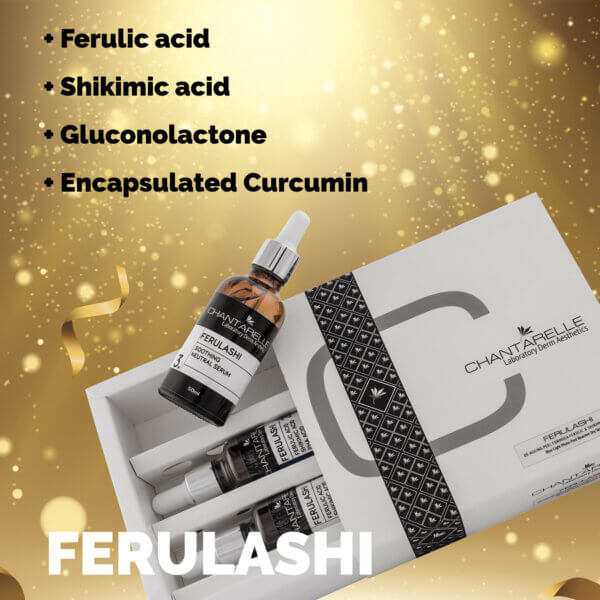
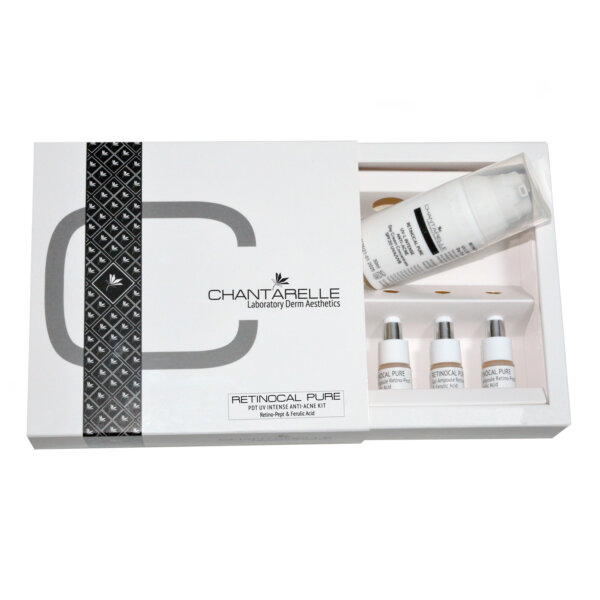
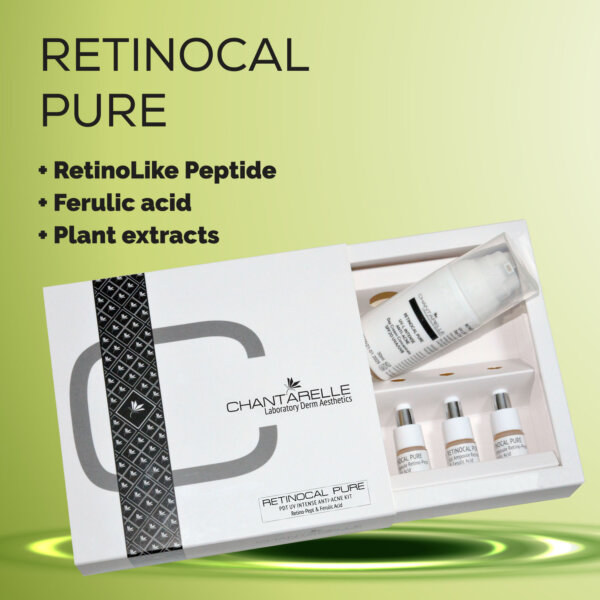
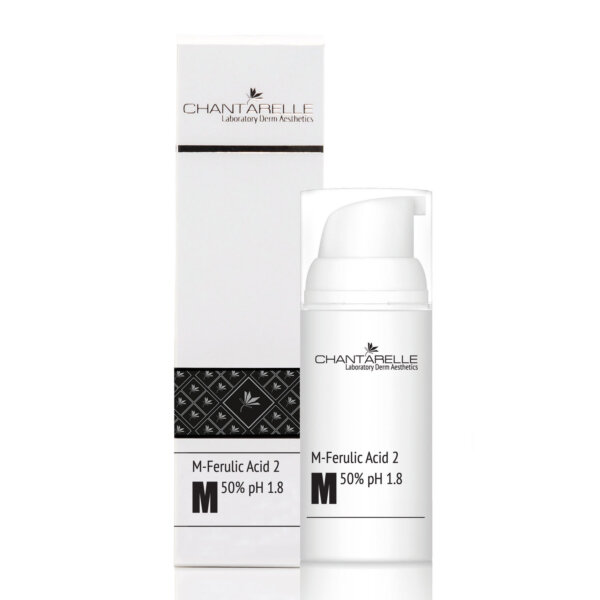
In addition to its antioxidant effects, ferulic acid is also a photoprotective substance (Peres et al. 2018). In studies, ferulic acid has been shown to be effective in counteracting UV-induced skin damage, including photo-ageing while remaining safe and non-irritating. By combining such properties, ferulic acid protects against oxidative stress, prevents skin ageing, improves skin tone and protects against photo-ageing (Zduńska et al. 2018). Chantarelle experts have used this acid in the M-Acid line and in PDT Ferulashi laser peels for very dry, sensitive, reactive skin and PDT Retinocal Pure for oily, acne-prone skin with massive inflammatory lesions.
 Dr Marcin Wasylewski
Chantarelle expert, biotechnologist and university lecturer
Literature:
- Dudka, K., Baran, M., & Karpik, E. (2016). Plant secondary metabolites and their application in cosmetics. Review of selected papers in enzymology, 99.
- Peres, D. D. A., Sarruf, F. D., de Oliveira, C. A., Velasco, M. V. R., & Baby, A. R. (2018). Ferulic acid photoprotective properties in association with UV filters: multifunctional sunscreen with improved SPF and UVA-PF. Journal of Photochemistry and Photobiology B: Biology, 185, 46-49.
- Zduńska, K., Dana, A., Kolodziejczak, A., & Rotsztejn, H. (2018). Antioxidant properties of ferulic acid and its possible application. Skin pharmacology and physiology, 31(6), 332-336.
Chantarelle cosmetics with ferulic acid
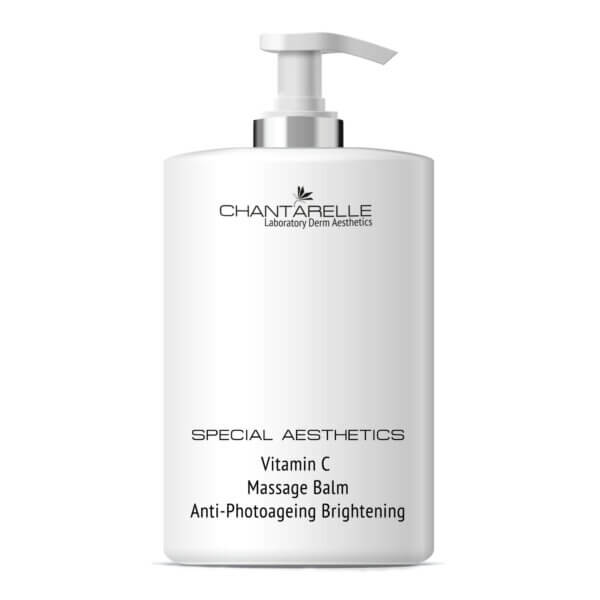
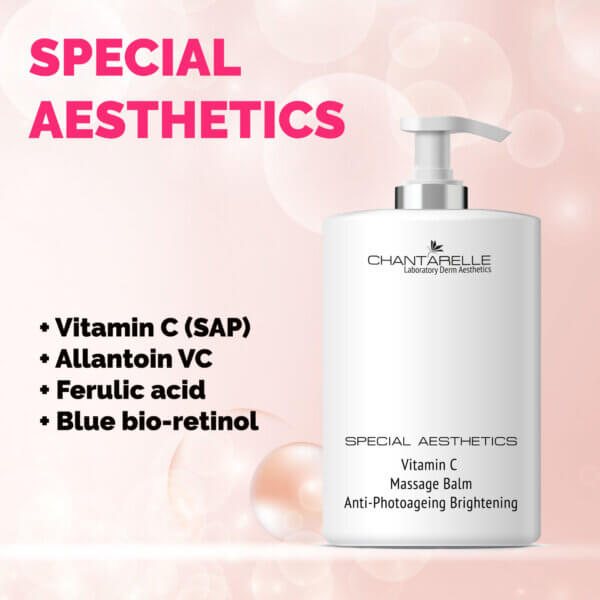
Special Aesthetics
Massage lotion against photo-ageing with vitamin C and ferulic acid
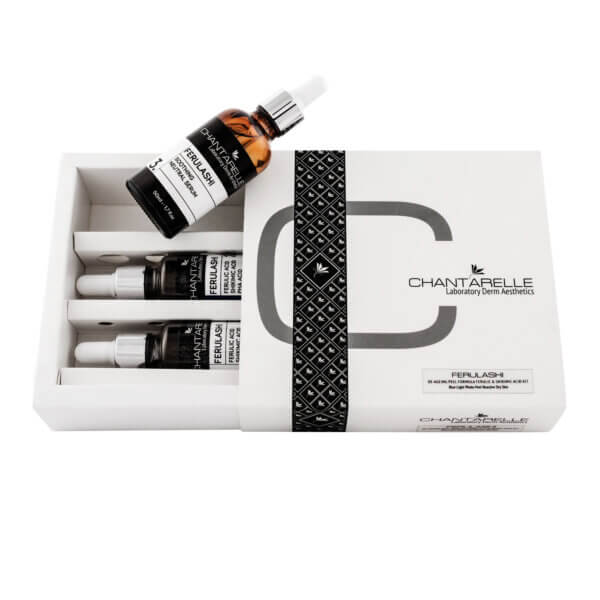
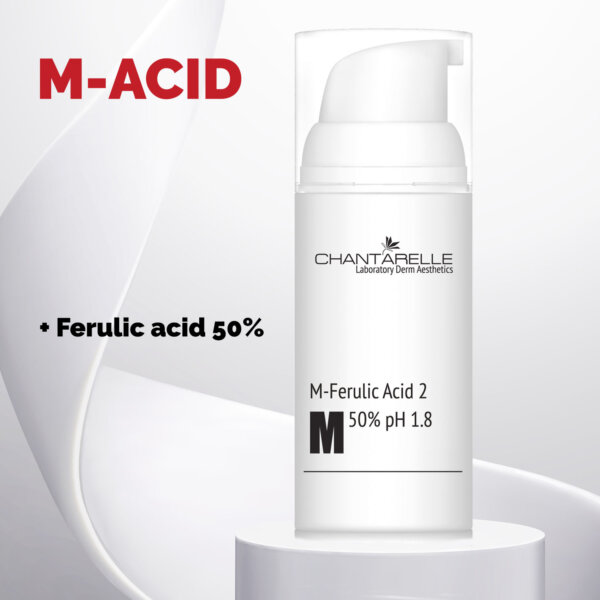
Cosmetic M-acids
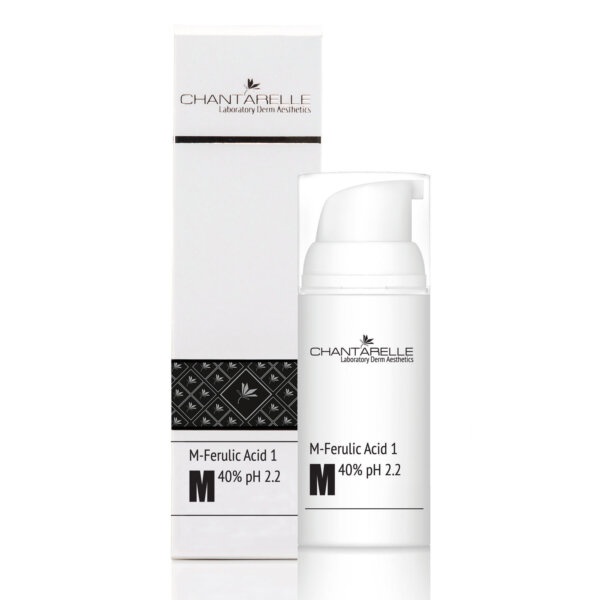
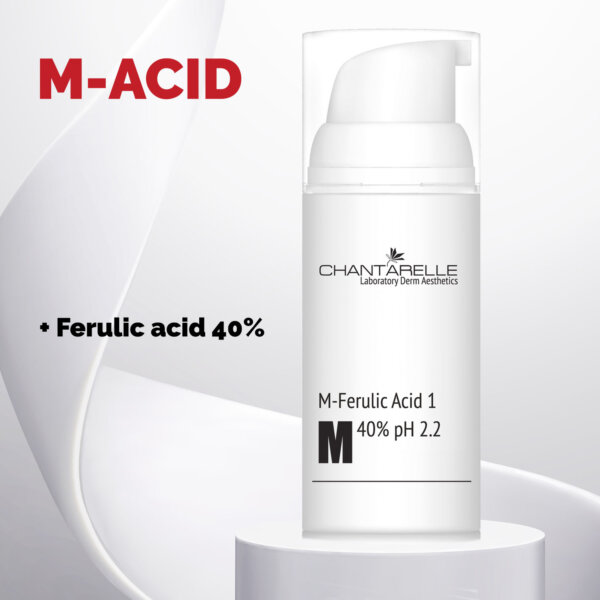
Cosmetic M-acids