Try our novelties and bestsellers!»





Cosmetic treatments, Active ingredients in cosmetics, Aesthetic cosmetology
Kojic acid for effective reduction of hyperpigmentation
Oct
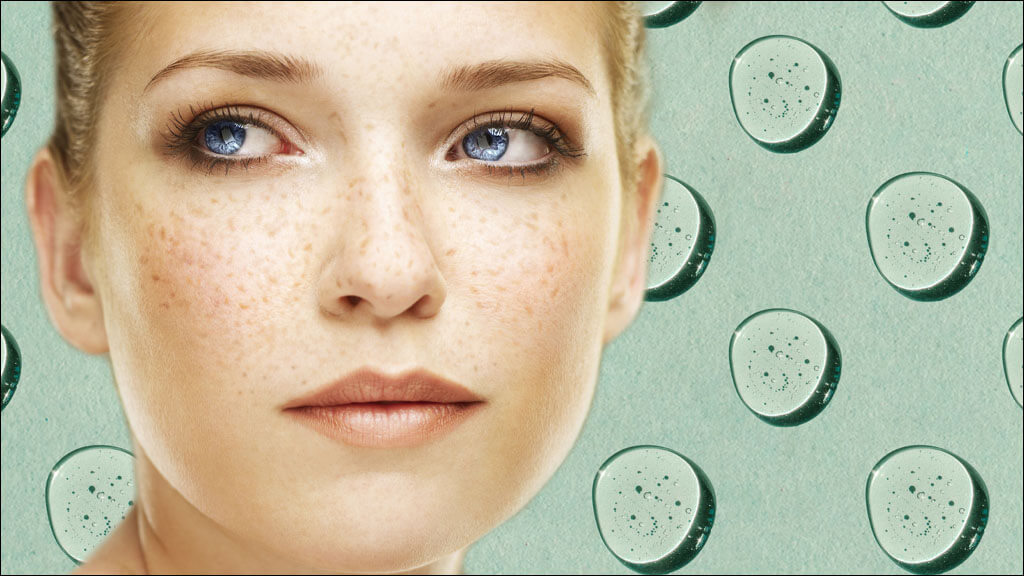
Kojic acid is used in Chantarelle chemical peels for skin with signs of ageing, photo-ageing and sun damage. We therefore use it in treatments for skin with various origins of spots and hyperpigmentation: lentigines, sun spots, age spots, liver spots, freckles, epidermal melasma and for skin with irregularities of texture and colour.
Kojic acid is an organic chemical compound, produced by fungi – primarily the spider mites. The name kojic acid is derived from the Japanese name for the fungus Aspergillus oryzae – koji. In living organisms, it is produced from sugars, mainly glucose, and is formed by fermentation processes.
Kojic acid in cosmetics
Kojic acid has chelating properties, that is, it exhibits the ability to capture metal ions. This activity of cojic acid has been indicated to have an anti-aging effect on skin aging. The results also show that cojic acid reduces ultraviolet radiation-induced wrinkles, counteracts skin fibrosis and prevents undesirable changes in the extracellular matrix (Mitani et al. 2001). In cosmetics, the most important property of kojic acid is its brightening effect. This is due to its ability to inhibit tyrosinase, the main enzyme responsible for melanin production in living organisms (Deri et al. 2016). This property is important in treatments against the signs of skin ageing, which include pigmentation changes such as lentigines, sun spots, age spots, liver spots, freckles, epidermal melasma and other colour irregularities. Kojic acid treatments can brighten the skin, as well as remove hyperpigmentation and spots of various origins. Kojic acid has often been used in combination with other bleaching agents such as hydroquinone (Lin 1999), as well as with other acids such as glycolic acid (Garcia and Fulton, 1996), and the results indicated significant activity of kojic acid as an agent against skin discolouration. Kojic acid has been recognised as a fully safe substance in cosmetic treatments, so its use is becoming more common.
 Dr Marcin Wasylewski Chantarelle brand expert
Literatura:
– Deri B, Kanteev M, Goldfeder M, Lecina D, Guallar V, Adir N, Fishman A. The unravelling of the complex pattern of tyrosinase inhibition. Scientific reports. 2016;6. – Garcia A, Fulton JE. The combination of glycolic acid and hydroquinone or kojic acid for the treatment of melasma and related conditions. Dermatologic Surgery. 1996 May 1;22(5):443-7. – Lim JT. Treatment of melasma using kojic acid in a gel containing hydroquinone and glycolic acid. Dermatologic Surgery. 1999 Apr 1;25(4):282-4. – Mitani H, Koshiishi I, Sumita T, Imanari T. Prevention of the photodamage in the hairless mouse dorsal skin by kojic acid as an iron chelator. European journal of pharmacology. 2001 Jan 5;411(1):169-74.
Kojic acid in Chantarelle cosmetics
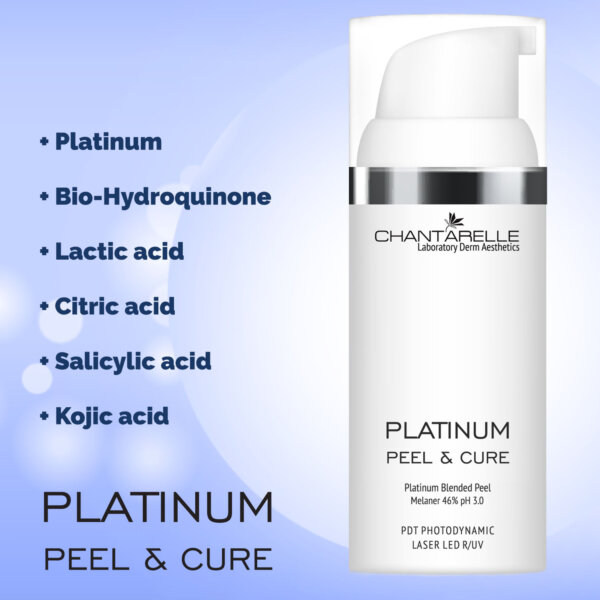
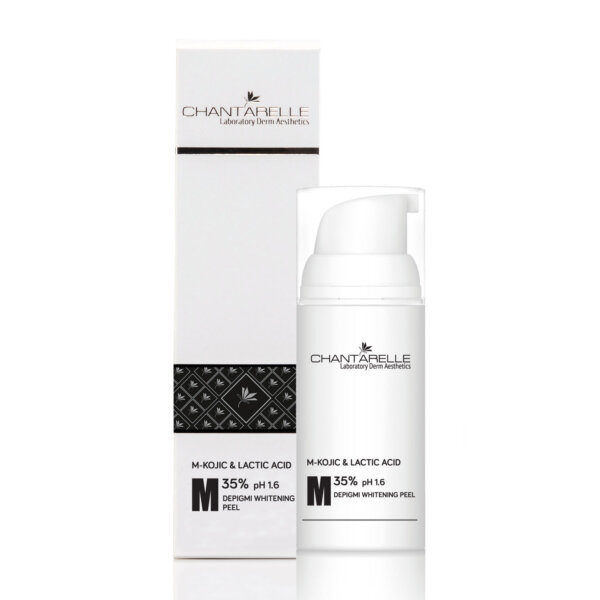
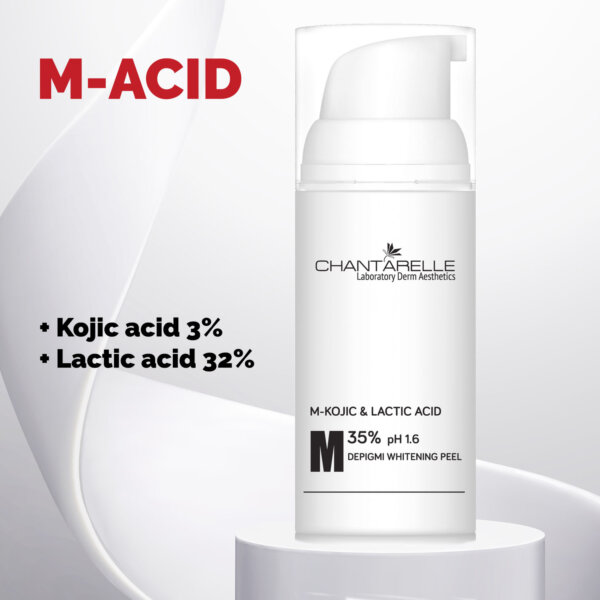
Cosmetic M-acids
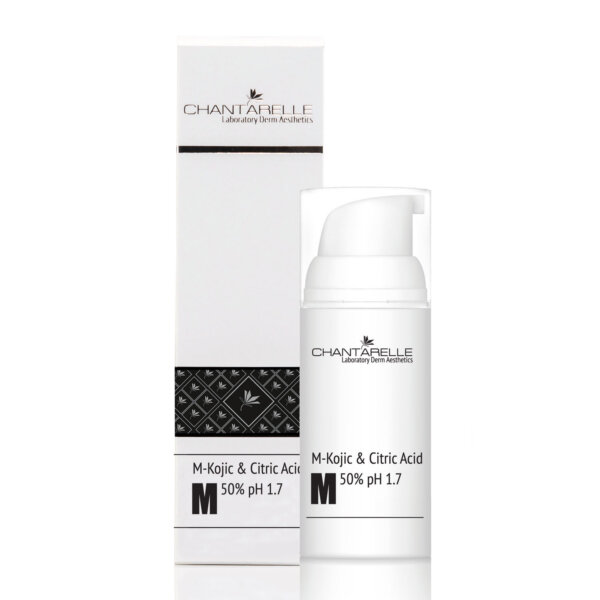
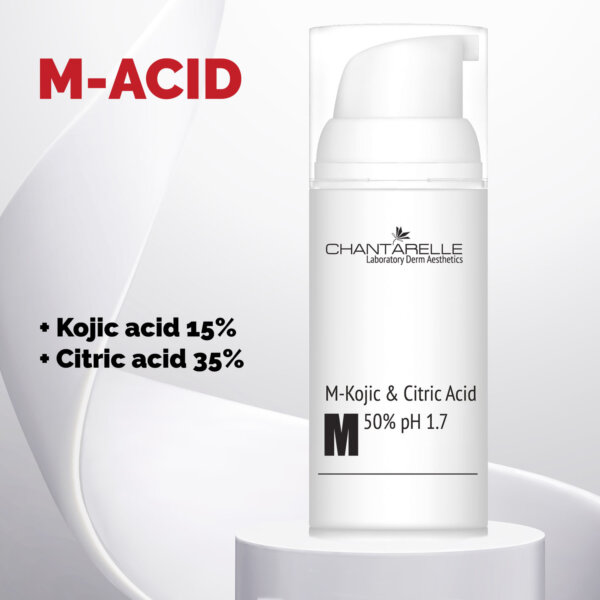
Cosmetic M-acids