Try our novelties and bestsellers!»






Cosmetic treatments, Active ingredients in cosmetics, Aesthetic cosmetology
Mandelic acid – broad spectrum action on skin problems

Sep
Almond acid is an alpha hydroxy acid (AHA) found in nature in bitter almonds. It has a mild exfoliating effect, and its beneficial effects include skin problems such as photo-ageing, uneven pigmentation and acne (Taylor 1999), and anti-wrinkle effects (Wojcik et al 2013). It has also been shown to have antibacterial effects against strains such as Staphylococcus aureus, Bacillus proteus, Escherichia coli and Aerobacter aerogenes (Taylor 1999, Garg 2009, Motamedifar 2014).
Applications of mandelic acid
Clinical studies have shown not only its efficacy, but also its excellent interaction with phototherapies, including laser treatments – both in preparing the skin for phototherapy and in repairing it after laser treatments (Taylor 1999, Rizza et al. 2010). Mandelic acid exhibits a mild exfoliating effect, even though its potency is slightly higher than that of glycolic acid. This is due to the slightly larger size of the molecule, as well as its greater affinity for the skin’s lipid barrier. The penetration of mandelic acid into the skin is gradual, but effective and easily controlled. The action of the acid is not just passive, but active. Studies have shown an effect of mandelic acid on sebum secretion (Wojcik et al 2013). Mandelic acid lightens hyperpigmentation and is an agent used in peels for skin pigmentation disorders (Sarkar et al 2012, 2016).
Mandelic acid in cosmetic treatments
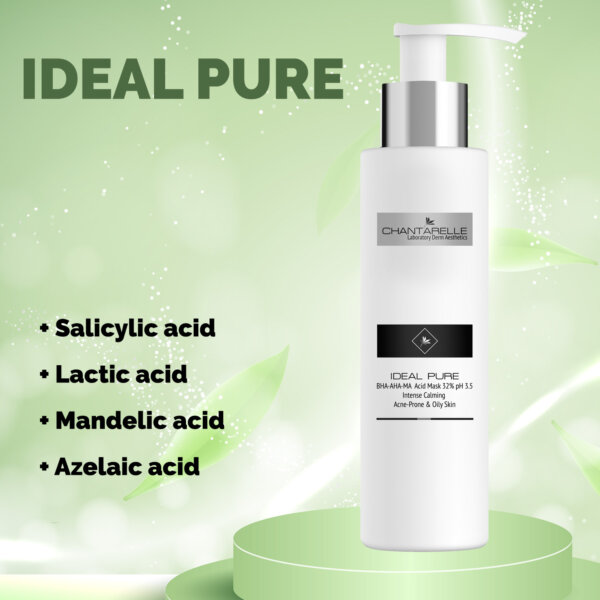
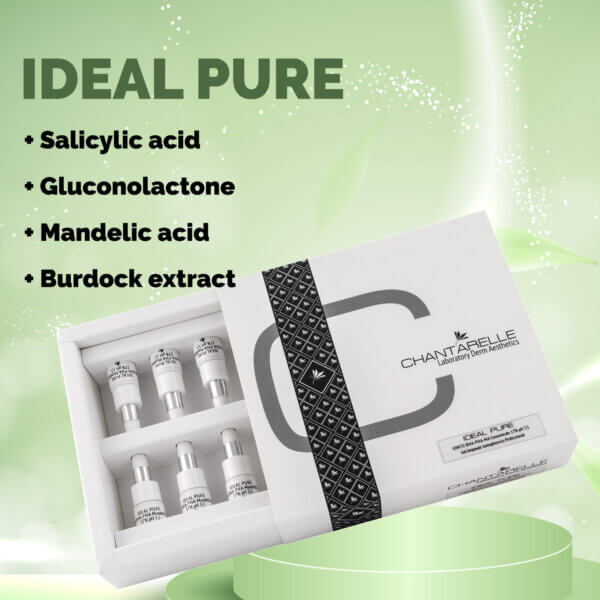
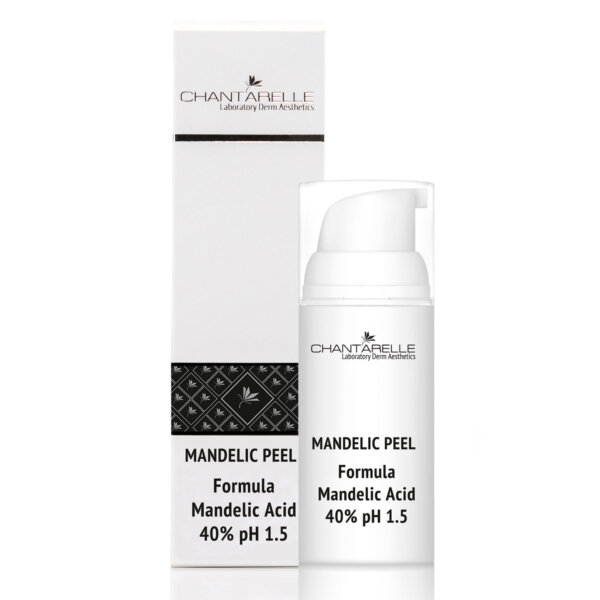
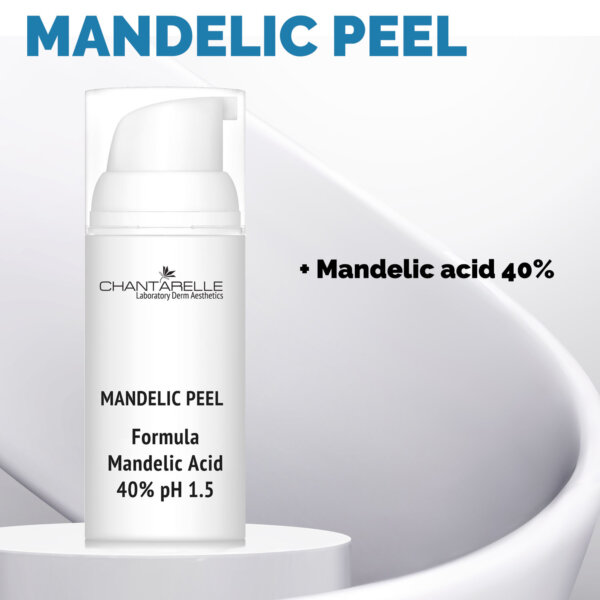
Mandelic acid has a superficial action and affects the outer layers of the epidermis. The mechanism of repair action includes stimulation of fibroblasts for increased synthesis of collagen, elastin and glycosaminoglycans. Mandelic acid is of growing interest as a substance used in cosmetic and dermo aesthetic treatments. In summary – the most important properties of mandelic acid are gentle exfoliation, regulation of sebaceous glands, reduction of excessive keratinisation, levelling of hyperpigmentation and even skin tone, antibacterial and anti-inflammatory properties. In addition, it has revitalising and rejuvenating effects, reduces signs of photo-ageing and skin ageing, moisturises and restores the water-lipid balance. Thus, mandelic acid has a gentle, but very effective and broad spectrum effect. The range of chemical peels Chantarelle includes highly effective treatments with mandelic acid in concentrations of 35% and pH=4.0 and 40% and pH=1.5. The treatments are especially dedicated to mixed skin with disturbed water-lipid balance; dry skin requiring hydration, oily seborrhoeic skin requiring normalisation of sebum secretion; skin with juvenile acne and adult acne, requiring levelling of inflammation and irritation symptoms, and skin with signs of photoageing and ageing with reduced elasticity, uneven grey colour and discolouration.
 Dr Marcin Wasylewski CHANTARELLE brand expert
Literatura:
– Garg VK, Sinha S, Sarkar R. Glycolic Acid Peels Versus Salicylic-Mandelic Acid Peels in Active Acne Vulgaris and Post-Acne Scarring and Hyperpigmentation: A Comparative Study. Dermatologic Surgery. 2009 Jan 1;35(1):59-65. – Motamedifar M, Bazargani A, Namazi MR, Sarai HS. Antimicrobial activity of mandelic acid against methicillin-resistant Staphylococcus aureus: a novel finding with important practical implications. World Appl Sci J. 2014;31:925-9. – Rizza L, Frasca G, Bonina C, Puglia C. Comparative in vivo study of the efficacy and tolerance of exfoliating agents using reflectance spectrophotometric methods. Journal of cosmetic science. 2010 May 1;61(3):247. – Sarkar R, Bansal S, Garg VK. Chemical peels for melasma in dark-skinned patients. J Cutan Aesthet Surg. 2012 Oct;5(4):247-53 – Sarkar R, Garg V, Bansal S, Sethi S, Gupta C. Comparative Evaluation of Efficacy and Tolerability of Glycolic Acid, Salicylic Mandelic Acid, and Phytic Acid Combination Peels in Melasma. Dermatol Surg. 2016;42(3):384-91 – Taylor MB. Summary of mandelic acid for the improvement of skin conditions. Cosmet Dermatol. 1999;12:26-8. – Wojcik A, Kubiak M, Rotsztejn H. Influence of azelaic and mandelic acid peels on sebum secretion in ageing women. Advances in Dermatology and Allergology/Postȩpy Dermatology and Allergology. 2013 Jun;30(3):140.
Mandelic acid in Chantarelle cosmetics
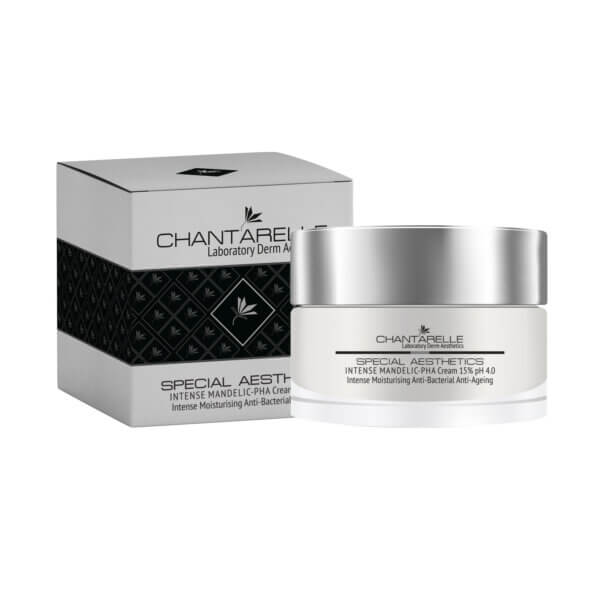
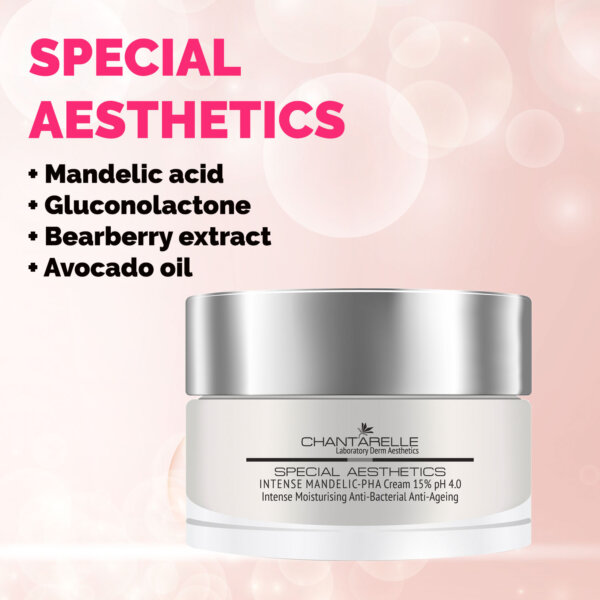
Special Aesthetics
Rejuvenating cream with mandelic acid and gluconolactone 15% pH 4.0
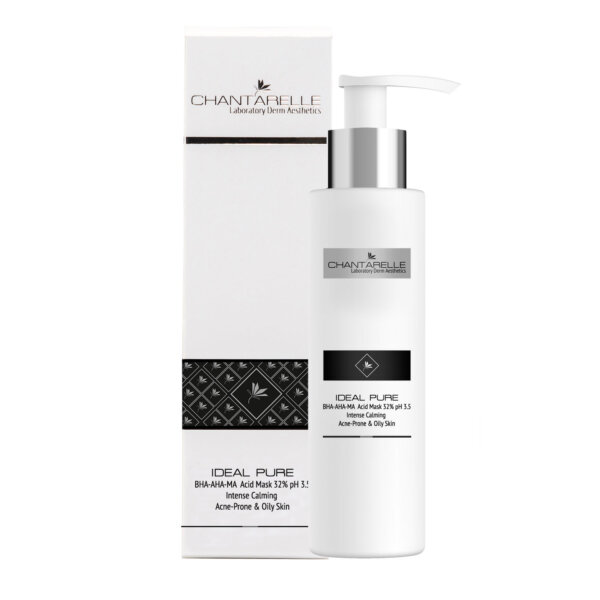
chemical and medical peels
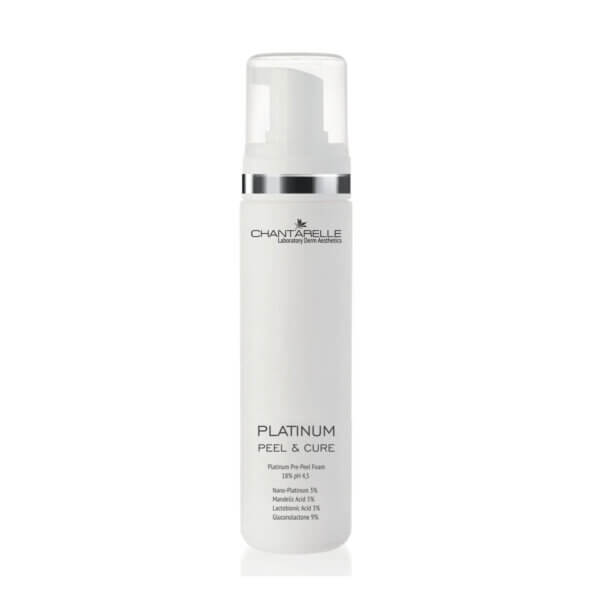
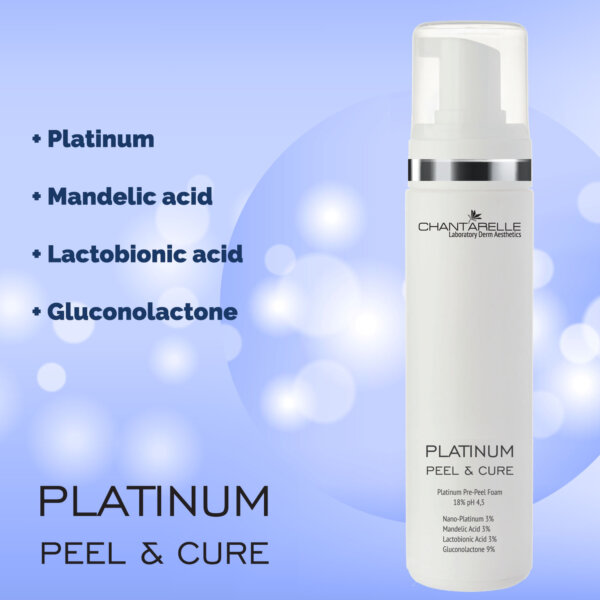
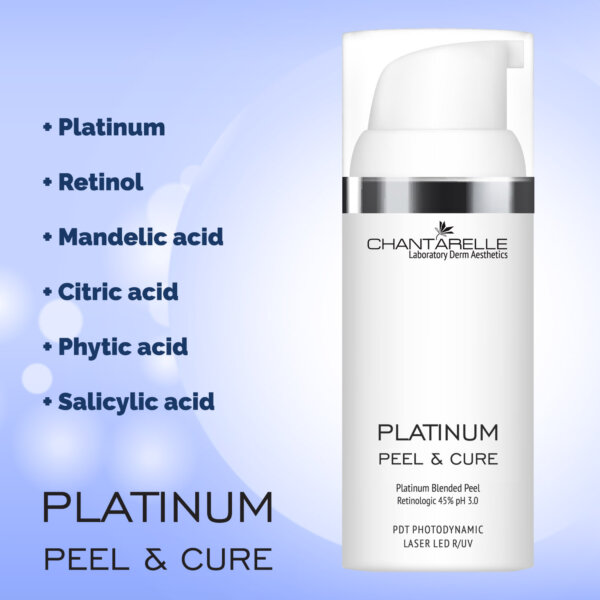
Platinum Peel&Cure
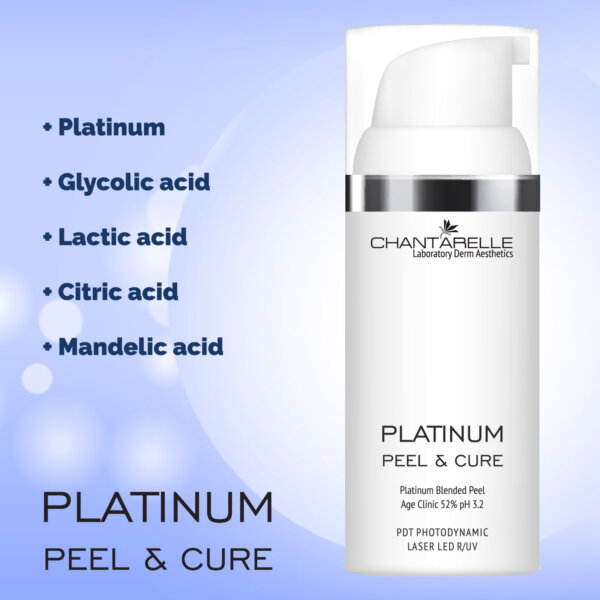
Platinum Peel&Cure
PDT Blend-Peeling Age Clinic 52% pH 3.2 for mature and dry skin
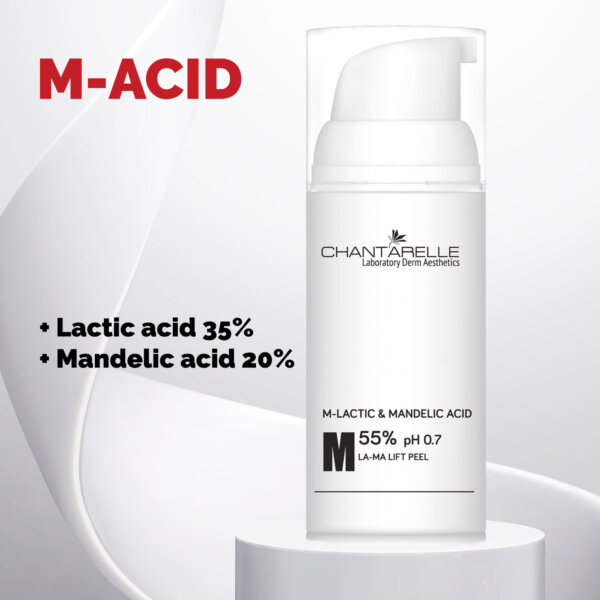
Cosmetic M-acids