Try our novelties and bestsellers!»




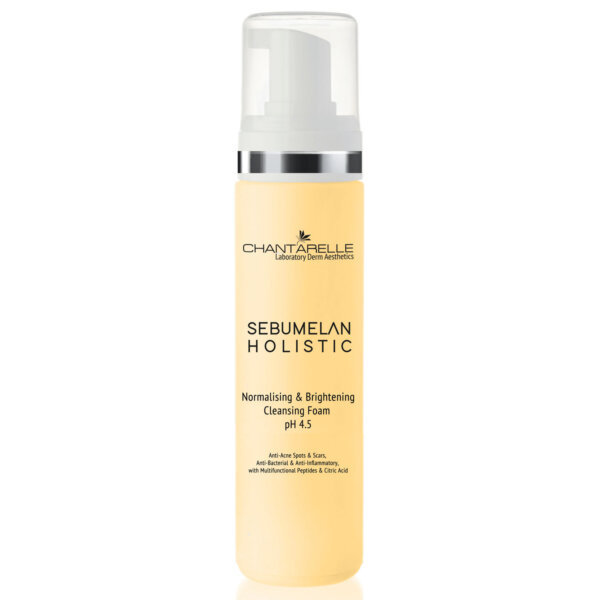 Cleansing foam pH 4.5 for acne blemishes and scars
 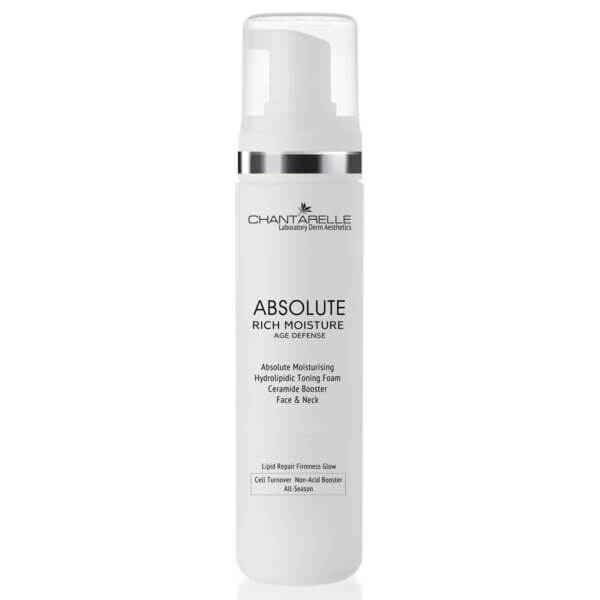 Hydrolipid toning foam for face and neck - absolute hydration


Cosmetic treatments, Aesthetic cosmetology
Mechanisms of transepidermal penetration

Apr
The skin is the largest organ of our body and also the first barrier protecting internal organs from the external environment. At the same time, in order for it to be properly moisturised and cared for, there must be methods of transepidermal penetration of active substances and supporting the formation of a protective layer.
The functions of the skin can be divided into passive and active. Passive functions include the protective functions of the skin against heat, cold, microorganisms, mechanical injury. An important function is protection against the action of chemicals (i.e. ‘mechanical’ protection). Active functions include secretory and regulatory functions, i.e. primarily absorption of active substances, sweat secretion and blood circulation (thermoregulation). Also important is the production of a lipid mantle, as well as protection against the ingress of micro-organisms and as a sensory organ (i.e. “chemical” protection). The skin has the character of a semi-permeable barrier. The transport of substances through the skin is determined by various factors. The first is the state of the skin, which determines transepidermal permeability: this is mainly affected by skin diseases and inflammation. The second factor is the physicochemical nature of the active substance and the shape of the penetrating molecule. Lipophilic substances penetrate and remain in the intercellular cement and, at the same time, are difficult to release from the lipophilic base. Hydrophilic substances, on the other hand, show high permeability with maximally hydrated skin. Amphiphilic substances, i.e. those having partly lipo- and partly hydrophilic properties, penetrate most easily. Small, short molecules penetrate most easily – linear, highly branched cells find it difficult to penetrate the stratum corneum. Another very important factor influencing transepidermal penetration is the substrate of the preparation, which itself usually shows very little penetration, but can increase or limit the penetration of the active substances contained in the preparation.
The stratum corneum
The basic protective barrier of our skin is the stratum corneum – stratum cornerum. Warstwa rogowa w 70% składa się z protein, w 20% z lipidów oraz w 10% z The primary protective barrier of our skin is the stratum corneum – the stratum cornerum. The stratum corneum consists of 70% proteins, 20% lipids and 10% water. The lipids found in the stratum corneum are mainly ceramides (45%), cholesterol (25%) and fatty acids (15%). In the 1970s, theories began to emerge regarding the structure of the stratum corneum and one of these was the so-called ‘bricks and mortar’ theory. According to this theory, the stratum corneum is composed of corneocytes (bricks) and the lipid “mortar” that holds them together, with the “bricks” being hydrophilic areas and the “mortar” being hydrophobic. Neither the corneocytes nor the intercellular cement are homogeneous structures. In the stratum corneum, two layers are distinguished: the stratum compactum and the stratum disjunctum. The corneocytes in the stratum compactum are connected by corneodesmosomes. On passing into thestratum disjunctum the corneodesmosomes are degraded under the action of proteolytic enzymes. The structure of the stratum corneum is therefore crucial for transepidermal permeation processes.
There are two main routes for substances to penetrate the skin – the transepidermal route and the route through the dermal appendages. Among the transepidermal routes, we can distinguish between the transcellular and the intercellular route.
The transcellular pathway is characteristic of small molecules. It was formerly thought to be a rarely used permeation pathway, possible for hydrophilic type molecules with sufficient hydration of the stratum corneum. Intercellular permeation occurs by means of permeation through the lipidic components of the intercellular cement and is mainly used by lipophilic and amphiphilic molecules.
The routes of permeation through the skin appendages are penetration through the hair follicles, through the sebaceous glands and through the sweat glands. In general, this type of permeation involves the sebaceous-hair follicles and deep epidermal depressions in the dermis, allowing the active substance molecule to reach as far as the reticular layer of the skin. Recent studies have shown that this is a more commonly used route than previously thought. However, it is obstructed by sebaceous glands, which pick up lipophilic substances and sebum. Penetration through sweat ducts is theoretically possible, but is a very rare route.
Mechanisms of transepidermal permeation – passive diffusion phenomenon
Transepidermal absorption is a phenomenonof passive diffusion, which occurs at every level of the dermis and epidermis, with molecules initially passing through the lipid dermal barrier before diffusing through the hydrated layers of the epidermis towards the hydrophilic dermis. Meanwhile, the molecules pass the capillaries, through which they are partially absorbed, then can be further absorbed and have a systemic effect. The rate of penetration through the skin is influenced primarily by the concentration of the substance, the higher it is, the faster the diffusion of the particle will be. The higher the affinity of the substance to the stratum corneum, the faster the transcellular transport will be. Transepidermal diffusion is weaker if the substance diffusing through the stratum corneum is complex (large size and high molecular weight). The structure of the stratum corneum also makes it 1,000 times more difficult to penetrate than deeper layers.
Electrophonoporation, or how the skin behaves during needle-free mesotherapy
This is a physical phenomenon, used inneedle-free mesotherapy, occurring in cell membranes and the stratum corneum, whereby ion channels open up under the influence of electrical impulses and ultrasound. The transport of substances takes place via transcellular and intercellular routes, which produces the best results in terms of absorption of substances deep into the skin. Electrophonoporation improves diffusion and multiplies the transepidermal transport of active substances in the form of hydrophilic and lipophilic molecules. Electrophonoporation occurs under conditions of interaction with two types of current, which generates an electric field resulting in a temporary opening of the cell membrane, allowing the penetration of substances. The size and shape of the electrical pulse, as well as the pulsation, are important factors. The phenomenon of electrophonoporation occurs in cell membranes and in the stratum corneum, thus opening up new entry pathways for active ingredients under the influence of specific electrical impulses. Short-lived, reversible changes occur in the cell membrane under the influence of short-lived electric fields, involving the opening of protein channels. This is a safe phenomenon for cell membranes. The skin cells are also stimulated to absorb the dissolved active substances. Molecules of the transported substance settle on the microfoldings of the cell membrane, penetrating slowly into the cytoplasm of the cell.
Through this process, cosmetic and therapeutic preparations act by releasing slowly after the treatment for up to 48h.
The action of electrophonoporation at the cellular level causes a state of biological stress, altering the regenerative capacity of the cell. With the phenomenon of electrophonoporation at the lipid layer level, temporary pores in the cell membrane are created and so-called protein channels are opened. The electroporation phenomenon is achieved by a magnetic wave pulse and is reversible. After treatment, the cell returns to its normal state regaining its integrity and cohesiveness.
Electroporation action at the stratum corneum level
As we mentioned at the beginning of this article, the stratum corneum is made up of corneocytes located in a lipid matrix consisting of ceramides, cholesterol and fatty acids. The application of voltage pulses increases skin permeability, improves diffusion and multiplies the transepidermal transport of active substances. These take the form of hydrophilic and electrically charged molecules. The effectiveness of maintaining water content in the stratum corneum is also increased.