Try our novelties and bestsellers!»





Active ingredients in cosmetics, Aesthetic cosmetology
Properties of phytic acid
Jun
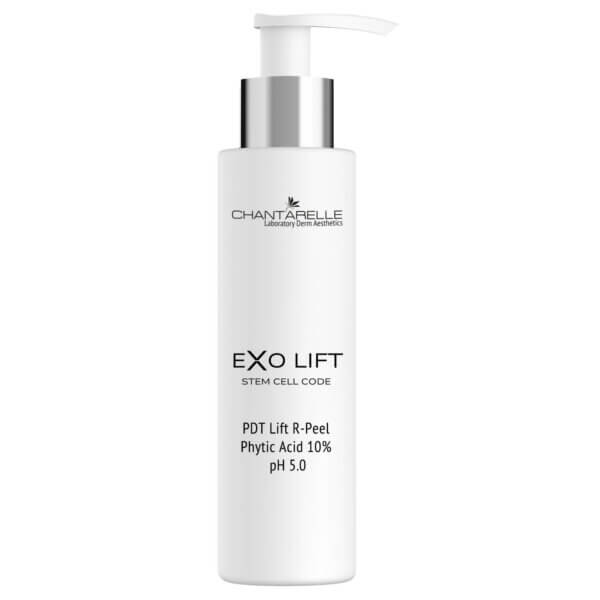
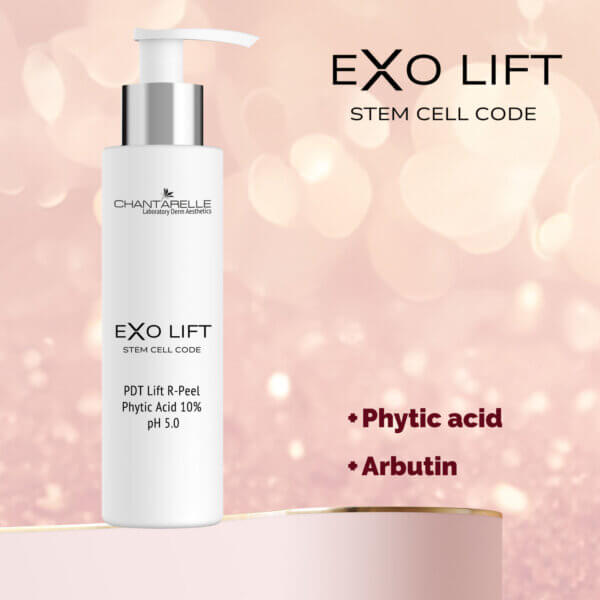
Peptide Exo Lift Stem Cell Code with Phytic Acid is a lifting treatment dedicated to all types of flabby, inflexible skin, including sensitive, mature skin with wrinkles. It is worth taking a closer look at the properties of phytic acid, which was used in the photodynamic peel of this line.
Phytic acid (inositol hexaphosphate) occurs naturally in most seeds and legumes. It is a storage form of phosphate groups. It is mainly extracted from rice seeds. It is an antioxidant (1), binds metal ions and has the ability to be absorbed through the skin (2). Phytic acid is also a mild exfoliant with a moisturising effect. It shows the ability to lighten hyperpigmentation. Recent publications show the potential of phytic acid as a peeling agent for skin pigmentation disorders (3-4). Importantly, treatments with phytic acid caused less discomfort than treatments with glycolic acid. In the keratolytic action of phytic acid, metal ion binding makes an important contribution. Among the advantages of phytic acid is that it is self-neutralising (does not require a neutraliser). Phytic acid is used in the EXO LIFT Stem Cell Code line at a concentration of 10% and at pH=5.0. This peel has a lifting and rejuvenating effect, stimulating the skin to increase collagen and elastin production, smoothing wrinkles and improving facial contours. The combination of the presence of phytic acid, biochromophore and light results in a significant increase in the effectiveness of the treatment. The peel is applied using the photodynamic method with 650nm PDT red light by LLLT / LED laser.
 Dr Marcin Wasylewski Chantarelle brand expert
Literatura:
1 Silva EO, Bracarense AP. Phytic Acid: From Antinutritional to Multiple Protection Factor of Organic Systems. J Food Sci. 2016;81(6):1357-62 2 Grases F, Isern B, Perelló J, Sanchis P, Prieto RM. Absorption of myo-inositol hexakisphosphate (InsP6) through the skin: study of the matrix effects. Mechanism of phytate topical absorption. Front Biosci. 2005 Jan 1;10:799-802 3 Sarkar R, Bansal S, Garg VK. Chemical peels for melasma in dark-skinned patients. J Cutan Aesthet Surg. 2012 Oct;5(4):247-53 4 Sarkar R, Garg V, Bansal S, Sethi S, Gupta C. Comparative Evaluation of Efficacy and Tolerability of Glycolic Acid, Salicylic Mandelic Acid, and Phytic Acid Combination Peels in Melasma. Dermatol Surg. 2016;42(3):384-91 5 Faghihi G, Taheri A, Shahmoradi Z, Nilforoushzadeh MA. Solution of Azelaic Acid (20%), Resorcinol (10%) and Phytic Acid (6%) Versus Glycolic Acid (50%) Peeling Agent in the Treatment of Female Patients with Facial Melasma. Adv Biomed Res. 2017;6:9
Phytic acid in Chantarelle cosmetics