Try our novelties and bestsellers!»



-
×
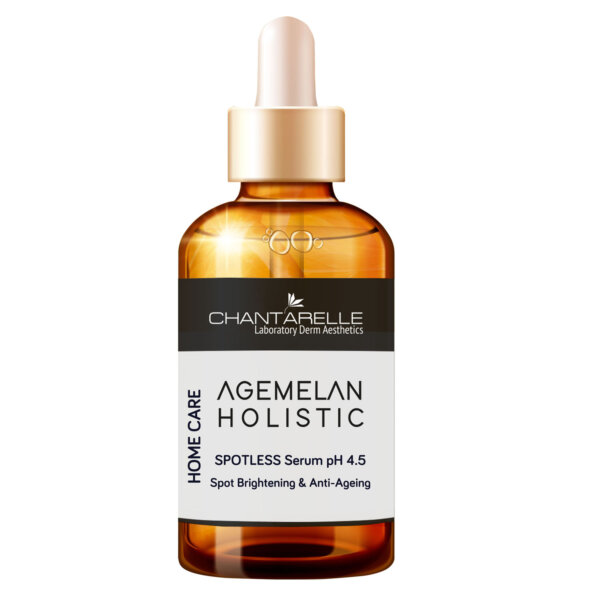 Serum pH 4.5 to rejuvenate and lighten blemishes
1 × 55,00 £
Serum pH 4.5 to rejuvenate and lighten blemishes
1 × 55,00 £



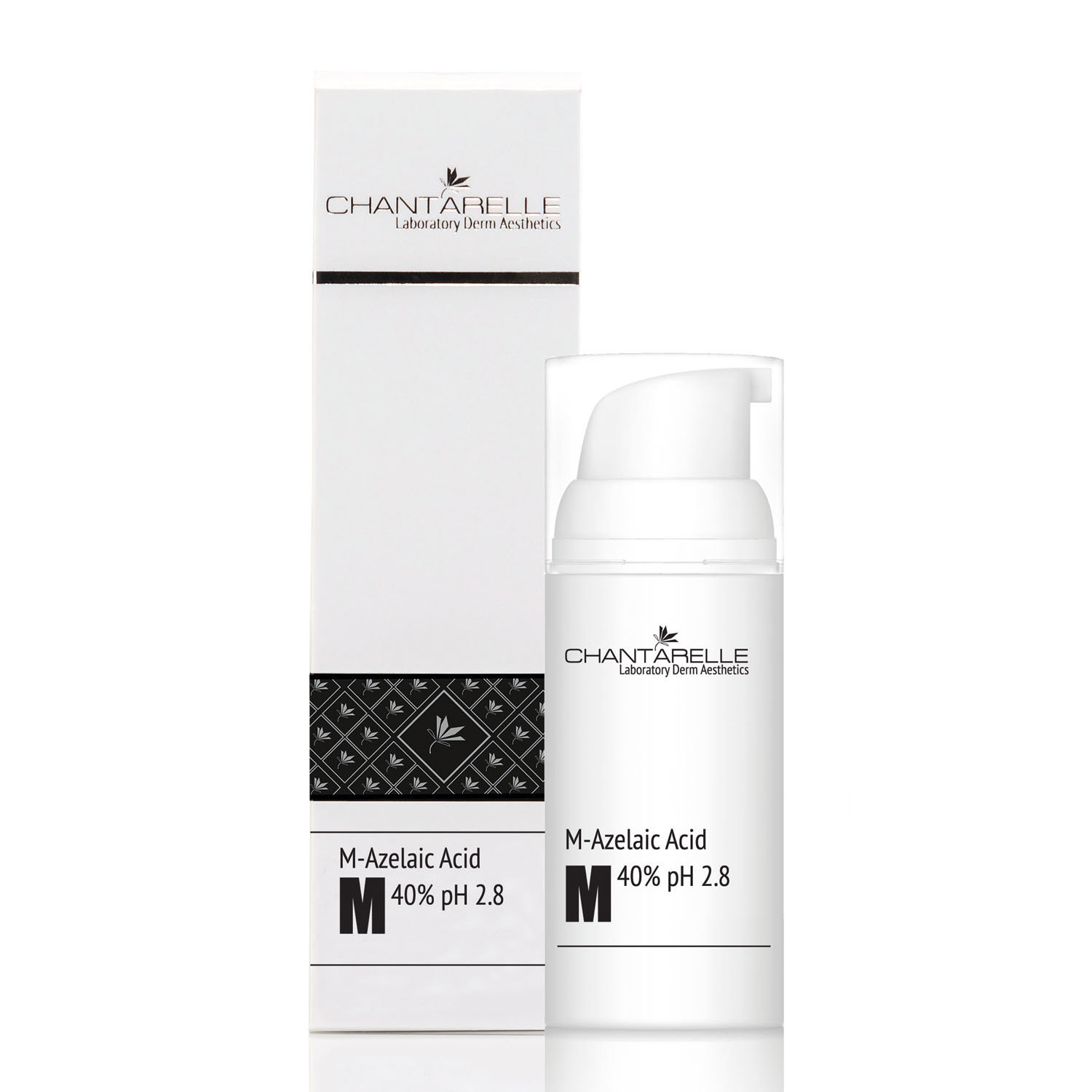
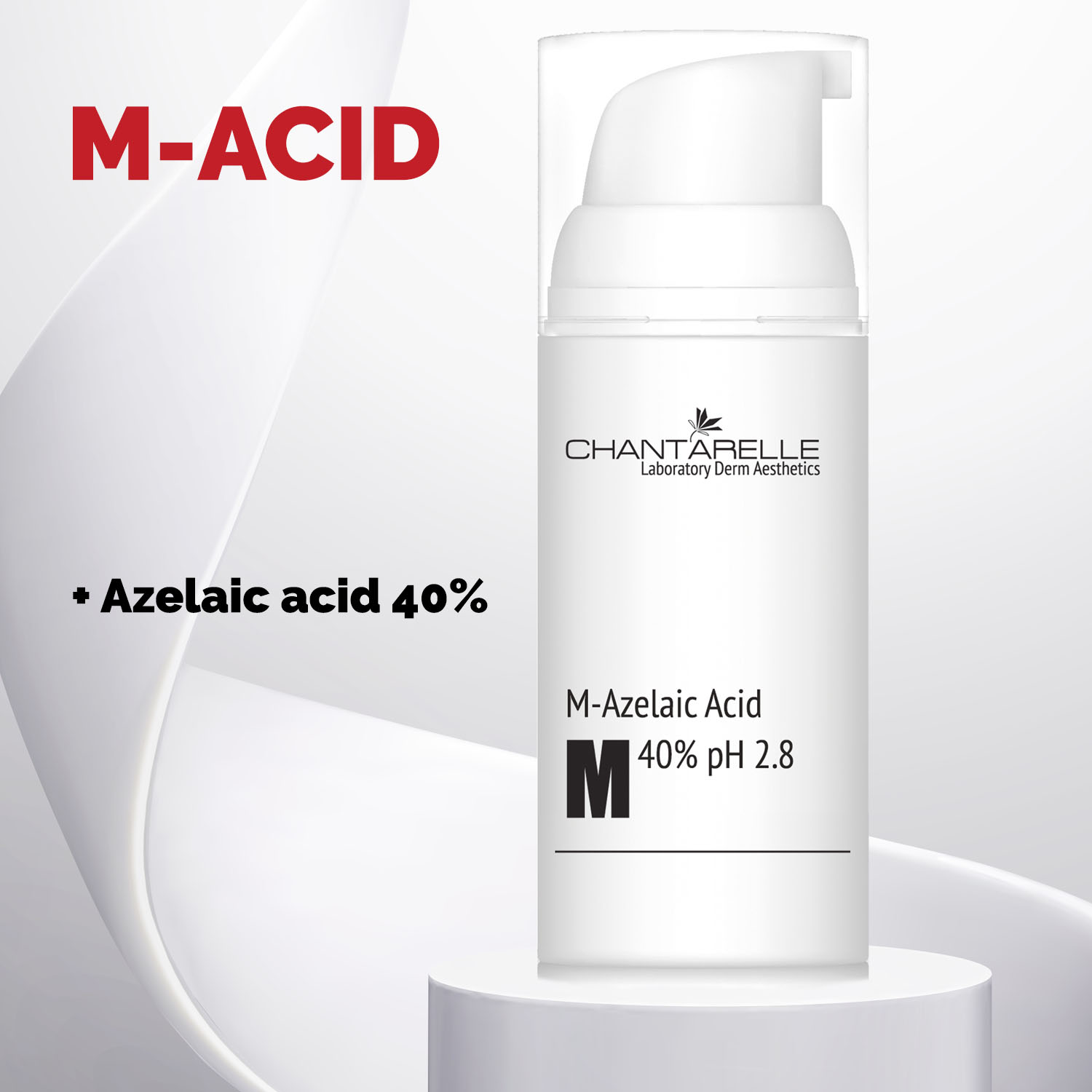
Azelaic acid 40% pH 2.8 (chemical peeling)
Cosmetic M-acids
M-Azelaic Acid 40% pH 2.8
Azelaic acid 40% pH 2.8 for exfoliation treatment. Has an antioxidant effect and lightens hyperpigmentation. Perform the treatment – azelaic acid for the face and décolleté.
Pojemność:
50mlAzelaic acid 40% pH 2.8 is a preparation for exfoliation treatment. It inhibits sebum secretion, unblocks the outlets of sebaceous glands, regulates the process of keratinisation, has an antioxidant, bacteriostatic and anti-inflammatory effect and lightens discolouration. Perform an exfoliation – azelaic acid treatment on the face and décolleté, followed by a selection of post-treatment preparations from the Special Aesthetics line.
Azelaic acid chemical peeling can be used all year round because it does not exhibit phototoxic effects.
Azelaic acid – indications:
- symptoms of inflammatory and non-inflammatory rosacea
- skin prone to erythema, sensitive, shallowly vascularised
- symptoms of acne vulgaris
- atopic skin
- atopic skin, susceptible to irritation, hyperpigmented
- symptoms of psoriasis
- pustular psoriasis
- folliculitis
Azelaic acid – effects:
- smoothing of the skin and evening out of its colour
- reduction of hyperpigmentation after steroidal acne, drug-induced acne, juvenile acne, cosmetic acne and herpes
- reduction of scars and scarring
- reduction of acne scars
- reduction of sebum secretion by sebaceous glands
- regeneration and rejuvenation of the skin
- elimination of erythema and papules

What do we know about azelaic acid?
✓ Azelaic acid is a nine-carbon dicarboxylic acid. It is mostly produced by the peroxidation of linoleic and linolenic acids. This acid has a broad spectrum of action, including: exfoliating, whitening, anti-inflammatory, antioxidant and antimicrobial properties.
✓ The exfoliating action is due to the acidic nature of this substance. The whitening properties are related to its ability to inhibit a number of enzymes important in the formation of skin pigments. Azelaic acid reduces skin hyperpigmentation (mainly osteomas and post-inflammatory hyperpigmentation) and that resulting from rosacea lesions. The popularity of brightening treatments with azelaic acid, both alone and in combination therapy, is linked to these properties.
✓ It does not cause phototoxic or photoallergic reactions, so it can also be used in spring and summer.
✓ In addition, it has an anti-inflammatory effect – a significant reduction in inflammation (papules and pustules) as well as redness and erythema is achieved. Other properties of azelaic acid include an anti-epidermal action and the ability to normalise the keratinisation process. It is therefore recommended in applications for irritated skin with erythema, also for oily skin.
✓ Azelaic acid also has an antibacterial effect (even with long-term use) and is therefore effective in the treatment of acne. Azelaic acid is one of the few therapeutic substances that simultaneously counteracts both juvenile acne and rosacea.
| 01. Nazwa angielska | M-Azelaic Acid 40% pH 2.8 |
|---|---|
| 02. Pojemność | 50ml |
| 03. Linia | Chemical peels |
| 05. Kosmetyka profesjonalna | acids |
| 07. Wiek i płeć | age 20-30, age 30-40, age 40-50, age 50+, male |
| 08. Typ skóry | acne-prone skin, sensitive skin, skin with rosacea, vascular skin |
| 09. Problem skóry | discolourations, capillaries, erythema, acne vulgaris, excess sebum |
| 10. Efekt działania | rejuvenation, regeneration, reduction of discolouration, antibacterial protection |
| 11. Składniki aktywne |
Active ingredients
Azelaic acid 40%
DESCRIPTION:
Azelaic acid (AzA) – derived from cereal grains, has an antimicrobial effect even with long term use. Reduces symptoms of inflammatory lesions such as papules, pustules and redness and erythema. Acts as a ‘scavenger’ of free radicals that activate inflammatory processes. It lightens discolouration and scars and has an antibacterial effect. It does not cause phototoxic or photoallergic reactions, so it can also be used in summer.
Directions for use
- In accordance with the treatment procedure. Can be used all year round without risk of discolouration.
- Application Azelaic M-acid 40% up to 5 min.
- Treatment time: up to 40 min
- Treatment frequency: 4-6 treatments in a series every 7 days or as a stand-alone treatment.
- For this product, we recommend: M-Neutraliser for M-mono and mixed acids – a common neutraliser for M-mono and mixed acids.
Line
M-acids are chemical peels, both mono-acid and mixed-acid. These are effective aesthetic treatments with exfoliating properties that provide visible skin renewal and rejuvenation. Chantarelle experts have developed a wide range of M-acids that, in addition to their primary function of exfoliation, also allow for effective treatments for specific skin conditions, even sensitive and problematic skin.
Related products
Cosmetic M-acids
Cosmetic M-acids
Cosmetic M-acids
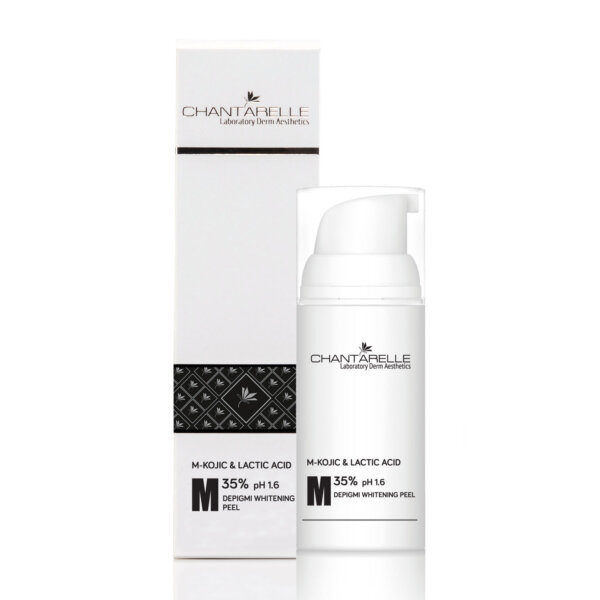
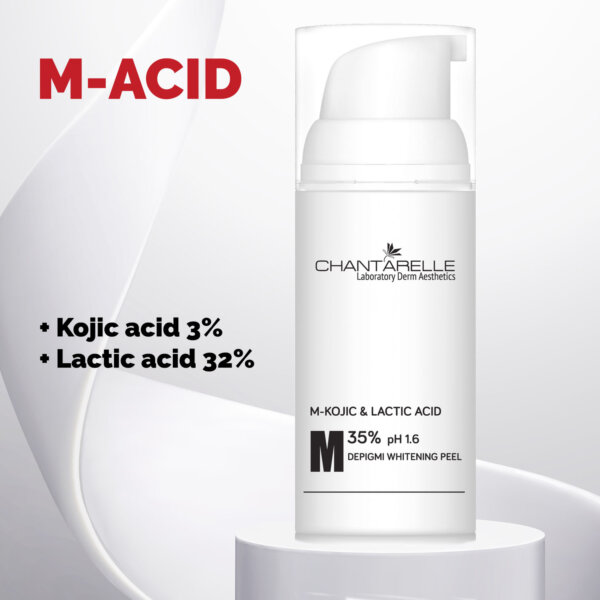
Cosmetic M-acids
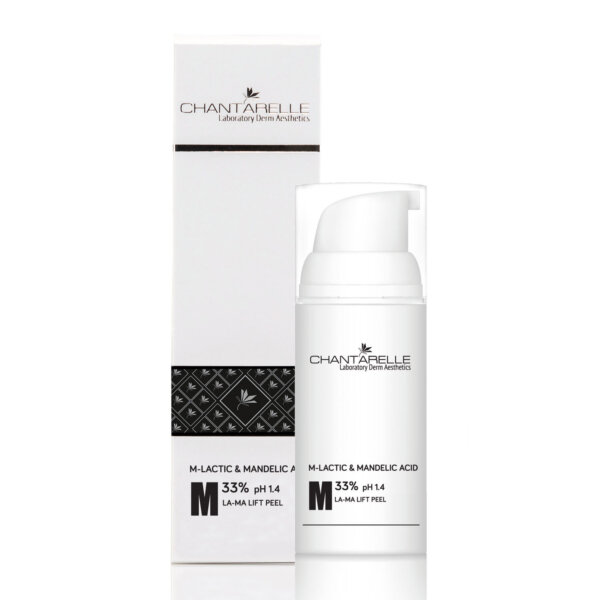
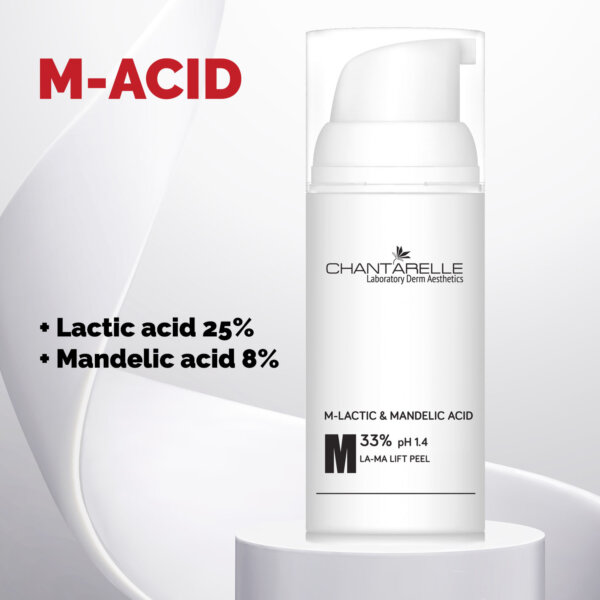
Cosmetic M-acids
New
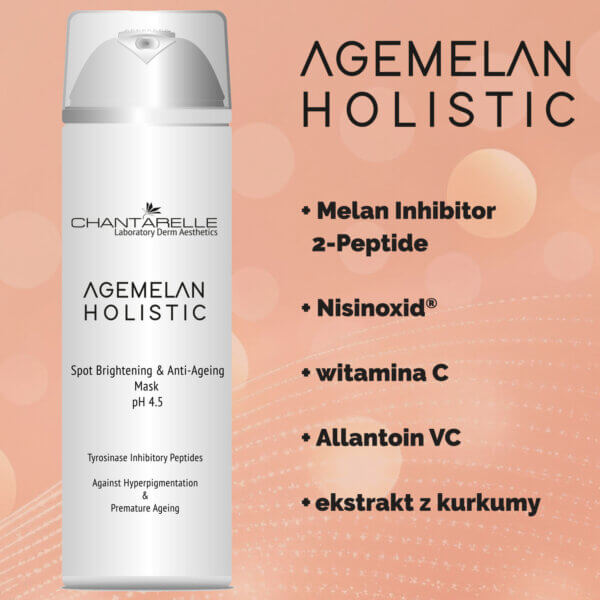
Agemelan Holistic
pH 4.5 brightening and rejuvenating mask for hyperpigmentation
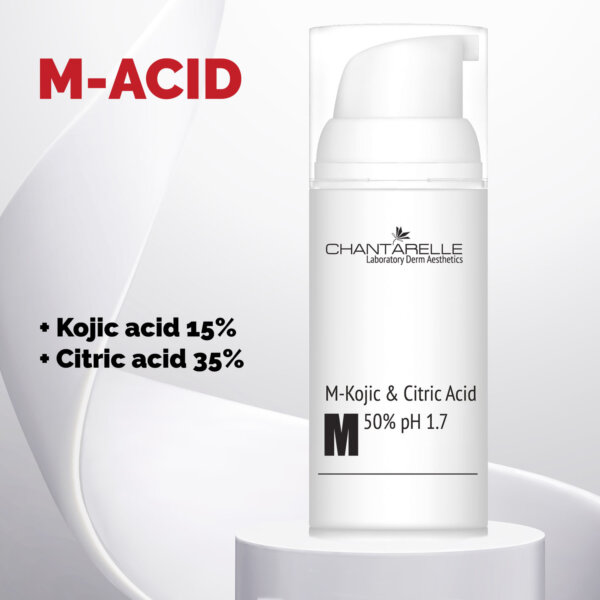
Cosmetic M-acids
Cosmetic M-acids