Try our novelties and bestsellers!»


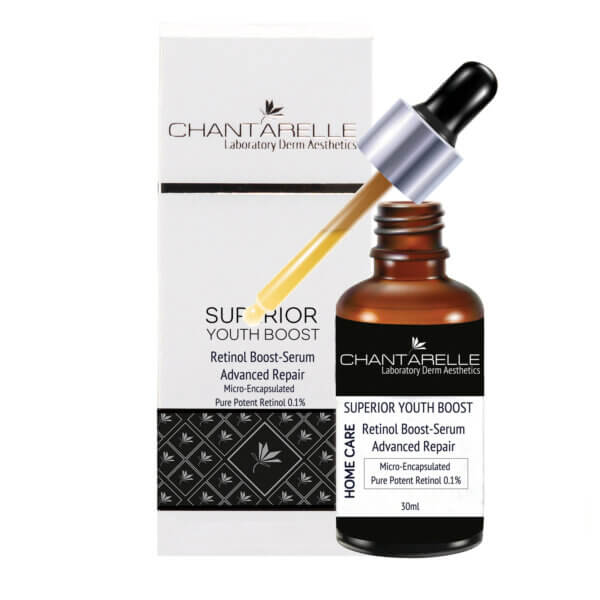 Boost Serum with microencapsulated pure retinol 0.1%


Cosmetic treatments, Active ingredients in cosmetics
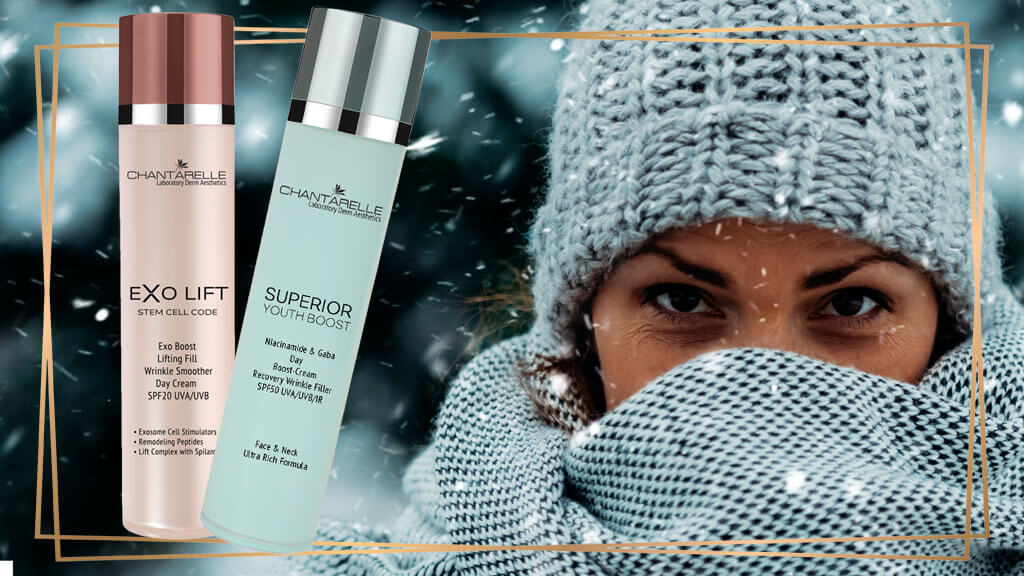
Chantarelle’s top 5 treatments during winter
Jan
We will soon be saying goodbye to the winter weather. In a short summary, we present the cosmetic procedures that are worth performing at this time of year. In our article, you will learn why it is worthwhile to carry them out just then.
The structure of the skin inevitably changes with age. At the same time, such an aesthetic defect as a wrinkle, discolouration or scar – does not pose a major problem for the skin, as it does not prevent it from performing its basic functions. In order to disrupt the skin’s equilibrium, a stimulus or intense stimulation is needed to induce a long-term change. Winter is the period when skin stimulation is the basis of cosmetic treatments. The lack of sunshine and ‘calmer’ melagenesis make stimulation methods in cosmetic surgeries more physiological.
Intensive cosmetic methods fall into two groups:
Negative skin stimulation methods
They trigger skin renewal processes by destroying specific structures or inhibiting specific processes that occur naturally in the skin. These include peels based on keratolytics, hydroxyl acids, proteolytic enzymes, senolytically active ingredients and depigmenting agents that inhibit melanogenesis, and microneedling.
Methods of positive skin stimulation
They activate specific processes in the skin without destroying or suppressing normal processes. These include treatments using retinoids, biomimetic peptides or selected plant extracts and LLLT therapy. Often both methods of positive and negative stimulation are combined in a single treatment. For example, the problem of acne scars together with the correction of deep wrinkles and furrows requires such an action. On the one hand, damaged skin structures need to be destroyed, but on the other, the formation of new, healthy tissue needs to be stimulated.
5 intensive winter treatments
Chemical peels
Chemical peels help to rejuvenate the skin by making room for new, healthy cells. Indications for peeling can be divided into three main groups:
- Changes in skin texture associated with disruption of the keratinisation process – superficial wrinkles, roughness, roughness.
- Changes in skin colour associated with a disorder of pigment formation – dyschromia. These include discolouration and uneven skin tone.
- Stimulation of the dermis and intense effects on the epidermis – wrinkles, scars, eyelid drooping.
PDT photodynamic method
Another option for intensive skin care treatments is the PDT method combined with the use of active ingredients in high concentrations. In this case, the LLLT biostimulative laser comes to the rescue. In order to successfully apply PDT therapy, three things are needed: tissue oxygen, a photosensitiser and a laser beam. Depending on which part of the body is being treated, the hands or the face, a photosensitising serum is applied to the skin. The treatment area is then exposed to light. The light causes the active ingredients to react, which increases the effectiveness of the photodynamic therapy.
Microneedling
The treatment consists of performing controlled micro-punctures while introducing the appropriate composition of active ingredients – selected according to the skin’s needs. The treatment aims to regenerate collagen and improve skin tone and elasticity. Studies have shown that the induction of collagen synthesis through multiple micropunctures is a safe and effective treatment, especially for age-related skin changes and scars. The aim of this dermotherapy is to stimulate collagen production by triggering the synthesis and release of a cascade of signalling molecules and active substances that penetrate deeper into the skin. Microneedling aims to reduce the appearance of acne, scars, hyperpigmentation, pores and wrinkles.
Depigmentation
Correcting hyperpigmentation is a complex and comprehensive process, requiring a multi-step approach. In summer, when the skin becomes tanned, depigmentation treatments are not recommended. This is why the winter period is the ideal time to regulate melanogenesis. The Agemelan Holistic line is designed for use in all seasons, and its active formula is based on peptides and senolytic ingredients. Such dermocuration can be combined with chemical peels (azelaic acid, kojic acid, citric acid, ferulic acid, glycolic acid, lactic acid), as well as with low-power LLLT laser therapy and a suitable depigmentation serum.
Hair growth stimulation with LLLT laser
The cold causes vasoconstriction, which disrupts microcirculation and interferes with the normal blood supply to the hair follicles. This can lead to disruption of normal hair growth. LLLT laser therapy involves stimulating the activity of the hair follicle cells. It improves blood circulation and metabolism, which accelerates hair growth. Studies show that LLLT therapy is particularly effective in people suffering from androgenetic alopecia, but it also helps to normalise immunity in autoimmune forms of alopecia such as alopecia areata etc. In addition, LLLT dermotherapy inhibits the activity of the bacterial flora, disturbed during scalp inflammation.
dr Khrystyna Shekhovtsova.
Chantarelle expert, dermatologist and aesthetic physician