Try our novelties and bestsellers!»



-
×
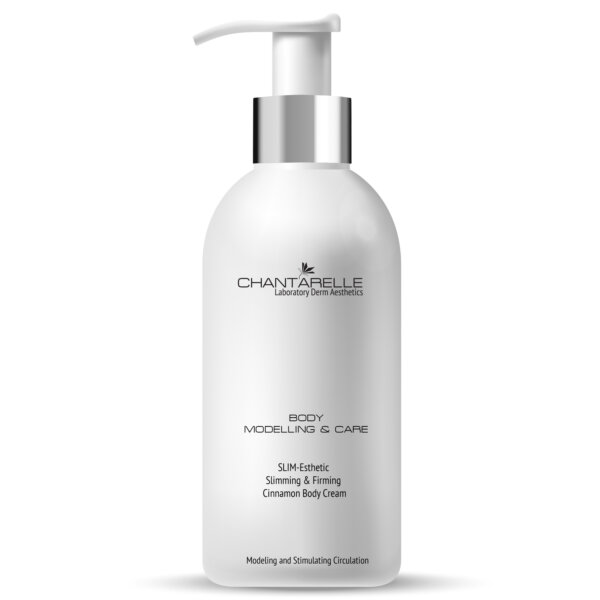 Slimming and firming cinnamon body cream, shaping and stimulating circulation
1 × 46,00 £
Slimming and firming cinnamon body cream, shaping and stimulating circulation
1 × 46,00 £ -
×
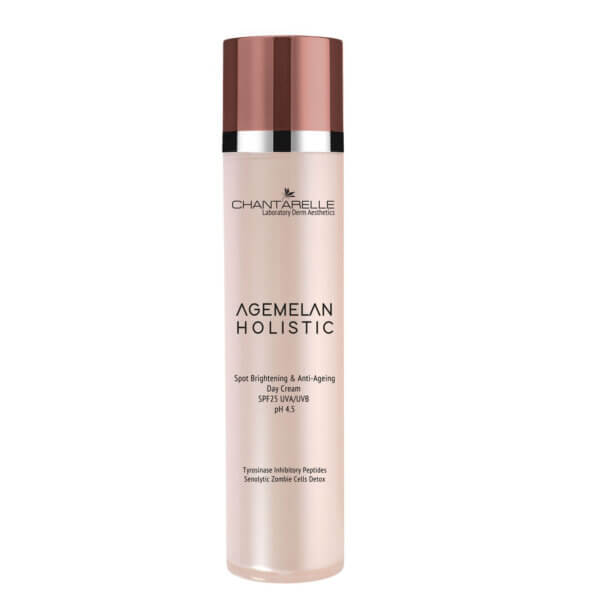 Day cream SPF25 pH 4.5 to lighten and rejuvenate blemishes
1 × 55,00 £
Day cream SPF25 pH 4.5 to lighten and rejuvenate blemishes
1 × 55,00 £ -
×
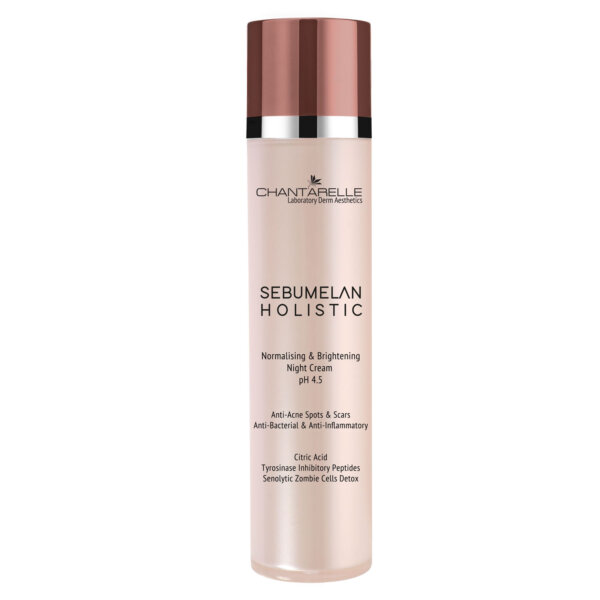 Night cream pH 4.5 for acne blemishes and scars
1 × 55,00 £
Night cream pH 4.5 for acne blemishes and scars
1 × 55,00 £ -
×
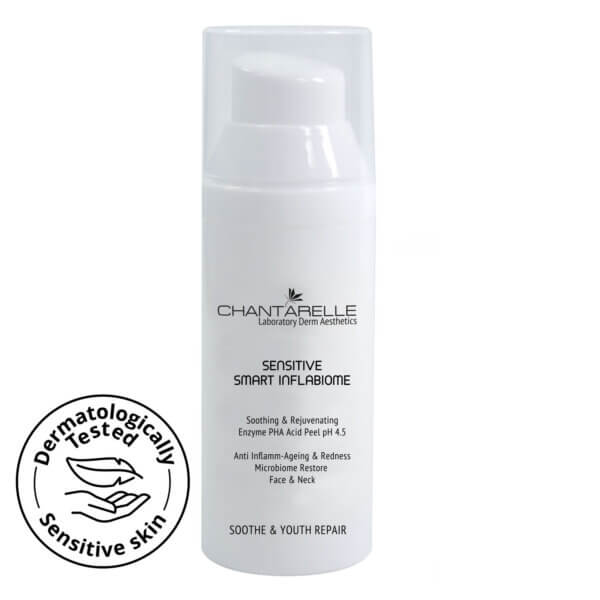 Enzymatic peeling for sensitive skin with gluconolactone, rejuvenating and soothing pH 4.5
1 × 32,00 £
Enzymatic peeling for sensitive skin with gluconolactone, rejuvenating and soothing pH 4.5
1 × 32,00 £



Cosmetic treatments, Aesthetic cosmetology, Tips
Chemical and medical peeling – indications and effects
29
Nov
Nov
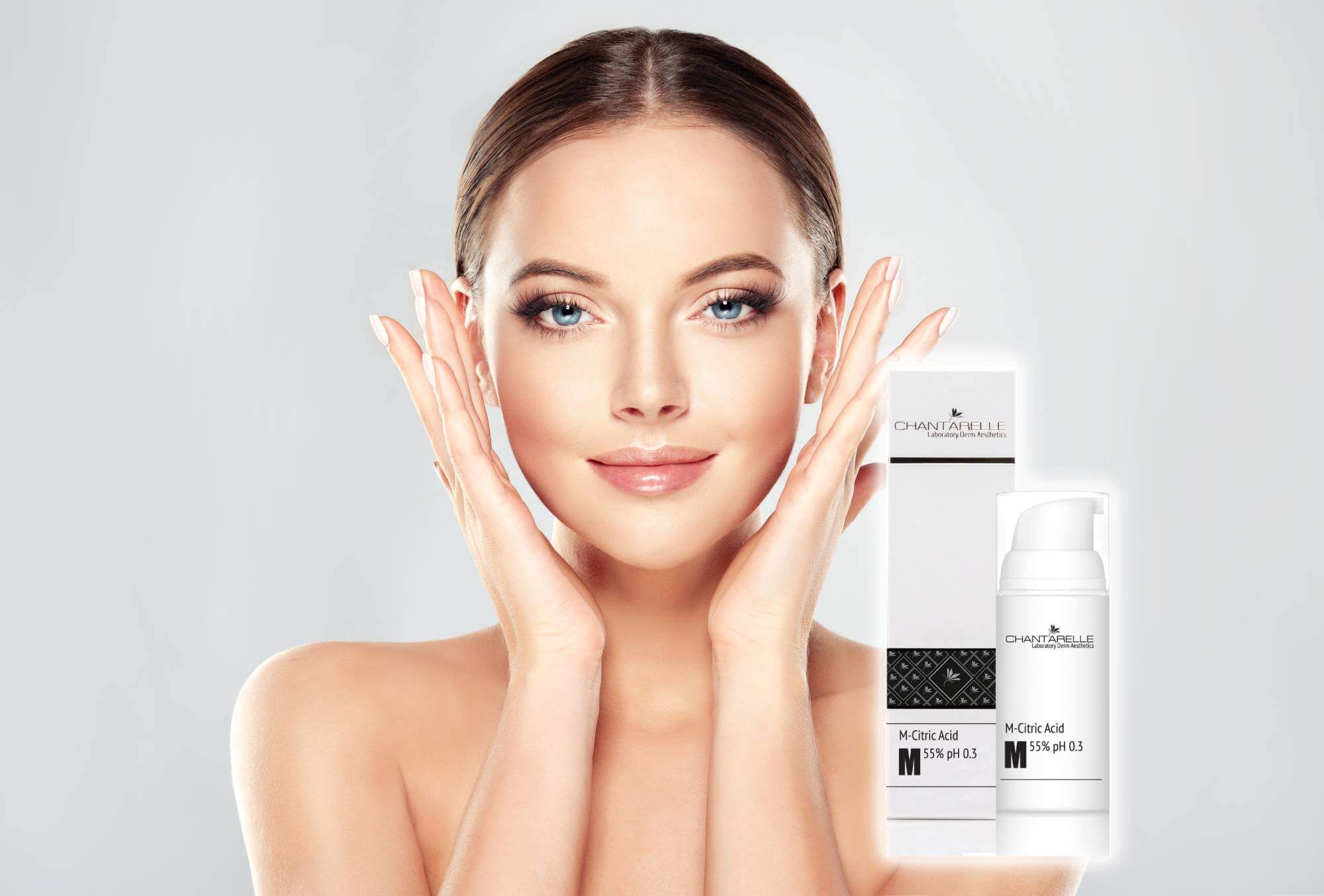
Chemical peeling is a very popular type of peel used in cosmetic surgeries and aesthetic medicine. How do they differ? The concentration of the preparations and the mode of action. Opinions are divided regarding efficacy. Some patients prefer the very aggressive action of medical peels, while others find such drastic interference unacceptable. Sometimes practical considerations are decisive. Not everyone can afford to hide at home for a week.
After medical peels, the skin comes off in patches all over the face and this process cannot be avoided. With in-office chemical peels, the aim is to stimulate the skin over the long term to restore collagen fibres, improve elasticity and exfoliate over time.
Let us recall what peeling is (peel – to exfoliate). It involves the forced and controlled exfoliation of the top layers of skin to remove the dead layer of keratinised epidermis. This is because dead cells prevent the skin from functioning normally and impede the penetration of cosmetic ingredients.
Keratinised epidermis exfoliation = exfoliation
What chemical peels for what skin problem?
Chemical peel preparations contain acids that loosen creatine-filled dead skin cells (known as the process of keratolysis). Depending on the type of acid used and its concentration, we distinguish:
- superficial peels (used for the following problems: lentigines, hyperkeratosis, superficial spots and wrinkles, non-inflammatory lesions, acne vulgaris)
- medium-depth peels (problems: wrinkles, hyperpigmentation, signs of photoageing, lentigines, shallow acne scars)
- deep peels (for deep wrinkles and scars of all types).
Chemical peeling with mandelic acid:
What acids are used in chemical peels:
We use superficial exfoliation in particular for such problems:
- ageing and photoageing of the skin
- pigmentation spots, uneven skin tone, hyperpigmentation
- skin with texture and colour irregularities
- deep scars, deep wrinkles and furrows, stretch marks, ageing
- uneven texture and roughness of the epidermis
Chemical peel treatments include:
- alpha-hydro acids (AHA), which dissolve in water, i.e.: glycolic acid, lactic acid, malic acid, citric acid, tartaric acid, among others;
- beta-hydro acids (BHA), which are fat-soluble and fat-soluble, only salicylic acid is used in cosmetics;
- poly-hydroxy acids (PHA), which are water-soluble and gentler on the skin than AHA and BHA acids: lactobionic acid, gluconolactone,
- others: azealinic acid, mandelic acid, phytic acid, szikimic acid, kojic acid
Chantarelle Peelings
New
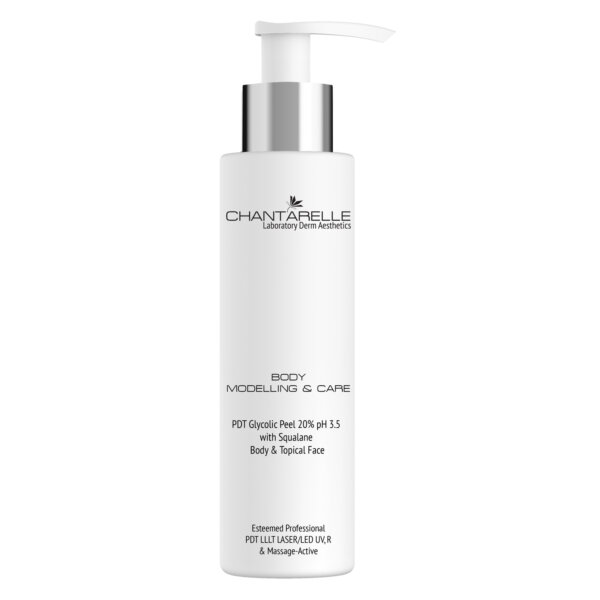
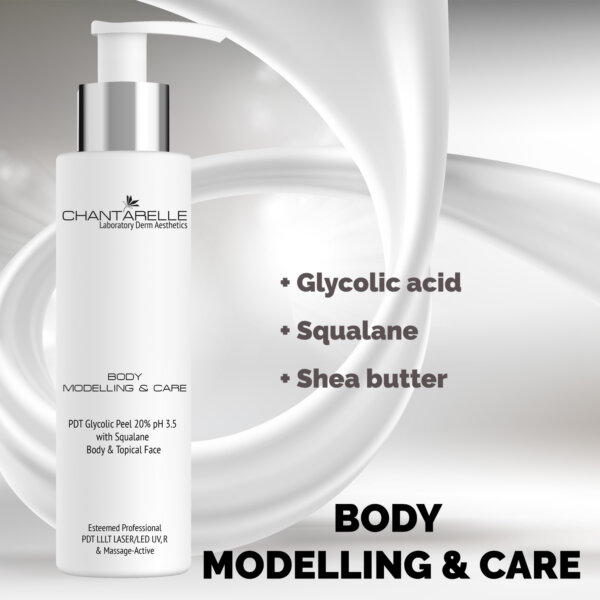
Body Modelling & Care
PDT glycolic peeling 20% pH 3.5 with squalane, for body and topical face
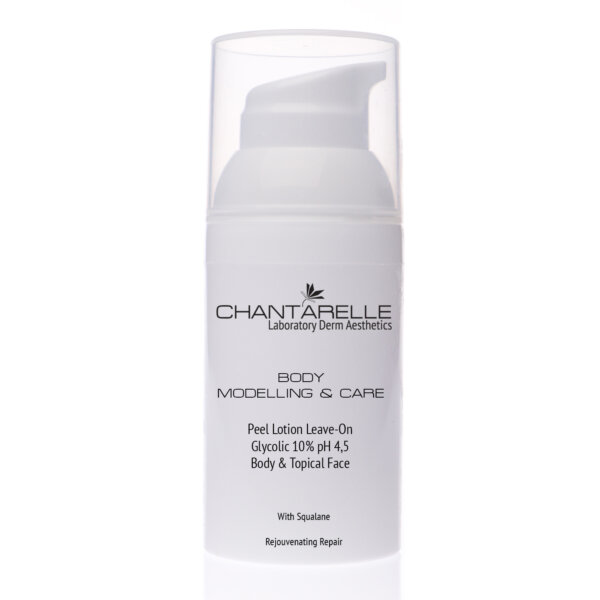
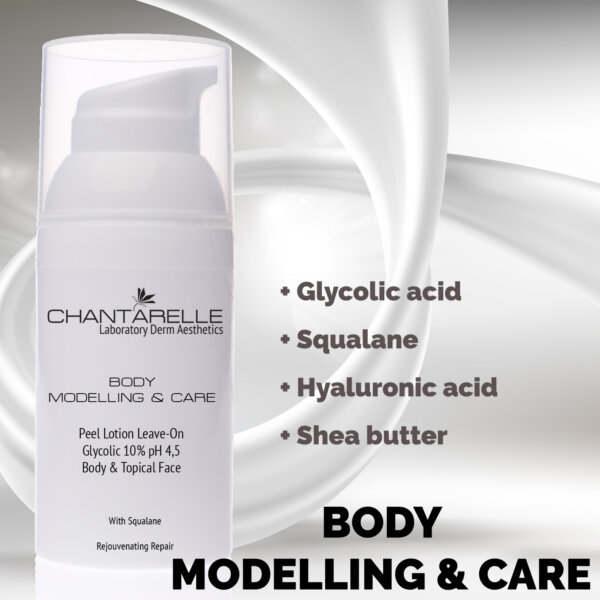
Body Modelling & Care
Peeling lotion without washing off with glycolic acid 10% pH 4.5, with squalane
46,00 £
Add to basket
NEW
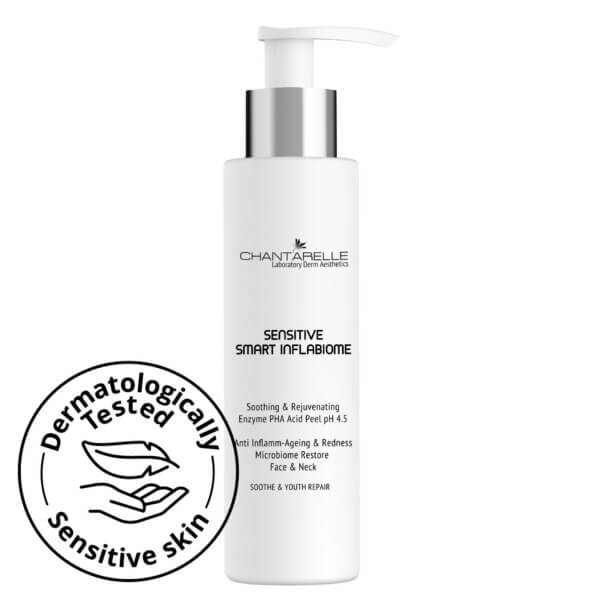
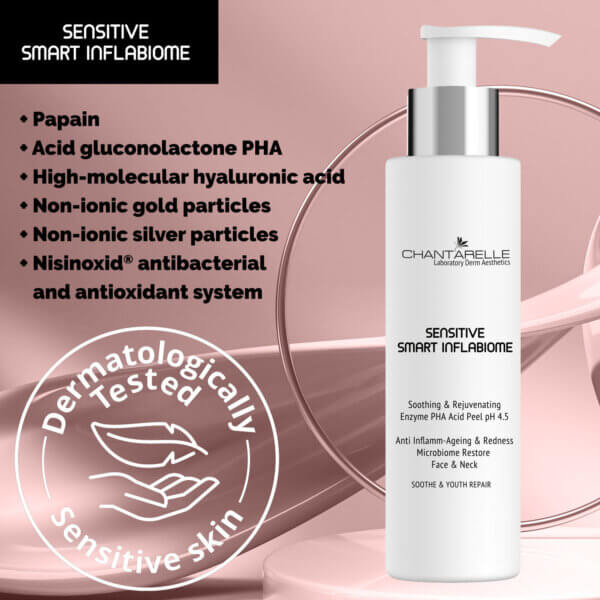
Sensitive Smart Inflabiome
Enzymatic peeling for sensitive skin with gluconolactone, rejuvenating and soothing pH 4.5
NEW
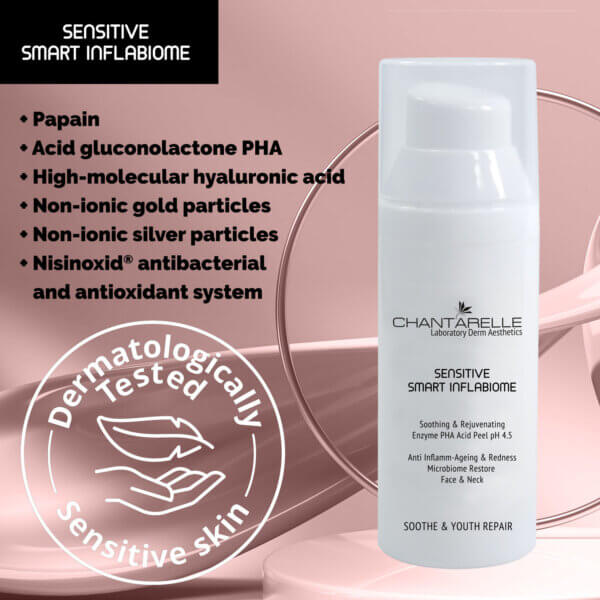
Sensitive Smart Inflabiome
Enzymatic peeling for sensitive skin with gluconolactone, rejuvenating and soothing pH 4.5
32,00 £
Add to basket
Special Aesthetics
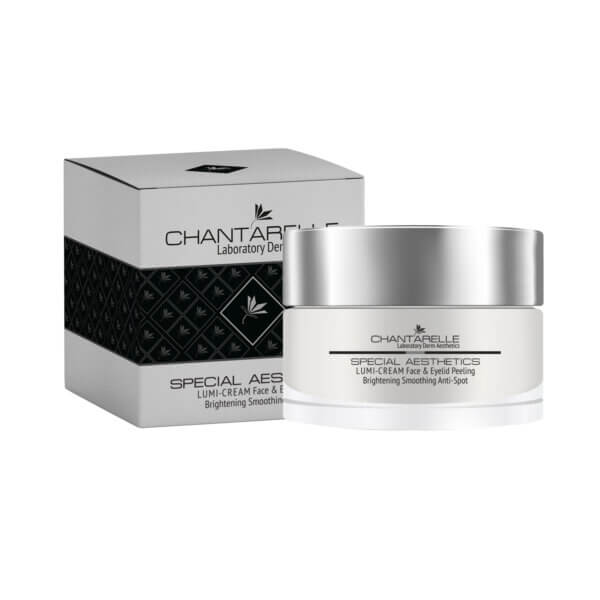
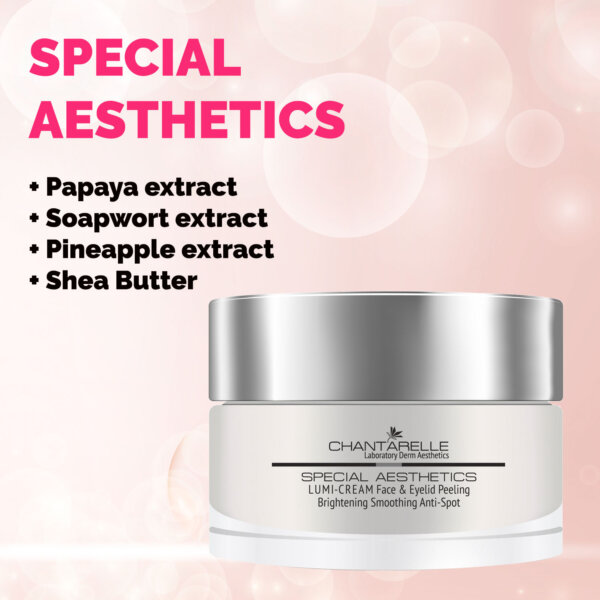
Special Aesthetics
Enzymatic peeling LUMI-KREM for the face, under-eye and eyelids
31,00 £
Add to basket
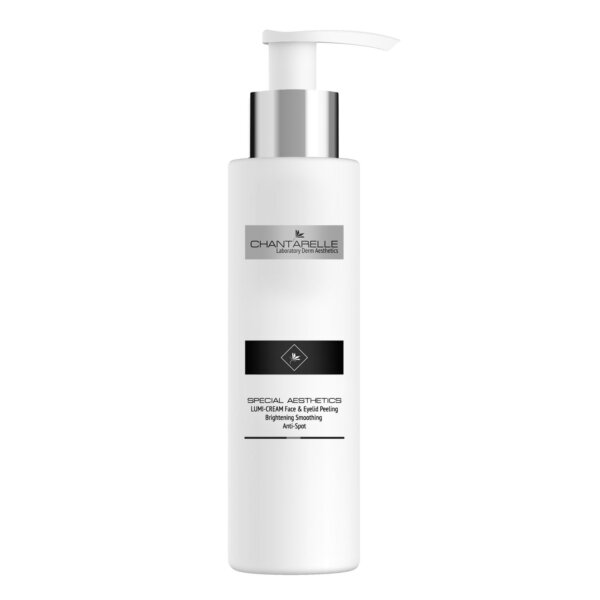
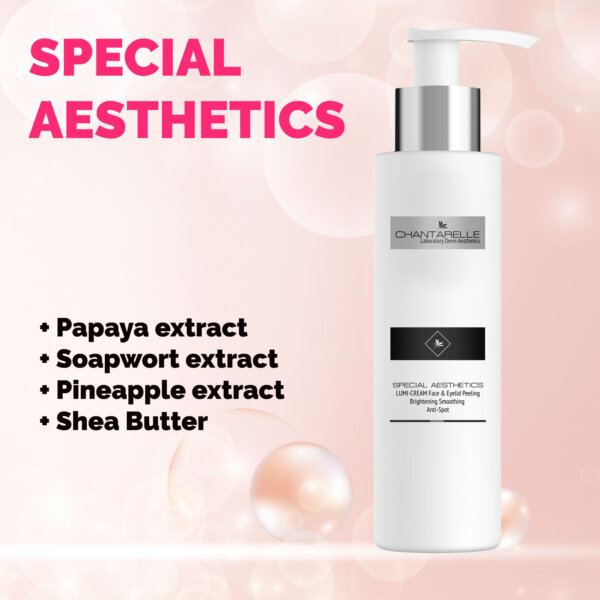
Special Aesthetics
Enzymatic peeling LUMI-KREM for the face, under-eye and eyelids