Try our novelties and bestsellers!»




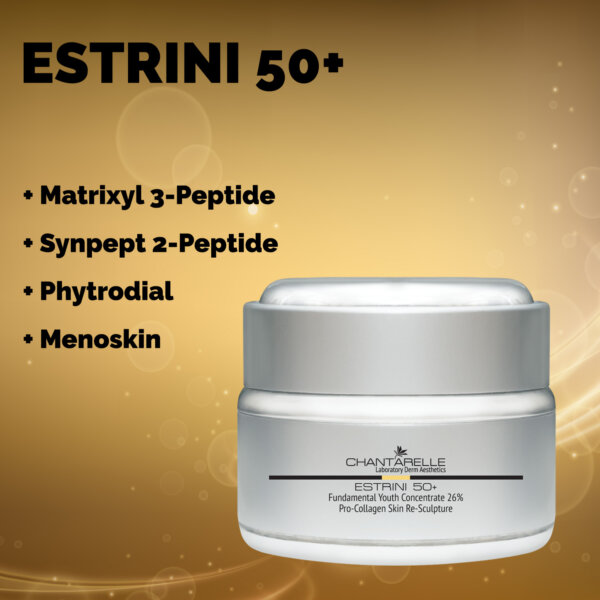
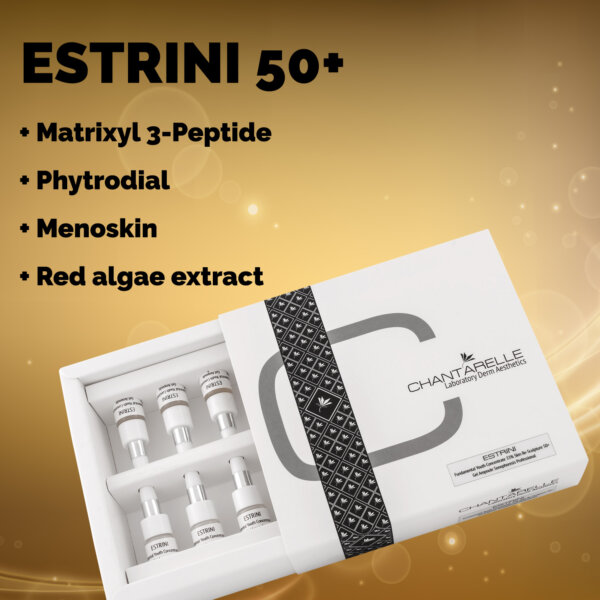
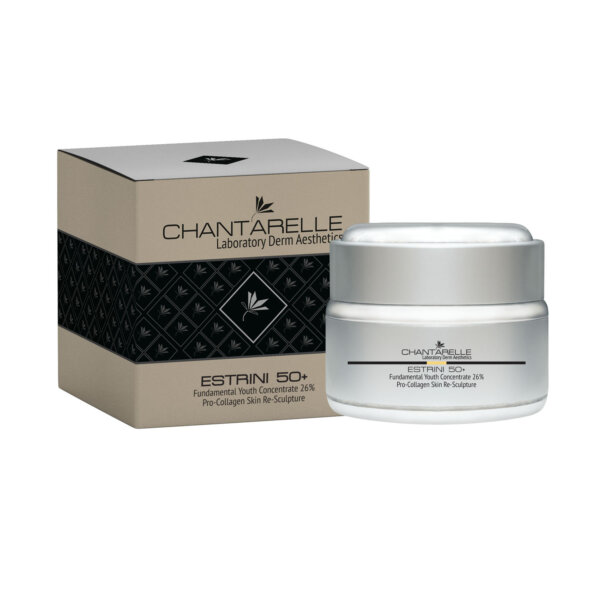 Rejuvenating Concentrate 26% with Phytoestrogens and Stimulating Peptides

Active ingredients in cosmetics
Common hops – plants in cosmetology
Aug
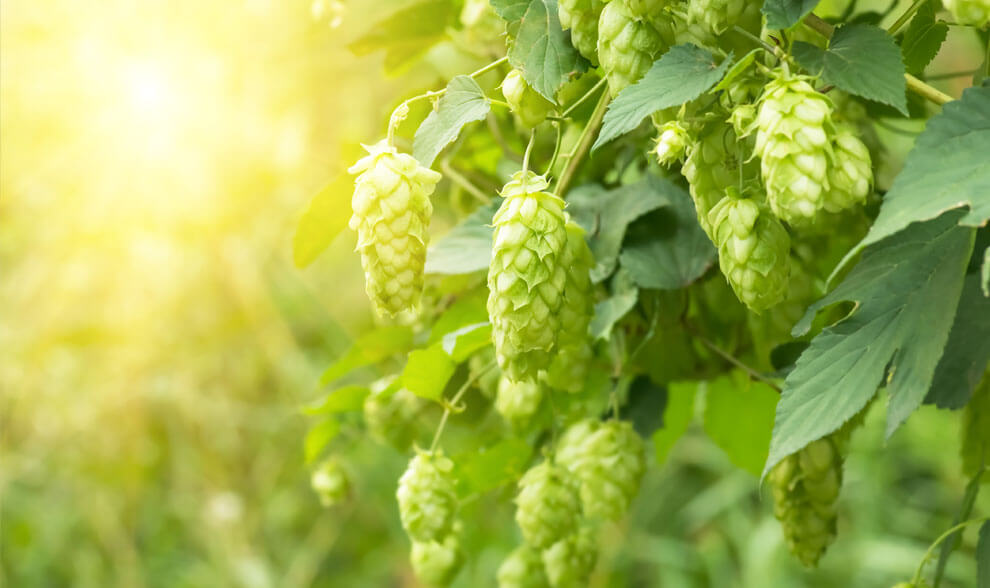
Common hop (Humulus lupulus) is an evergreen plant in the hemp family. It grows up to 6m tall. The flowers are yellowish green, arranged in inflorescences. The male flowers are gathered in conical inflorescences called cones. It is native to temperate regions of Europe, Asia and America. It grows wild in moist woods and on fences, and is often found in alder and willow forests.
Hops extract used in cosmetology is produced from the female flowers. The extract obtained has a high concentration of flavonoids such as quercetin, quercitrin, isoquercitrin, rutin, kempferol 3-rutoside, leucocyanidin, leucodelfinidin. We also find prenylated estrogen-like flavonoids and numerous essential oils and bitter resinous substances.
Hops history
Hops have accompanied mankind since the dawn of time. The ancient Babylonians and Egyptians used it as an aromatic plant, and the ancient Romans pioneered its cultivation. The Indians used hops to combat insomnia, gynaecological complaints, urinary infections and rheumatism. Cultivation of hops began on a larger scale in the Middle Ages, particularly in France, Denmark and Germany, when the possibility of using the plant to preserve beer was discovered.
Europeans commonly used it to treat war anxiety and mental illness. Kings Henry VI and VIII of England regarded hops as a ‘cursed herb’ because its pickers used to fall asleep during church retreats. However, decoctions of hop cones were recommended as a sedative, hypnotic, antispasmodic, digestive, diuretic, menstrual regulator and for gall bladder. In 1787, a pillow filled with dried hops cured King Gregory III of England of intractable insomnia. Hops were applied topically to treat skin infections such as herpes, ulcers and boils, as well as analgesic and anti-allergic.
Hops in cosmetology and cosmetics
Today, hops are mainly used in the production of beer, but increasingly also as an ingredient in cosmetics. Hops have anti-androgenic properties, which means they are recommended for androgenetic alopecia, the most common type of male pattern baldness. It also has an anti-seborrhoeic effect on the scalp, seborrhoea being one of the causes of hair loss. It is important to remember that seborrhoeic changes also affect the face. For this reason, hops are used in preparations dedicated to acne and atopic skin, as well as combination skin. Another property of hops is its regulating and normalising action. Extract from hops has a regulating effect on sebum production and normalises the skin. The extract from this plant also soothes irritation and redness.