Try our novelties and bestsellers!»







Cosmetic treatments, Active ingredients in cosmetics, Aesthetic cosmetology
Skin growth peptide factors in cosmetic procedures
Oct
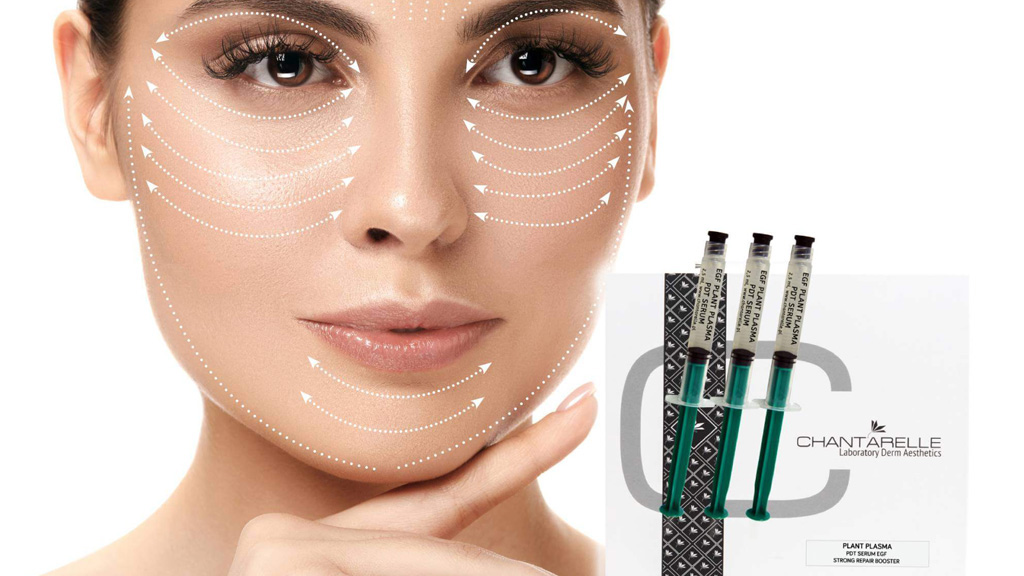
Dermal growth peptide factors are small proteins that interact with receptors on the surface of target cells. What is their mechanism of action based on? How can they be obtained and can they be an accessible and effective alternative to aesthetic medicine treatments? To find out the answers to these questions, we invite you to read the article.
Skin growth factors and the ageing process
The human dream of immortality has been enshrined in human history since its dawn. One example is the Greek myth of Eos, who begged Zeus for the gift of immortality for Tithonus. However, she forgot to ask for eternal youth for him. Can we prolong our youth? We know that ageing is a natural process that affects the whole body, and therefore also the skin – the most visible and largest tissue. Moreover, the skin is exposed to both internal and external factors that cause ageing, such as UV radiation and chemical pollutants. Whatever the cause of ageing, the effects are similar: increased levels of reactive oxygen species, activation of metalloproteinases. And the result is an accumulation of collagen hydrolysis products inhibiting the synthesis of new collagen fibres and progressive degradation of the extracellular matrix (Sachs et al. 2016).
How can we remedy this?
Remembering the Eos story, it is better not to count on miraculous methods, but rather to take advantage of what science offers us and use the knowledge of natural skin regeneration processes. Just how to induce the cells of our body not to succumb to the traditional ageing process. A clear, comprehensible signal is needed to get the cells to start behaving in the way we expect. Such signals are transmitted between cells after injury, for example, during the healing process, to initiate it and for it to run properly until the end. These signals are carried between cells by substances that belong to the cytokine group and are called growth peptide factors. They are released by cells during the healing process, among other things, which is why they have received attention – so that they can be used in regenerative therapies (Mitchell et al. 2016).
What are the types of growth peptide factors?
Important growth factors for the skin include:
- EGF (epidermal gowth / peptide factor) – epidermal growth peptide factor,
- FGF (fibroblast growth / peptide factor) – fibroblast growth peptide factor,
- PDGF (platelet-derived growth / peptide factor) – platelet-derived growth peptide factor,
- TGF (transforming growth / peptide factor) – transforming growth peptide factor,
How can such substances be controlled?
One solution is to introduce a preparation capable of secreting growth peptide factors into the area where we would like to trigger the regeneration process. The use of preparations in aesthetic medicine treatments is based on this concept. These are preparations obtained from the patient’s own blood, subjected to a process that allows it to yield a fraction rich in platelets, which have the ability to secrete growth peptide factors. In order to gain even greater control over the release of growth peptide factors, other possibilities are being sought to obtain and introduce them into the skin. Such an opportunity is offered by biotechnology, which makes it possible to produce substances with a similar structure and function to those already existing in the body. A good example is insulin, which is a hormone and therefore also a signal substance, and its structure shows significant analogies to that of epidermal growth peptide factor. Insulin is an important drug and could have been obtained from animals, among others, but would then differ slightly in structure from the human one. Today, insulin is therefore produced biotechnologically and the same method can be used to produce factors that are completely identical to those produced in our body.
Advanced biotechnology processes
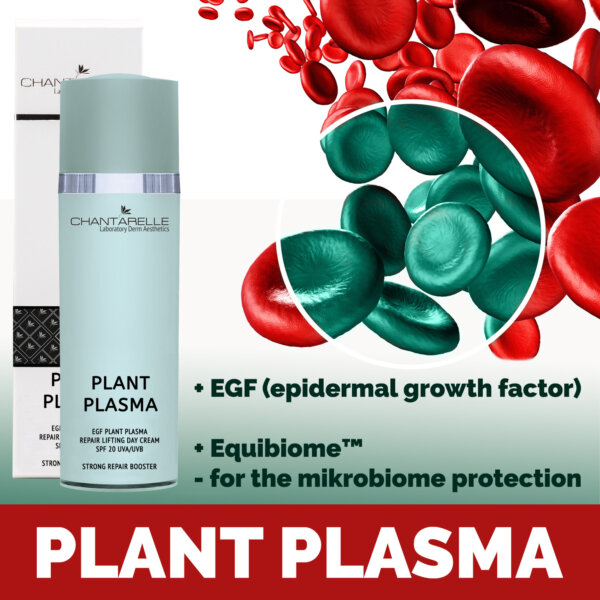
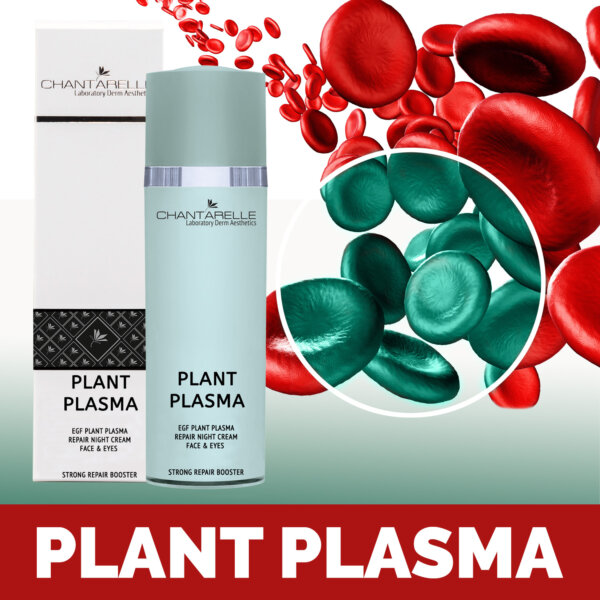
Modern biotechnology, which ensures the highest purity and safety in the use of manufactured substances, makes it possible to use plants as specific biochemical factories. Thanks to the extraction of peptide agents from plants – preparations with them are completely free of human, animal or bacterial components, as well as endotoxins and preservatives (Shanmugaraj and Ramalingam 2014). Growth factors produced in this way are used as innovative and effective active ingredients, in advanced cosmetic preparations (Gold et al. 2007; Laura et al. 2016). This is how we get the possibility to use growth peptide factors in a fully safe and controlled way. These growth active ingredients have been used in the Plant Plasma line, giving a high rejuvenating effect in Chantarelle treatments.
Plant Plasma treatment in the Chantarelle range
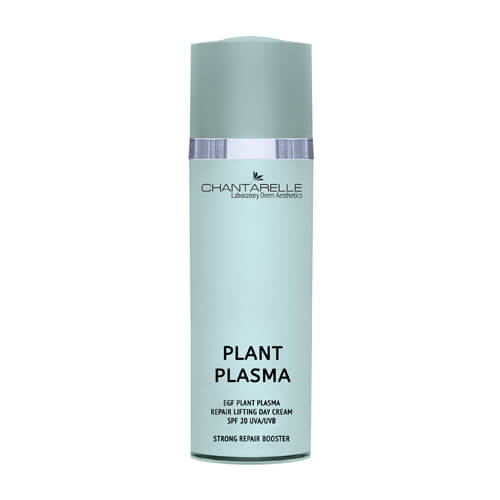
Plant Plasma is a cutting-edge regenerative cosmetology treatment that uses growth peptide agents to naturally stimulate skin renewal. It is an intensive anti-ageing and revitalising dermo-cure for the face, around the eyes, neck, décolleté and hands.
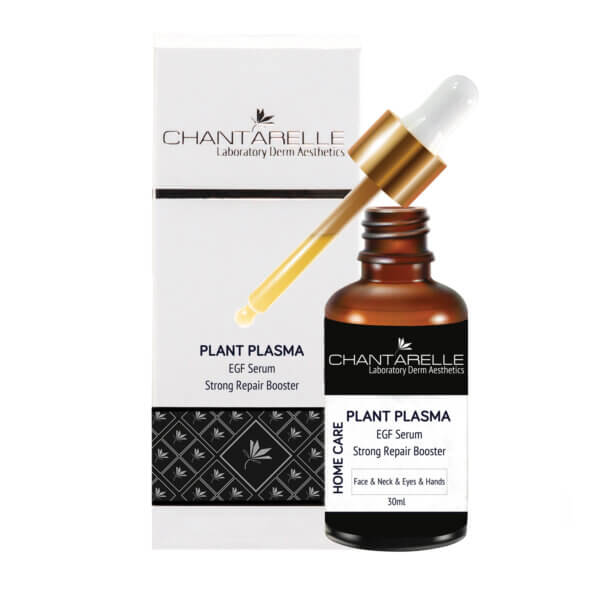
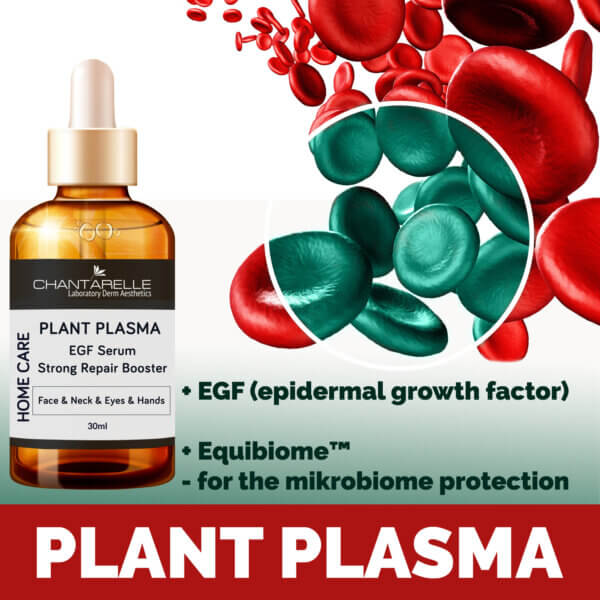
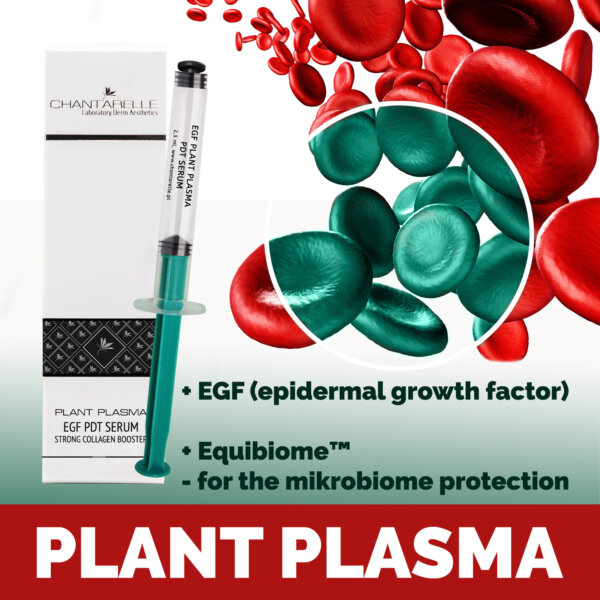
- PDT Serum with EGF Growth Peptide Factor for intensive stimulation of revitalisation and rejuvenation of skin on the face, around the eyes, neck, décolleté and hands, requiring hydration, firming and smoothing of wrinkles. It has an anti-ageing effect – regenerates and smooths the epidermis, increases hydration, strengthens skin elasticity.
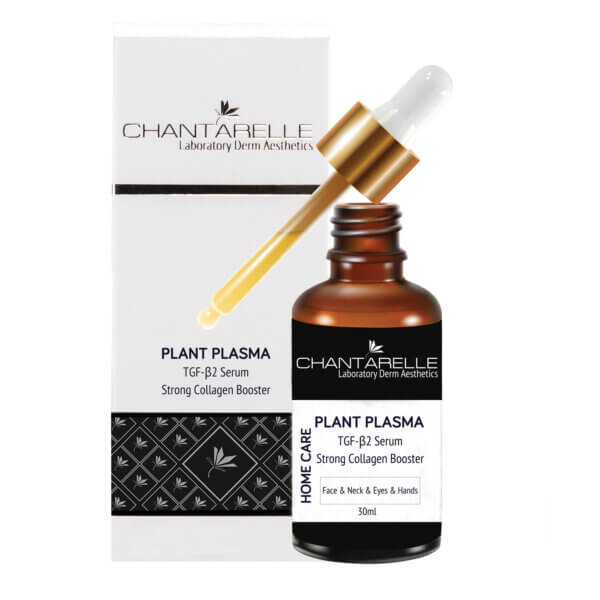
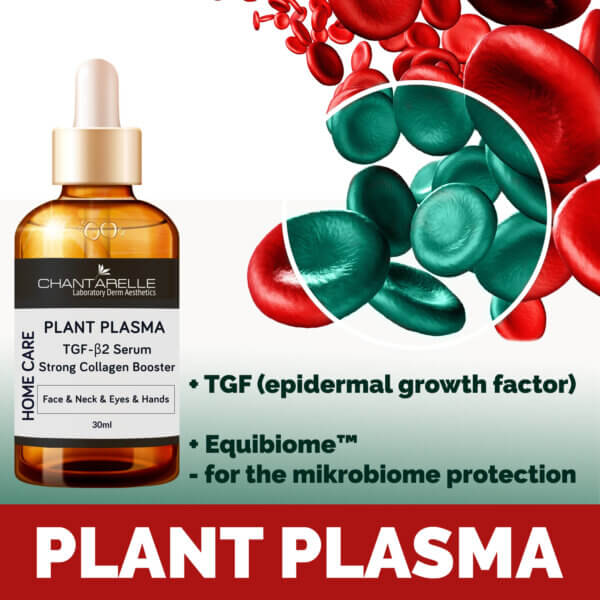
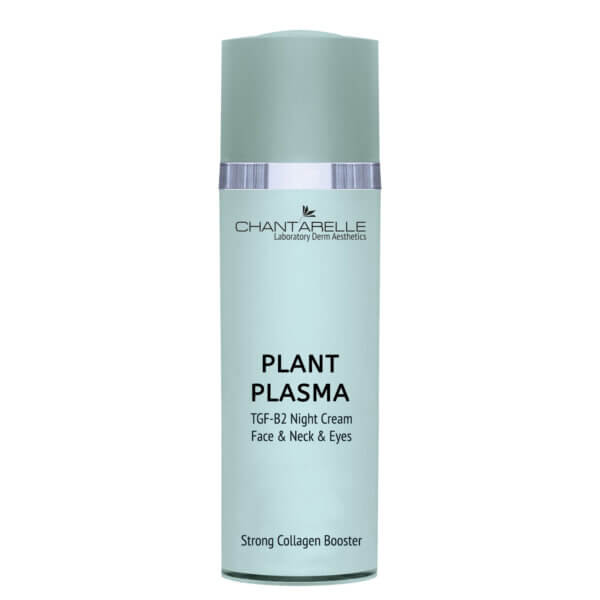
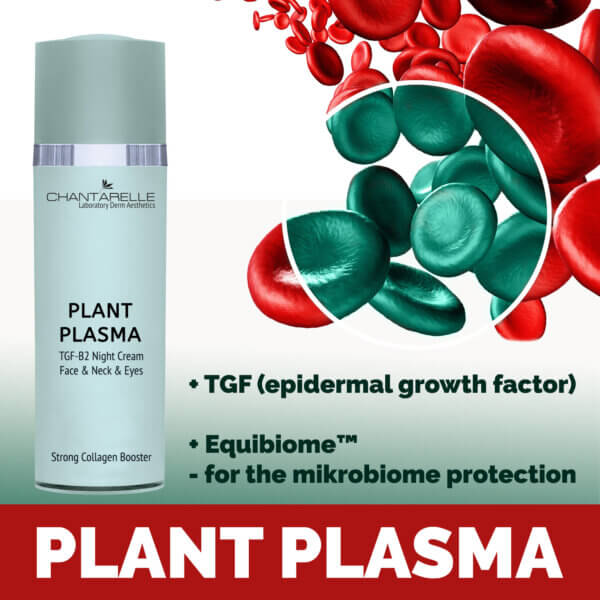
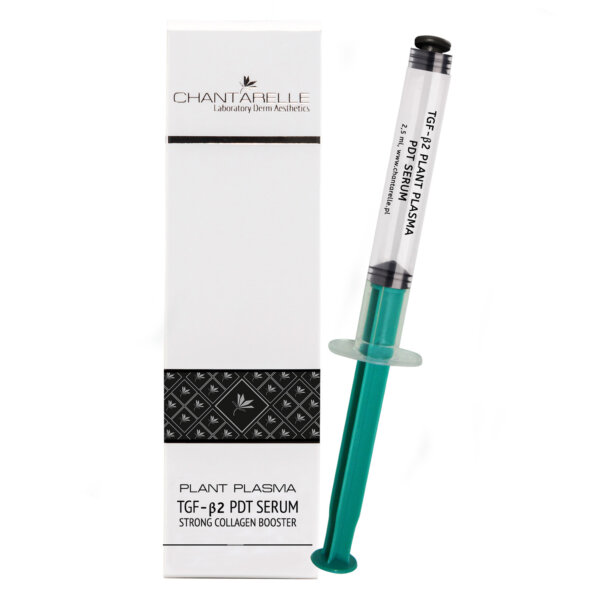
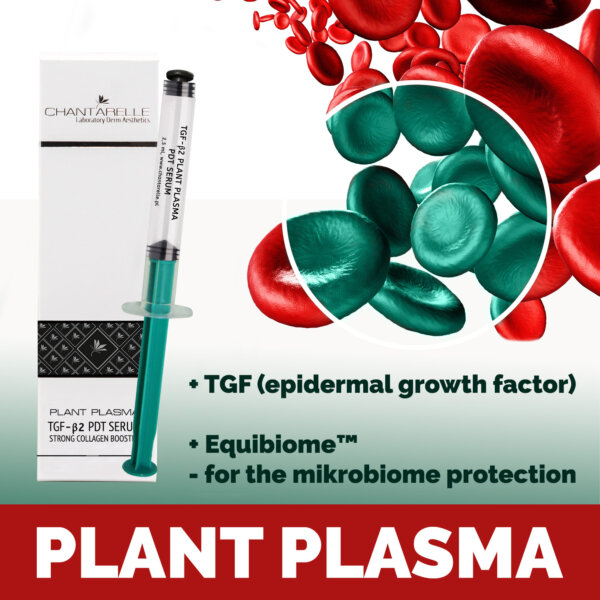
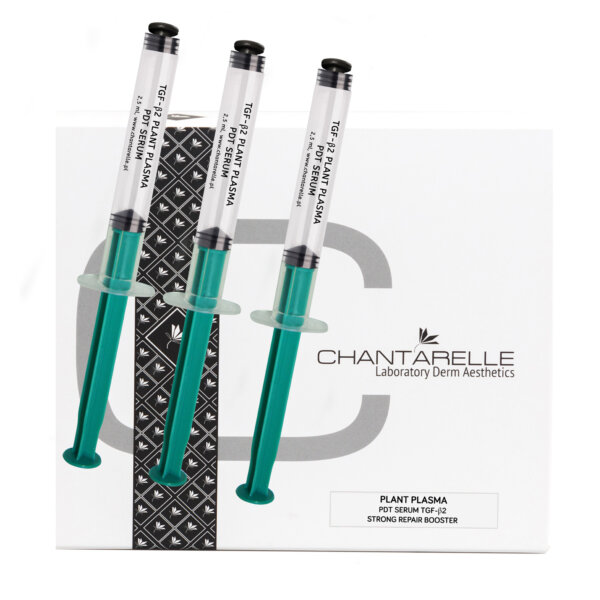
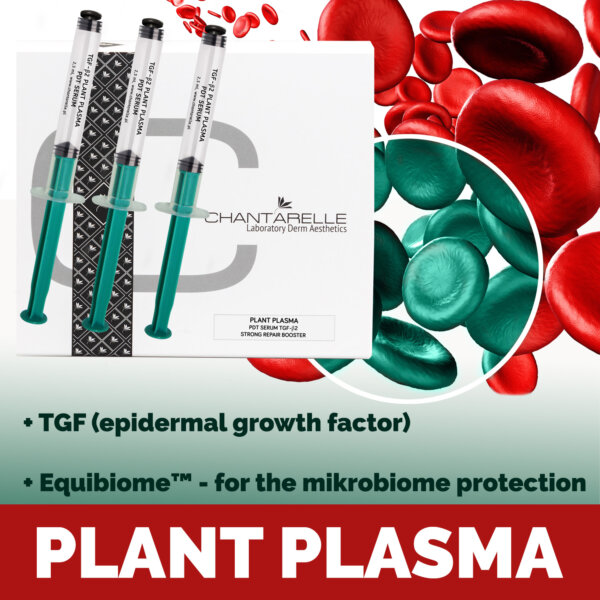
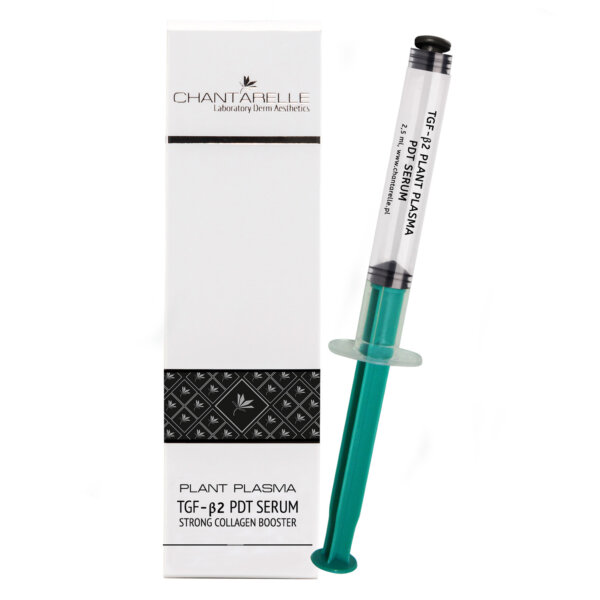
- PDT Serum with TGF-β2 Growth Peptide Factorfor intensive collagen stimulation and restructuring of the skin on the face, around the eyes, neck, décolleté, hands; for skin with pronounced signs of chronological and ex-ageing – deep wrinkles, lack of elasticity and damaged collagen structure.
 Dr Marcin Wasylewski
CHANTARELLE Laboratory Derm Aesthetics expert
Literature:
– Gold, M. H., Goldman, M. P., & Biron, J. (2007). Efficacy of novel skin cream containing mixture of human growth factors and cytokines for skin rejuvenation. Journal of drugs in dermatology, 6(2), 197. – Laura, W., Pablo, L., Arantxa, A., Isabel, B., Alberto, R., Silvia, J.& Gorka, O. (2016). Potential Application of Plant-derived Bioengineered Human VEGF for Tissue Regeneration. Current pharmaceutical biotechnology, 17(5), 458-464. – Mitchell, A. C., Briquez, P. S., Hubbell, J. A., & Cochran, J. R. (2016). Engineering growth factors for regenerative medicine applications. Acta biomaterialia, 30, 1-12. – Sachs, D. L., Fisher, G., & Voorhees, J. J. (2016). Skin Ageing. Rook’s Textbook of Dermatology, Ninth Edition, 1-11. – Shanmugaraj, B. M., & Ramalingam, S. (2014). Plant expression platform for the production of recombinant pharmaceutical proteins. Austin J Biotechnol Bioeng, 1(6), 4.
Chantarelle cosmetics with growth peptide factors

Plant Plasma
Plant Plasma