Try our novelties and bestsellers!»




 Cellular Anti-Ageing DNA Day Cream SPF20 with Antioxidants
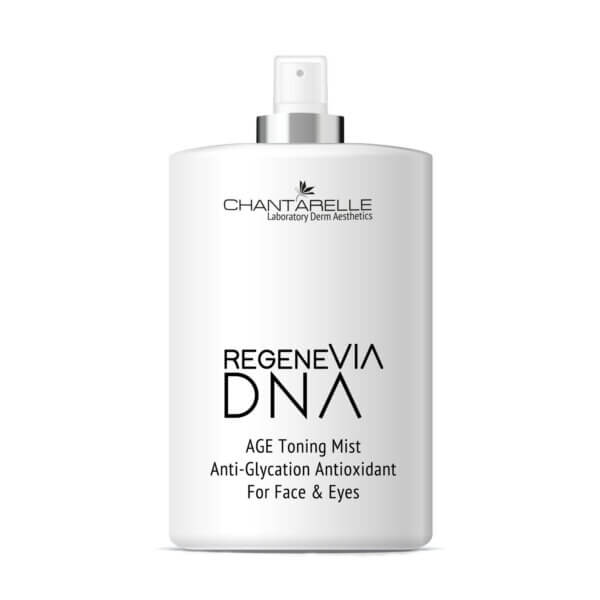
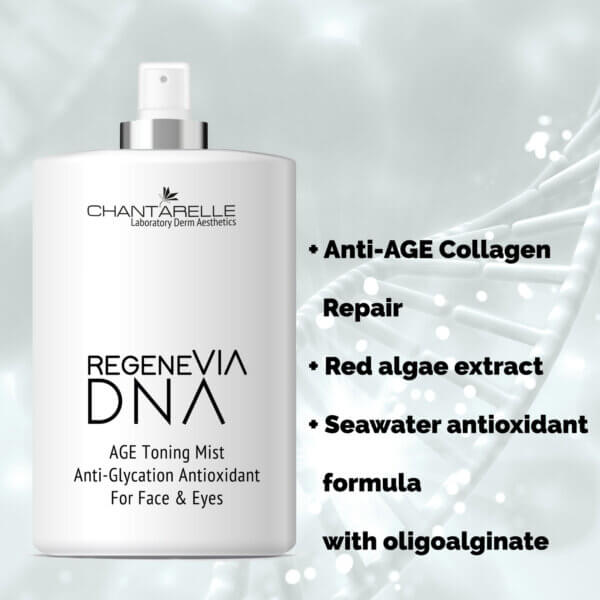
 Anti-Glycation Toning Mist with Bioferment

Dermatology, Cosmetic treatments, Aesthetic cosmetology
Glycation – what is it and how does it affect skin ageing?

Oct
Glycation, or rather the process of glycation, involves the destruction of the skin’s main support proteins by sugars. These are, of course, collagen and elastin, which provide the skin with its youthful appearance, elasticity and resilience. Unfortunately, we currently consume twice as much sugar as we need. How does excess sugar accelerate skin ageing? Let’s take a closer look at this process.
One of the natural, albeit unwanted, transformations that our body undergoes is ageing. The mechanisms and triggers of this process are still being debated, but the basic knowledge is widely accepted. Ageing is a complex process determined by external and internal factors. Each tissue exhibits its own peculiarities, the understanding of which not only allows us to learn about the processes determining the rate of its ageing, but also to effectively seek ways of delaying and sometimes even reversing this process or its manifestations.
Glycation and skin ageing
The same principles apply to the skin – the largest organ in the human body. It is particularly exposed to external chemical and physical factors and, at the same time, is strongly affected by internal factors. The skin and its appearance is not only subject to natural biological changes, but also a manifestation of our condition. As such, it is an important part of our image that determines our wellbeing and general functioning. Seeking ways to improve its condition is therefore important for many reasons.
skin ageing is a complex biological process influenced by both endogenous (genetic, hormonal management and metabolic processes) and exogenous (exposure to radiation including ionising radiation, pollution, chemicals, toxins) factors (Ganceviciene et al 2012).
The typical picture of changes due to intrinsic factors is skin abrasion and atrophic changes and fine wrinkles, while photo-ageing manifests as thickened epidermis, hyperpigmentation, deep wrinkles and skin sagging and roughness. There is also a slowing down of the cell cycle, which manifests itself in slower epidermal transformation and weaker exfoliation.
How do wrinkles form?
Changes in skin parameters are associated with changes at the molecular level. In ageing skin, a decrease in important structural proteins such as fibrillin or collagen is observed, which is mainly responsible for the formation of wrinkles. In parallel with changes in protein content, existing proteins are modified. Some of such processes are natural and even necessary, others can be harmful when they go beyond a certain framework, and still others can be the result or source of disease.
One process of protein modification is the attachment of sugar groups. This can be a process that occurs according to a plan and is carried out by molecular machines – enzymes – and is then called glycosylation. It can also occur haphazardly without enzymes and we call it glycosylation.
The latter especially occurs when the concentration of sugars in the body is high, and this can occur in diabetics and increasingly in healthy people who consume simple sugars in excessive amounts. Glycation can involve proteins, peptides, lipids and nucleic acids.
AGE – advanced glycation products
The pattern of glycation in living organisms is complex, but of particular importance are the end products of these transformations collectively referred to as “advanced glycation products” AGE (Advanced Glycation End-Products) (Warwas et al. 2010; Gkogkolou and Böhm 2017). The acronym used not coincidentally refers to the English term for age and ageing. Glycation of macromolecules in our body is therefore an important contemporary problem also affecting skin proteins and, above all, collagen. Such proteins, with a long duration in the body, are exposed to glycation processes, which leads to changes in their parameters. This results in a reduction in the elasticity of the proteins themselves and, consequently, of the tissues of which they are an essential component. There is growing evidence that the processes ofglycation and photo-aging are linked, mutually reinforcing each other (Farrar 2016). This means that formulations with antiglycation and antioxidant effects should be sought. For this reason, the search for means and ways to counteract these adverse processes in model systems is ongoing (Cadau et al. 2015; Lee et al. 2017).
Antioxidants for glycation
Proposed substances withantiglycation effects are undergoing research (Tarwadi and Agte 2011) indicating the most promising substances. One such substance is niacin, or vitamin B₃. It is already used in advanced cosmetic products most often in combination with other substances withantiglycation and antioxidant effects. Such preparations make it possible to reverse the effects of glycation in collagen structures, remove free radicals and reverse the cumulative effects of glycation. As a result, the skin improves its mechanical parameters, such as firmness and elasticity, and its visual parameters, such as radiance and proper colour.
Antioxidants in Chantarelle professional cosmetics
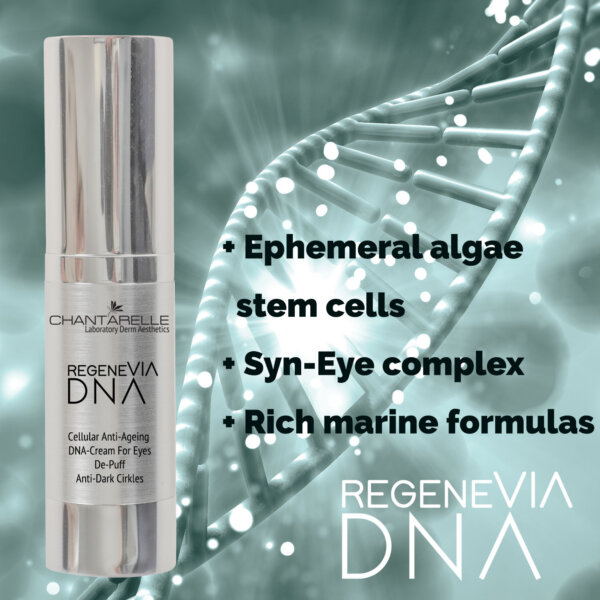
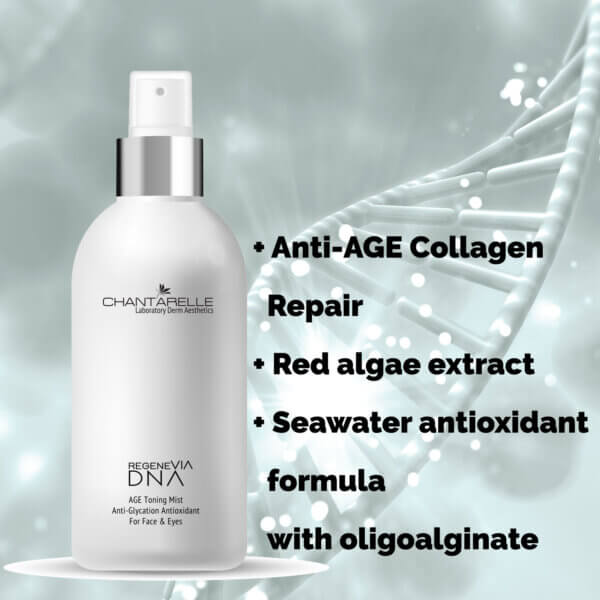
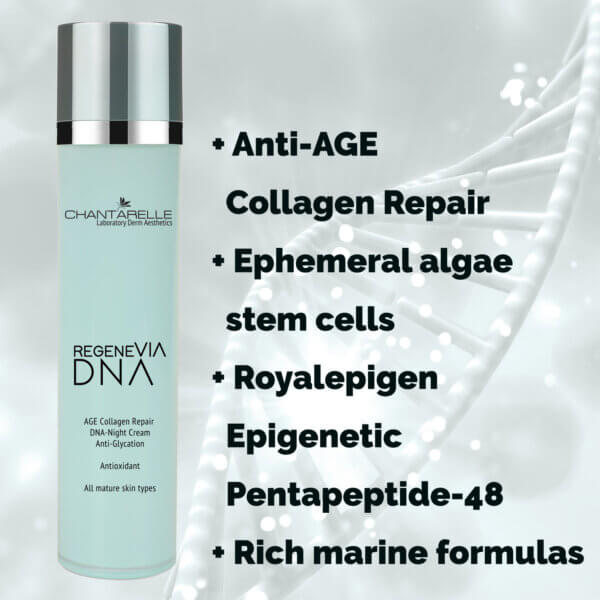
Anti-AGE Collagen Repair is a complex of carnosine peptide, vitamin B₃ (niacin) and u extract from the exotic quinoa plant. Carnosine is a dipeptide that counteracts the formation of AGE products in the skin. It thus protects the dermis fibres from glycation and premature loss of elasticity and firmness. Vitamin B₃ (niacin) reduces TEWL (transepidermal water loss through the epidermis), enhances collagen production and benefits skin microcirculation. Quinoa extract strongly moisturises and regenerates the skin. This ingredient is used in DNA-Cocktail AGE Collagen Regeneration. It is a modern DNA-cocktail with bio-chromophores (650nm, 420nm) to combat signs of ageing accelerated by a diet rich in sugars, free radicals, environmental pollution. The active formula also uses ephemeral algal stem cells, which stimulate energy metabolism and renewal at the mitochondrial level, the so-called “Eve genes”, and extend cell life by stimulating the synthesis of “longevity”
 Dr Marcin Wasylewski
CHANTARELLE Laboratory Derm Aesthetics expert
Literature
- Cadau S, Leoty-Okombi S, Pain S, Bechetoille N, André-Frei V, Berthod F. In vitro glycation of an endothelialized and innervated tissue-engineered skin to screen anti-AGE molecules. Biomaterials. 2015 May 1;51:216-25.
- Farrar MD. Advanced glycation end products in skin ageing and photoaging: what are the implications for epidermal function? Experimental dermatology. 2016 Dec 1;25(12):947-8.
- Ganceviciene R, Liakou AI, Theodoridis A, Makrantonaki E, Zouboulis CC. Skin anti-aging strategies. Dermato-endocrinology. 2012 Jul 1;4(3):308-19.
- Gkogkolou P, Böhm M. Advanced Glycation End Products (AGEs): Emerging Mediators of Skin Aging. Textbook of Aging Skin. 2017:1675-86
- Lee KH, Ng YP, Cheah PS, Lim CK, Toh MS. Molecular characterisation of glycation-associated skin ageing: an alternative skin model to study in vitro antiglycation activity of topical cosmeceutical and pharmaceutical formulations. British Journal of Dermatology. 2017 Jan 1;176(1):159-67.
- Tarwadi KV, Agte VV. Effect of micronutrients on methylglyoxal-mediated in vitro glycation of albumin. Biological trace element research. 2011 Nov 1;143(2):717-25.
- Warwas M, Piwowar A, Mound G. Advanced glycation products (AGEs) in the body-formation, fate, interaction with receptors and its consequences. Farm. Pol. 2010;66:8.
Anti-Glycation AGE Cosmetics from Chantarelle