Try our novelties and bestsellers!»




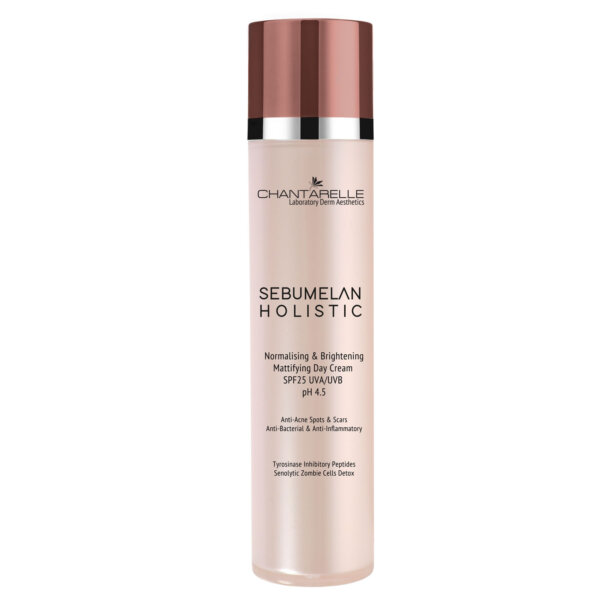 Mattifying day cream SPF25 UVA/UVB pH 4.5 for acne blemishes and scars


Cosmetic treatments, Aesthetic cosmetology
Skin moisturising mechanism
May
Half of all beauty salon clients struggle with inadequate skin hydration, a problem that is most acute in winter and summer, when weather conditions are most unfavourable to the skin.
Water has several important functions in the human body. First of all, it is the main, most important component of the body and can make up between 45 and 75% of body weight, with an average of 60%. The water content of lean body mass in adults is relatively constant at around 75%. In individual tissues, the water content varies depending on the cell structure: muscles contain 74-80% water, lungs 80%, liver 68% and bones 25%. Liquids and body fluids have a higher water content, bile 86%, lymph 98%, gastric juice 97%, sweat 99.0-99.5%.
The fluid component of blood – serum contains 4 litres of water, extracellular fluid is 10 litres of tissue fluid. The cellular fluid inside the body is 30 litres, and the remaining water is contained in the fluids filling the body cavities. Water in the body’s tissues allows intra- and extracellular permeation by participating in the process of diffusion and osmosis.
The chemical structure of water
Water is made up of two elements – hydrogen and oxygen. One molecule of water consists of two hydrogen atoms and one oxygen atom according to the formula H-O-H. The two hydrogen atoms are bonded to the oxygen at an angle of 140 degrees. A water molecule is a dipole, which means that it has a double partial negative charge. Water molecules form weak bonds between each other called hydrogen bonds, through which water molecules form a cross-linked structure. In the solid state, this structure is characterised by an ordering that breaks down when water is heated to its boiling point. The forces of attraction between the individual molecules of the structure create surface tension between the water and other surfaces such as air, clothing and skin. Water is a very good solvent for salts and other polar compounds. Thanks to water, the introduction of ions (electrolytes) through the epidermal barriers also takes place by means of iontophoresis. In iontophoresis, a potential difference occurs between the epidermis and the deeper layers of the skin.
Transepidermal water kinetics
There are two types of water in the skin. There is migratory water, which is predominantly found in the stratum corneum, water derived from hydration of the deeper layers and water bound to colloids through weak electrostatic bonds. Unbound water migrates by diffusion according to the concentration gradient outwards from the skin. The second type is non-migratory water that is strongly bound to biological tissues. The water content of infant skin is 80%, while in adult skin it is already 60%. Water in the skin maintains the structure of fibrillar proteins; at the level of the dermis, the presence of water in collagen and elastin prevents the loss of their mechanical properties. The dermis also contains compounds – GAGs – proteoglycans, mucopolysaccharides and hyaluronic acid, which retain water molecules. In the epidermis, water is essential for the proper transformation of keranocytes into corneocytes, differentiation and exfoliation of corneocytes; when these mechanisms are disrupted, allergy occurs. No less important is the contribution of water ions to the formation of the hydrolipid barrier. Disturbances in this process are the most common type of water-related dysfunction in the skin. These include increased enzyme activity, abnormal NMF and lipid synthesis, and disorders within the formation of desmosomes. The kinetics of water penetration from the deeper skin layers towards the epidermis follow a concentration gradient by diffusion, while at the surface the water evaporates. Each layer of skin is characterised by a specific water-binding capacity, the higher the skin layer the lower this capacity is. The basal layer has a water holding capacity of 70 per cent, the spiny layer about 50 per cent, the granular layer only 30 per cent and the epidermis about 10 per cent.
TEWL (Transepidermal Water Loss)
Water therefore flows through the layers of the skin continuously. The constant averaged water flow through the skin is estimated to be 5g water/m2/hr. With a result of 8-10g/m2/1h we can conclude that the skin is well hydrated. At 3g/water/1h we are dealing with dry skin, with an insufficiently hydrated stratum corneum. The daily water loss is 300 to 400 ml. Water is gradually replenished by diffusion from deeper layers of the skin and body. This phenomenon is known in cosmetology as TEWL – transepidermal water loss. However, if the compensation of losses proves insufficient or the mechanism is disrupted, dermatoses and skin diseases occur, and mechanical damage is easier to occur. Water, thanks to the hydrogen bonds and hydrophobic properties described earlier, is bound in the individual skin layers through various structural elements (proteins, carbohydrates). This results in a relatively constant amount of water in the tissues in question. Water diffuses from the deeper skin layers through cell membranes. In the stratum corneum, however, it encounters an obstacle in the form of the hydrolipid mantle, which inhibits water escape and evaporation. The lipid barrier, thanks to the hydrophobic properties of the intercellular cement, serves to retain unbound water in the stratum cornerum and sebum.
Moisturising cosmetics
Modern professional cosmetics now make use of laboratory-tested substances that are highly capable of modifying water-binding processes in the stratum corneum. In the process of effective moisturising, the most important role is played by increasing the capacity of the horny layer to bind water. It is also important to strengthen the hydrolipidic barrier and reduce the evaporation of water from the skin surface. It is a myth to claim that sprays with ordinary water are able to improve skin hydration. It is unbound water and therefore has no chance of penetrating the stratum corneum against the concentration gradient. In addition, it adversely affects sebum, causing it to be diluted and ultimately compromising the skin’s hydrolipid barrier. It is therefore imperative to avoid spraying on the face on hot days, as this will cause the skin to dry out, contrary to the expected effect. A good cosmetic mimics the skin’s natural water retention mechanisms. It creates an occlusive barrier by reducing water escape and increases the water content of the startum cornerum. At the same time, by forming an occlusive layer, it must reduce the water concentration gradient at the skin’s surface to prevent water from diffusing out of the stratum corneum. In doing so, it creates an additional barrier so that water evaporation is reduced.
Chantarelle moisturisers
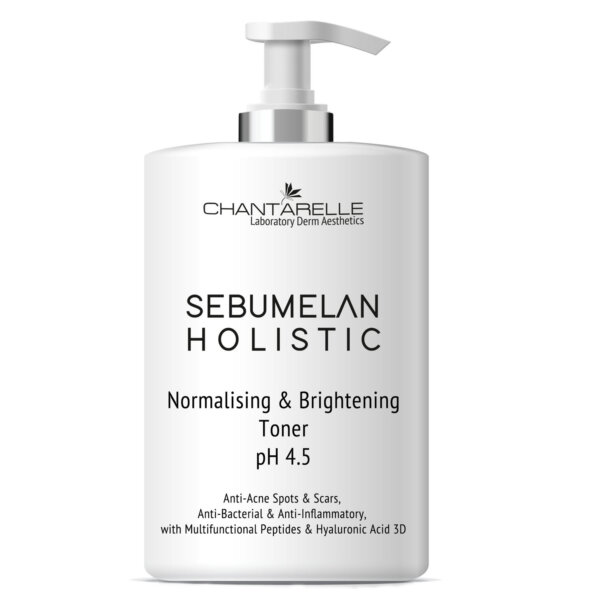
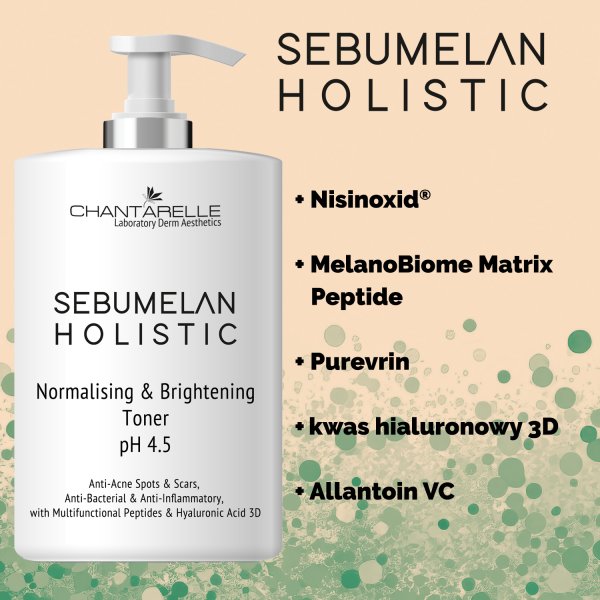
Sebumelan Holistic