Try our novelties and bestsellers!»




-
×
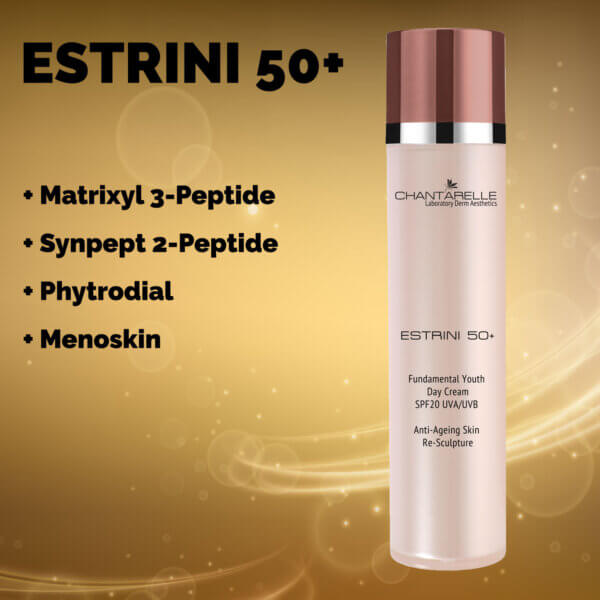
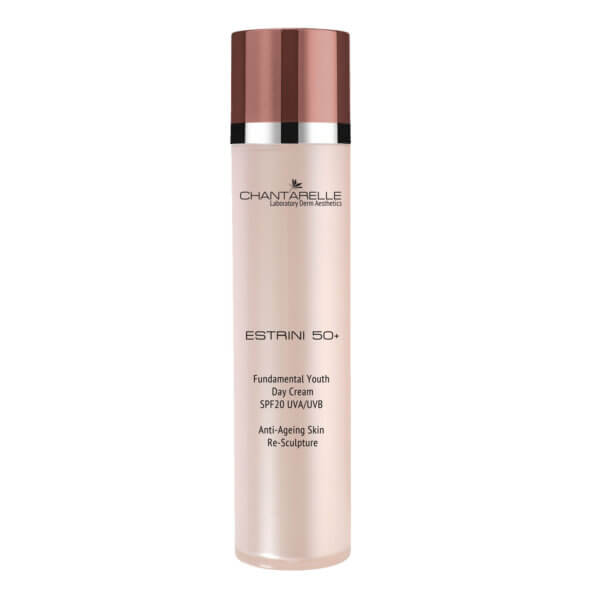 Rejuvenating Day Cream SPF20 with Phytoestrogens and Stimulating PeptidesCD1380Linia: Estrini1 × Original price was: £ 52,00.£ 48,50Current price is: £ 48,50.


Dermatology, Skin care at home
Skin protection in summer – SPF filters

09
Jun
Jun
Summer skin protection is a must. Why should we protect our skin from the sun? The action of UVB rays on the skin causes an increase in the number of keranocytes in the living epidermis, excessive keratinisation and thickening of the horny layer. With excessive UVB exposure, ‘sunburn cells’ (translation: sunburned cells) are formed in the deep layers of the epidermis, which are keratinocytes in apoptosis (cell death) that have no connection to neighbouring keratinocytes. This is because UVB rays affect the differentiation processes of keranocytes. The epidermis is excessively keratinised and dried out. It only returns to its original state after 10-14 days, with more sensitive complexions only after 21 days. The action of UVA rays leads to a thickening of the stratum corneum, without the formation of sunburn cell clusters.
How is a tan formed?
The reaction to exposure to the sun is the colouring of the skin, among direct and indirect colouring. Direct or immediate tinting is caused by UVA radiation and is called the Meyrowski phenomenon. The reaction is observed after 6 hours due to the increased oxidation of DOPA. Pigmentation induced in this way is impermanent, and can occur in the event of prolonged exposure to sunlight through, for example, windscreen or other blockers. Intermediate or delayed pigmentation only occurs in the skin as a result of UVB radiation after approximately 48h. As a result of radiation, erythema occurs due to excessive melanocyte activity, a rapid increase in melanin synthesis and the production of melanosomes.
Dermal protection through UV filters
External skin protection is achieved through three substances used in cosmetics:
- Physical filters (also known as mechanical filters), which work by reflecting radiation from a film produced on the skin
- Chemical filters, which absorb some of the radiation so that it is no longer harmful
- Free radical scavenging compounds that are formed in the skin when overexposure to the sun
Physical filters, otherwise known as mechanical filters or mineral filters, are generally coloured pigments that reflect radiation waves from across the wavelength range due to their properties. Coloured pigments include titanium oxide, zinc oxide, iron oxides, titanium oxide (mica), among others. In addition, there are also so-called micronised pigments of titanium oxide and zinc oxide, which act simultaneously as a physical and chemical filter, reflecting part of the radiation and accumulating other wavelengths. Mineral filters are essential in cosmetics designed to block as much as possible of the sun’s radiation from reaching human skin.
Chemical filters are particles having a carboxyl group in their composition, which isomerises due to the absorption of short wavelengths of solar radiation. Long wavelengths (above 380 nm) are reflected. Among chemical filters, we distinguish synthetic filters authorised by Annex VII of the European cosmetic guidelines. This is currently a group of 26 substances. A second group of chemical filters is also made up of narrow-spectrum filters (UVB protection), broad-spectrum filters (UVA and UVB protection), medium-spectrum filters (UVA protection) and filters of natural origin such as Shea butter, Karite butter, bee putty, walnut pigment, arnica extract or natural melanin.
Compounds that actively counteract the proliferation of free radicals are vitamin E, esters, beta-carotene, flavonoids, Q10 or ubiquinone, plant extracts such as Ginko Biloba, Echinacea, Rosmarinus.

Recommended for high UV protection:
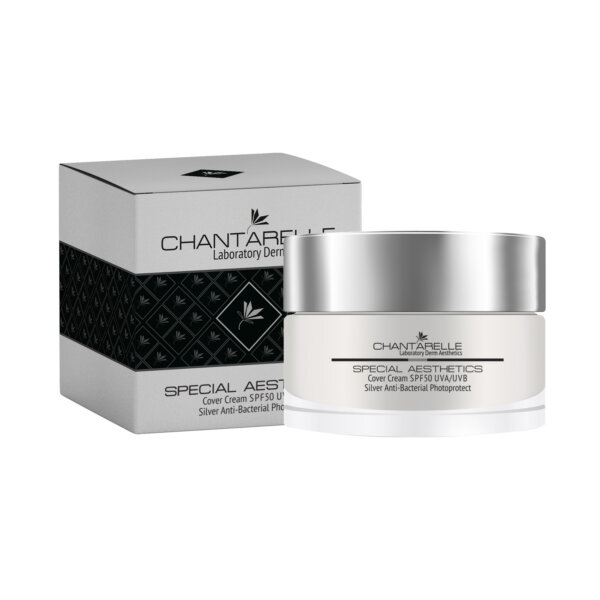
SPECIAL AESTHETICS COVER UV-protective cream SPF50 UVA/UVB
Chantarelle’s coverage cream contains a modern complex of physical and chemical filters, giving broad spectrum protection (UVA and UVB). A special UV filter guarantees even UV protection across the entire skin surface. The cream is designed to protect any skin type after treatments with epidermal disruption: acid exfoliation, microdermabrasion, laser therapy. Also recommended for allergic skin, skin with a low phototype, acne-prone skin and skin prone to irritation. Has a moisturising, anti-radical and antibacterial effect. Stimulates the regeneration of epidermal cells.
Active ingredients:
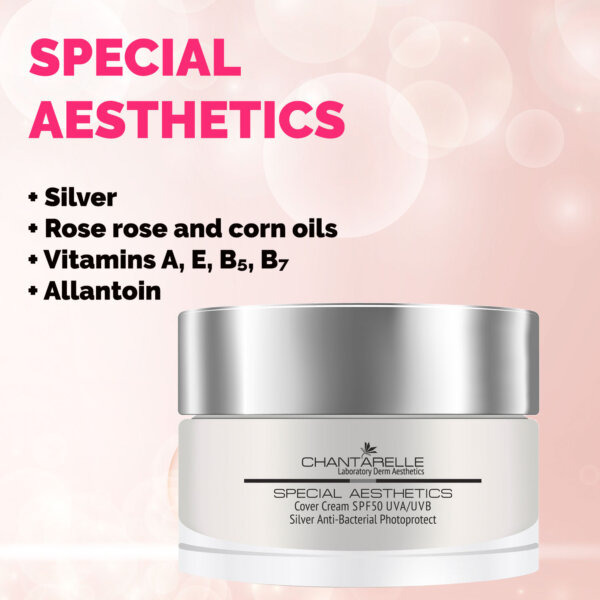
✓ Silver – has antifungal, antiviral and antibacterial properties. Cleanses the skin and regulates sebum secretion. Eliminates the causes of acne vulgaris and seborrhoea of the skin.
✓ Horse-chestnut extract – is an important ingredient in preparations against broken capillaries. In addition, it has a mattifying effect on the skin and removes impurities. It has firming and UV-protective properties. It has anti-inflammatory and anti-oedematous effects, while strengthening blood vessels.
✓ Rust rose oil, also known as musk rose, is rich in polyunsaturated fatty acids, trans-retinoic acid, tannins, flavonoids, vitamin C and beta-carotene. Due to its composition, it has a natural ability to protect against photo-ageing. In addition, it repairs the effects of UV exposure – smoothing wrinkles and reducing the amount and intensity of pigment spots.
✓ Corn oil is a valuable vegetable product containing large amounts of unsaturated fatty acids (contains approximately 60% linoleic acid), a lot of tocopherols (vitamin E). An emollient, it improves the epidermal barrier, reduces the risk of hyperpigmentation, and normalises the skin’s keratinisation processes thanks to its unsaturated acid content.
✓ Alanthoin – counteracts hypersensitivity and excessive reaction to the sun. Has antioxidant properties. Protects against free radicals, which are the cause of faster skin ageing.
✓ The active formula is completed by rejuvenating and regenerating Shea butter and vitamins A, E, B₅, B₇ and inositol.
Chantarelle cosmetics to protect skin in summer
New
Out of stock
Sale!
Sale!
Out of stock
Sale!