Try our novelties and bestsellers!»




-
×
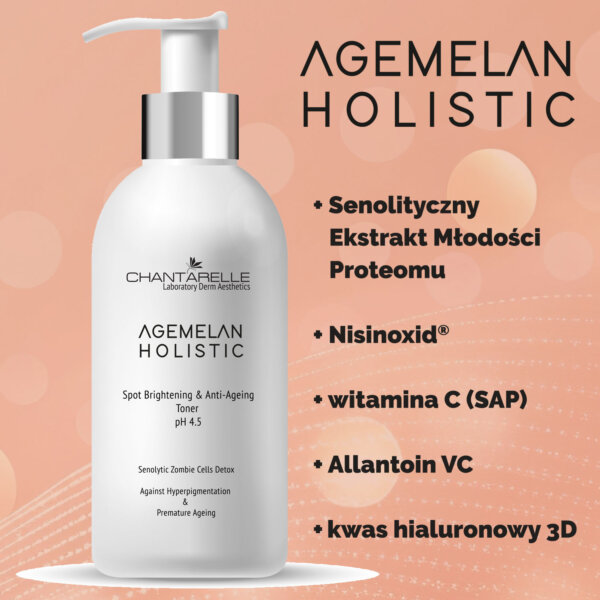
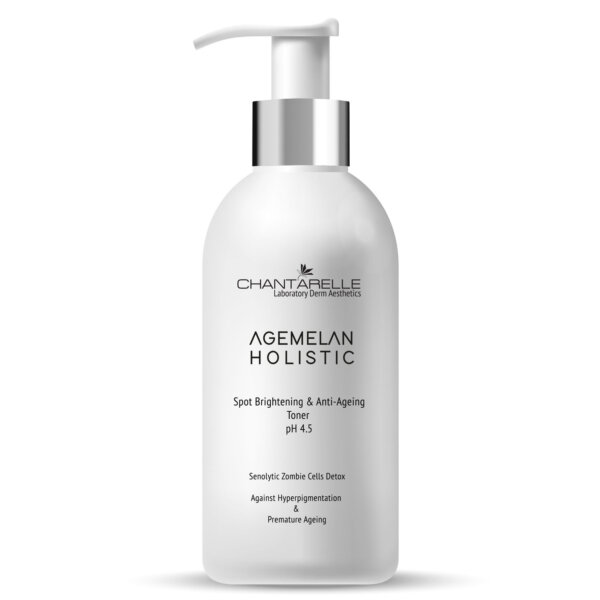 Tonic pH 4.5 to rejuvenate and lighten blemishes
1 × 37,00 £
Tonic pH 4.5 to rejuvenate and lighten blemishes
1 × 37,00 £



Dermatology
The microbiome – the skin’s defence mechanism
16
Feb
Feb
The skin is the largest organ of our body and provides a habitat for many bacteria. The microbiome (microbiota, microflora) is the variety of microorganisms living on the surface of the skin. The balanced state of this microbiota is linked to the proper functioning of the skin’s hydrolipid mantle.
Beneficial micro-organisms synthesise many substances essential for the condition of the hydrolipidic mantle: hyaluronic acid, peptides, fatty acids. At the same time, an imbalance of the skin microbiome can cause the development of acne, psoriasis, rosacea, seborrhoeic dermatitis, atopic dermatitis and eczema. In other words, a healthy, balanced microbiota is responsible for good skin health. In addition, the microbiome is part of the immune defence against unwanted and harmful agents on the skin.
How does the skin defend itself against pathogens?
The skin’s three lines of defence against harmful external agents and pathogens:
I line of defence
The microbiome barrier is the first line of defence. It is an ecosystem made up of billions of micro-organisms (bacteria, fungi and viruses) that colonise the skin from birth – this forms each person’s individual microbiome.
II line of defence
The physiological barrier is the second line of defence, which consists of the structure of the stratum corneum (corneocytes and bilipid layer). In addition, the epidermis is also represented by Langenhars cells, and the keratinocytes themselves (living cells of the epidermis) can synthesise antibacterial peptides that also protect our skin.
III line of defence
The immune barrier occurs in the dermis. Blood circulates here and immune cells are also present, such as lymphocytes, neutrophils, mast cells and eosinophils, macrophages and other
What are antimicrobial peptides (AMPs)
The main weapons of microorganisms of a balanced human microbiome are antimicrobial peptides antimicrobial peptides (hereafter: AMPs). These are chains of amino acids less than 100 amino acids in length. Why do AMPs win over pathogens? This is made possible by a difference in the structure of the cell membranes of the host and pathogenic microorganisms. This causes the peptide to break the integrity of the hostile microbe and even penetrate inside the pathogen, leading to its death. Various AMPs are able to combat fungi, bacteria, viruses, protozoa. In addition to destroying pathogens, antimicrobial peptides can influence the action of other immune cells, stimulate a response to infection, or accelerate wound healing.
Where do AMP peptides live
For effective protection of the body, AMP proteins need to be located in the areas most exposed to pathogens. Antimicrobial peptides are therefore produced by epithelial cells. AMPs are therefore found, among others, on the skin, mucous membranes of the respiratory and digestive systems and genital organs. They are synthesised both by the cells of the skin itself and by the bacteria of the normal skin microflora.

Balance for the microbiome
Taking care of the balance of the microbiome is an important action for skin protection and, consequently, healthy skin. It’s worth remembering: if the bacteria on the skin are bad, so is the microbiome, and consequently the state of our skin. Research into the skin’s microflora and the knowledge of what is good for the skin and what is not, has provided the impetus for the popularisation of skin care and the creation of skin care programmes emphasising the restoration of the skin’s microbiome.
 dr Khrystyna Shekhovtsova
Chantarelle expert, dermatologist and aesthetic physician
Cosmetics to protect the skin microbiome
New
New
New
NEW
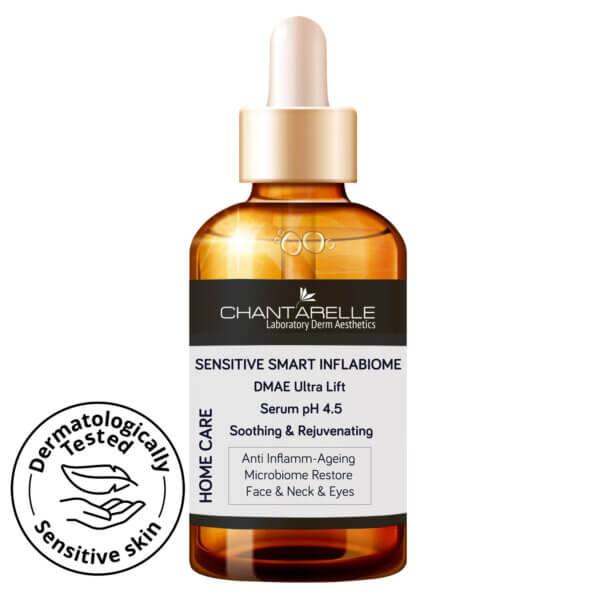
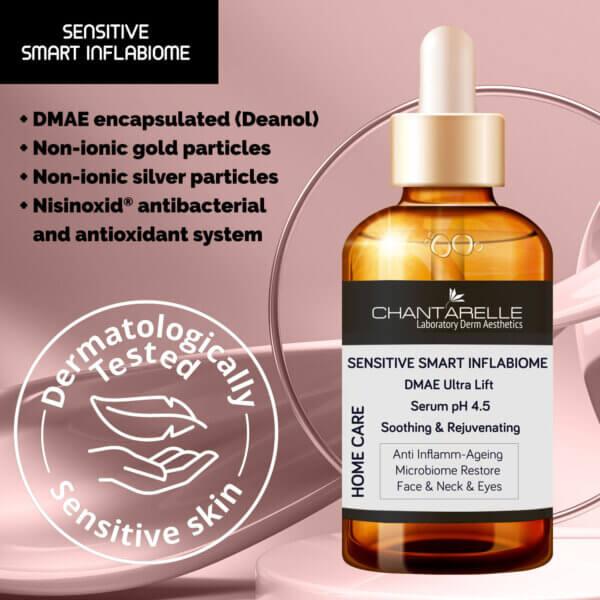
Sensitive Smart Inflabiome
Lifting serum for sensitive skin, rejuvenating and soothing pH 4.5
55,00 £
Add to basket
NEW
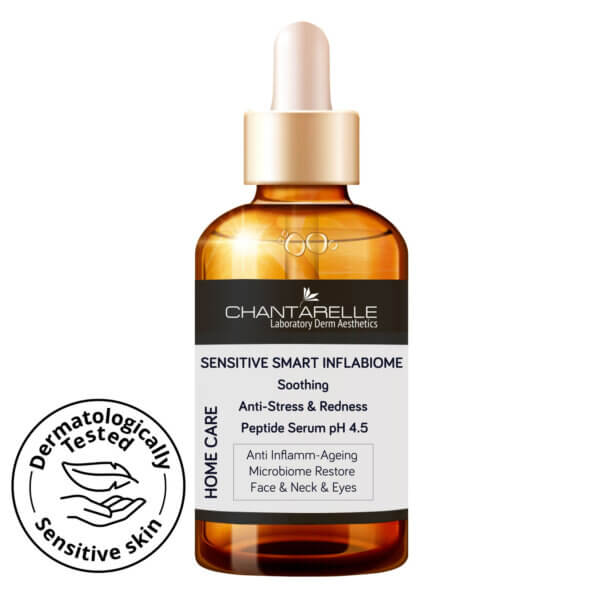
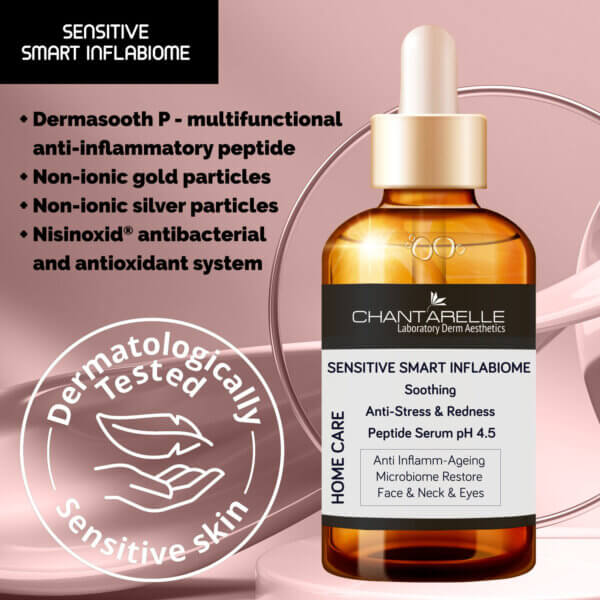
Sensitive Smart Inflabiome
Peptide serum for sensitive skin, anti-stress and soothing pH 4.5
55,00 £
Add to basket
NEW
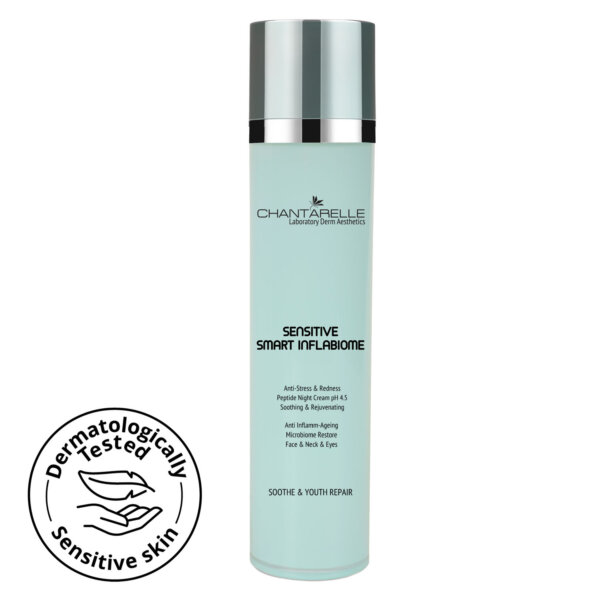
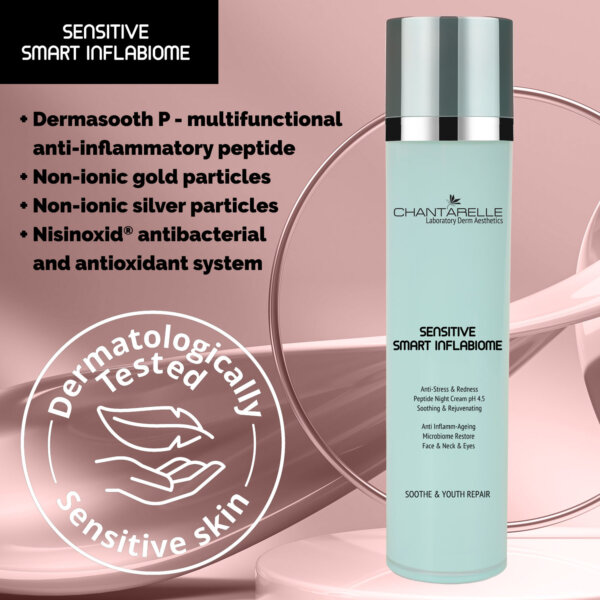
Sensitive Smart Inflabiome
Peptide night cream for sensitive skin, anti-stress and soothing pH 4.5
55,00 £
Add to basket
NEW
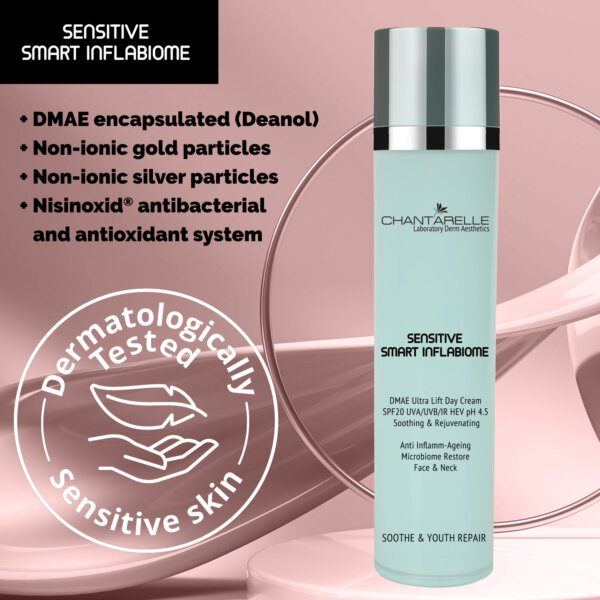
Sensitive Smart Inflabiome
Lifting Day Cream for sensitive skin SPF20 UVA/UVB/IR HEV, rejuvenating and soothing pH 4.5
55,00 £
Add to basket
NEW
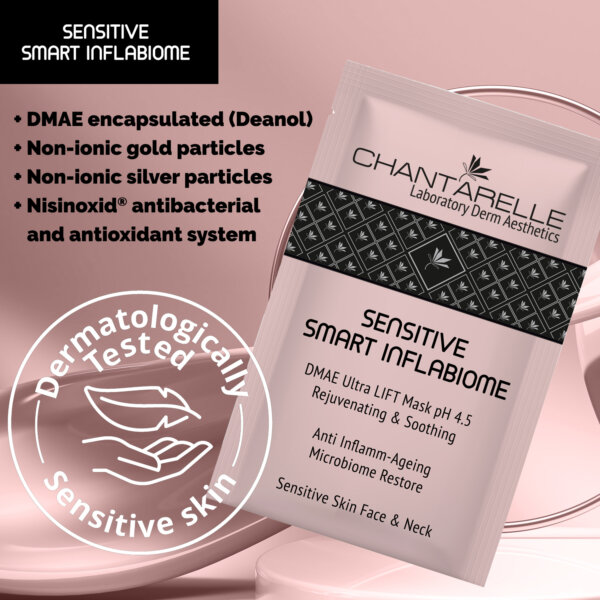
Sensitive Smart Inflabiome
Lifting mask for sensitive skin, rejuvenating and soothing pH 4.5
3,90 £
Add to basket