Try our novelties and bestsellers!»







Cosmetic treatments, Dermatology, Skin care at home, Tips
What do we know about the skin microbiome?
Feb
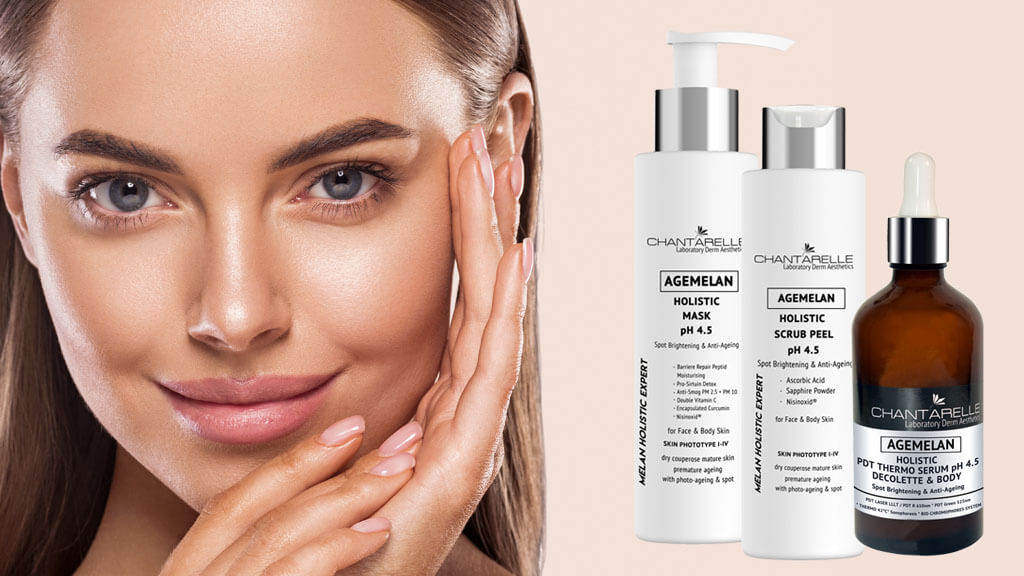
The skin microbiome is second only to the gut microbiota in terms of microbial population. When they are in balance, they protect the skin from negative environmental factors and pathogenic bacteria. If the skin microbiota is disrupted, this can lead to dermatological diseases.
What is the skin microbiome?
The skin microbiome is all the microorganisms like bacteria, viruses, fungi and mites that live on human skin. They are mostly saprophytic microorganisms that do not cause symptoms of infection and are the main protective barrier against adverse external factors.
Functions of the skin microbiome
- Protects the epidermis from temperature changes, dust, ultraviolet radiation and other environmental factors.
- Protects the epidermis from temperature changes, dust, ultraviolet radiation and other environmental factors.
- Participates in the immune response of the skin (the immune response of the skin can be impaired in some dermatological diseases – e.g. atopic dermatitis and psoriasis).
- Participates in the immune response of the skin.
- Participates in skin regeneration processes.
- Regulates the water balance of the skin.
- Regulates the acid balance of the skin.
What organisms inhabit our skin?
All microorganisms living on the skin can be divided into two large groups – resident and tourmaline microorganisms. Some live on the skin permanently, others get on the skin from the external environment and remain on the skin from a few hours to a few days. Resident micro-organisms on the skin permanently:
-
- non-pathogenic mycobacteria
- staphylococci
- micrococci
Tourmaline micro-organisms – residing on the skin at times:
- Gram-positive sarcoma
- Staphylococcus aureus
- Candid fungi
- molds

Is it possible to damage the skin microbiome?
The skin is constantly exposed to environmental factors – from aggressive detergents to certain drugs and cosmetics. All of these can disrupt the normal composition of the skin microbiome.
Dysbiosis is a microbial imbalance involving changes in the natural microflora specific to a particular area of the body, with undesirable consequences that sometimes affect the entire body.
Dysbiosis in the ‘bacterial-host’ system can lead to many dermatoses and skin diseases. Factors that disrupt the skin microbiome:
- polluted air
- exposure to the sun without using sunscreen
- smoking
- inadequate skin cleansing – excessive use of scrubs and peels, frequent use of antibacterial gels and wipes
- neglect of skin care principles – cleansing and protection from wind and frost
- taking antibiotics
- excess simple carbohydrates in the diet – pathogenic microorganisms “love” sweets
- continuous stress and anxiety
- frequent use of scented candles etc
How to rebuild the facial skin microbiome
It is essential that we maintain the correct composition of the microbiome at all times of the year. Support beneficial microbes and reduce pathogens. Take care of your skin’s microbiome by following a few important rules:
- Balanced diet, i.e. sufficient protein, ‘good’ fats and carbohydrates: fruits, vegetables, cereals.
- Limiting the intake of fast carbohydrates. Nothing disrupts the skin microbiome more than consuming too many sweets.
- Physical activity in the fresh air.
- Living a stress-free life.
- Healthy sleep. The microbiota reacts sensitively to any changes in our lifestyle.
- Sleeping well.
- Gentle skin care – for cleansing, choose gentle products that do not damage the skin’s protective layer.
- Choose the right products for your skin type.
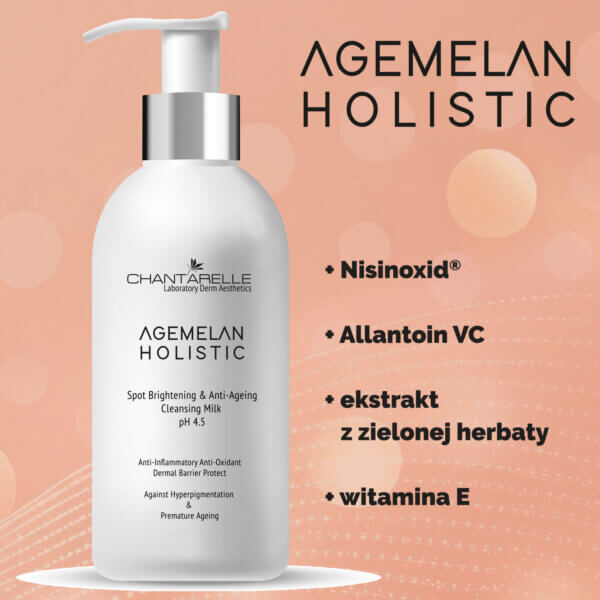
- Use cosmetics containing active ingredients that support a healthy skin microbiome, e.g. Nisinoxid® and Equibiome™.
Worth taking care of your skin’s healthy microbiome. Follow the above principles and you will be rewarded with healthy, beautiful and strong skin.
 dr Khrystyna Shekhovtsova
Chantarelle expert, dermatologist and aesthetic physician
Cosmetics for protecting the microbiome
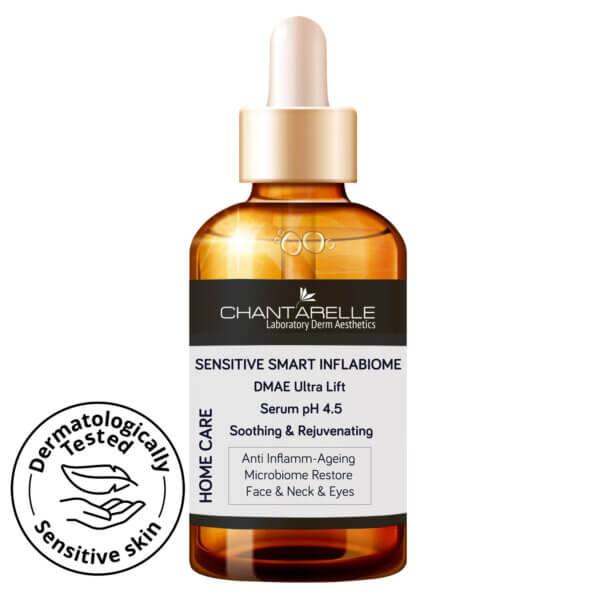
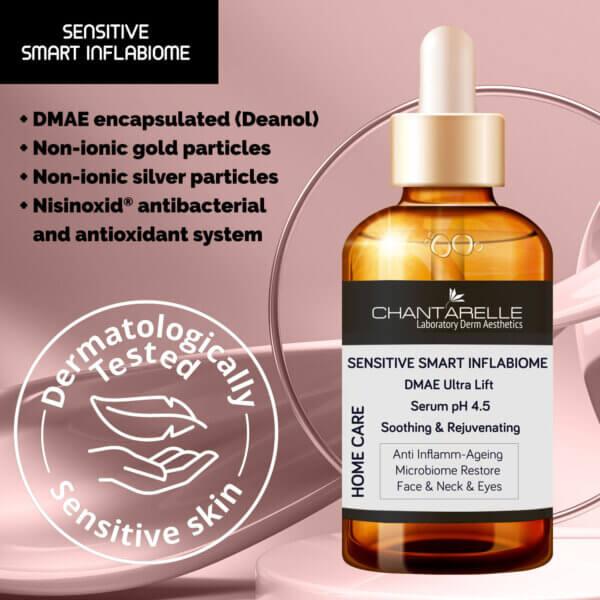
Sensitive Smart Inflabiome
Lifting serum for sensitive skin, rejuvenating and soothing pH 4.5
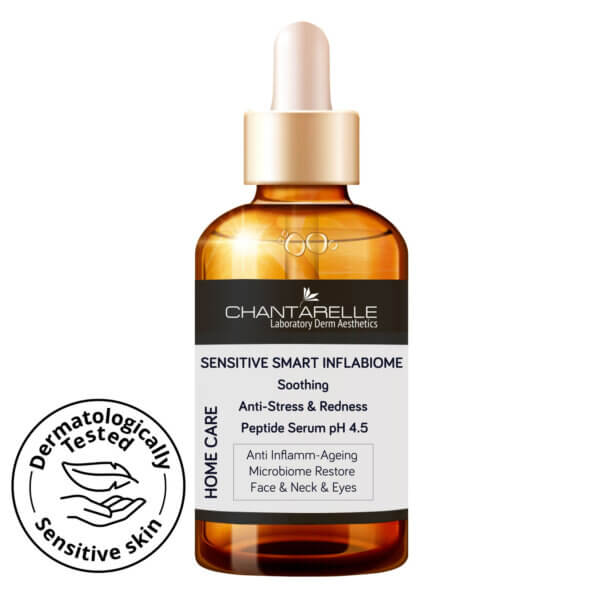
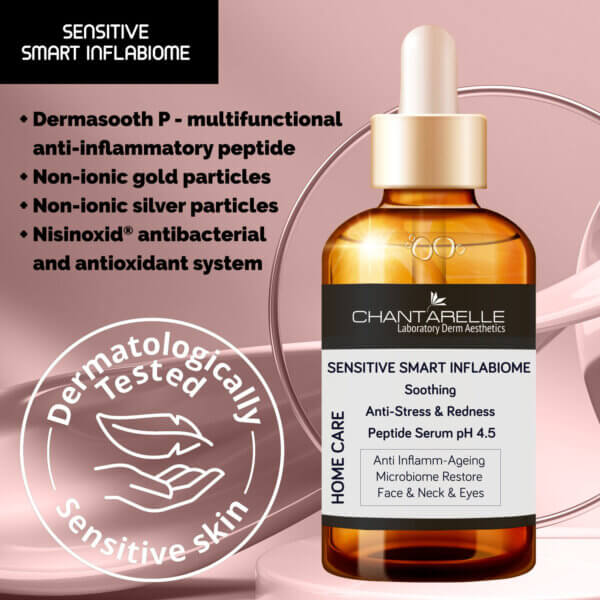
Sensitive Smart Inflabiome
Peptide serum for sensitive skin, anti-stress and soothing pH 4.5
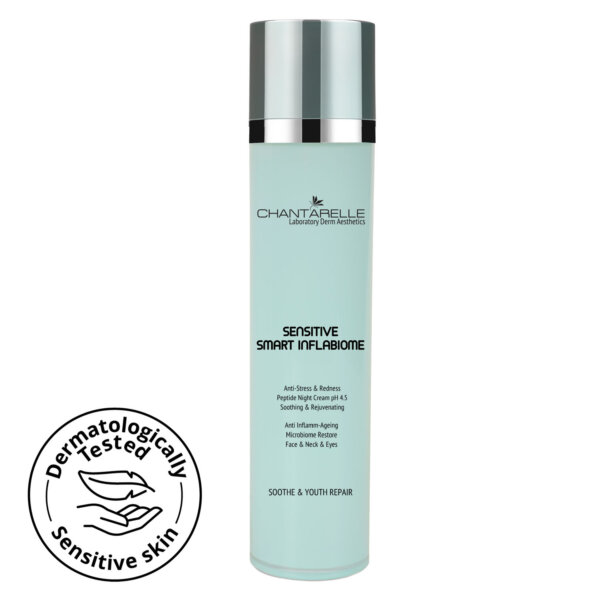
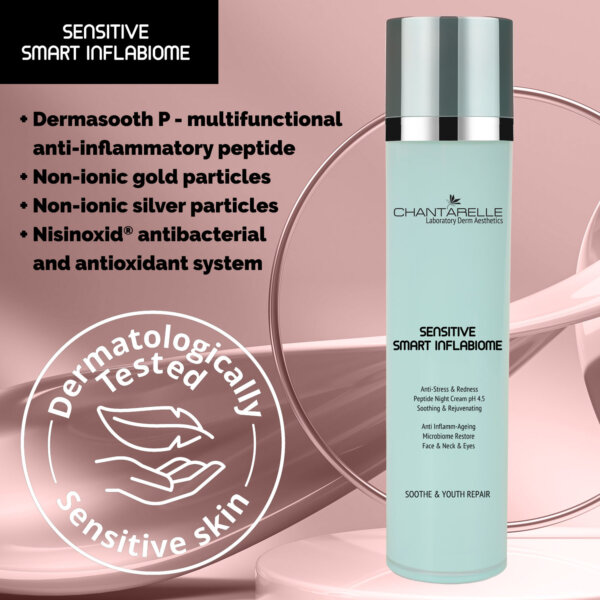
Sensitive Smart Inflabiome
Peptide night cream for sensitive skin, anti-stress and soothing pH 4.5
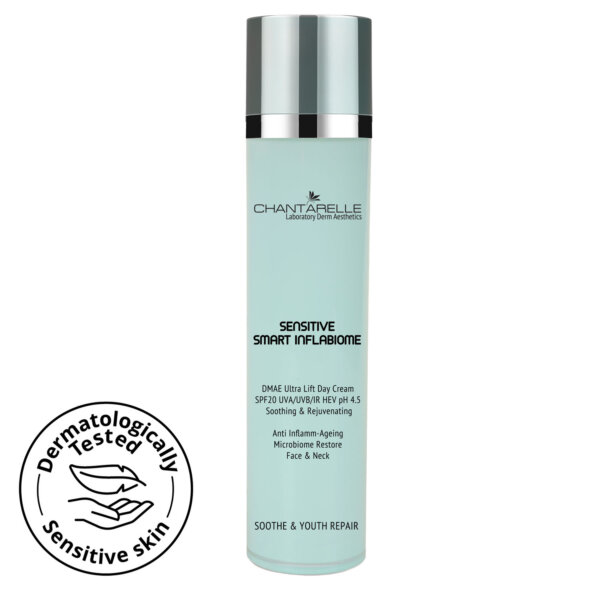
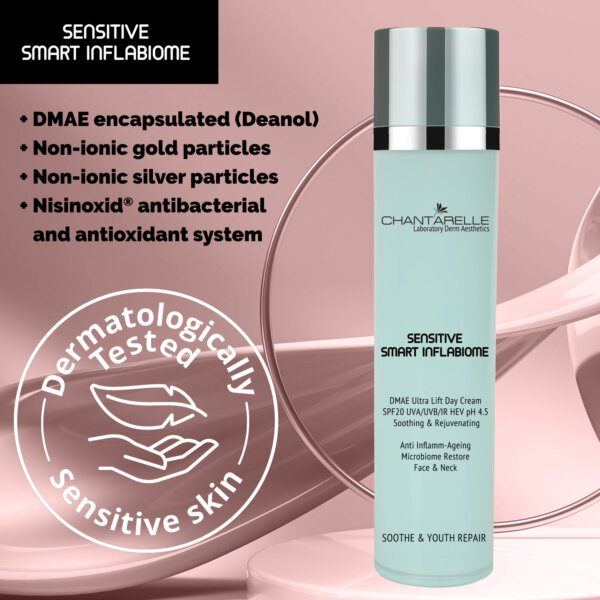
Sensitive Smart Inflabiome
Lifting Day Cream for sensitive skin SPF20 UVA/UVB/IR HEV, rejuvenating and soothing pH 4.5
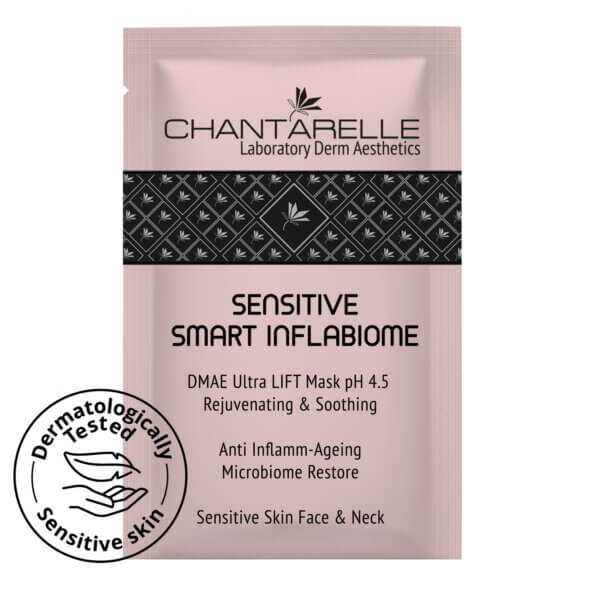
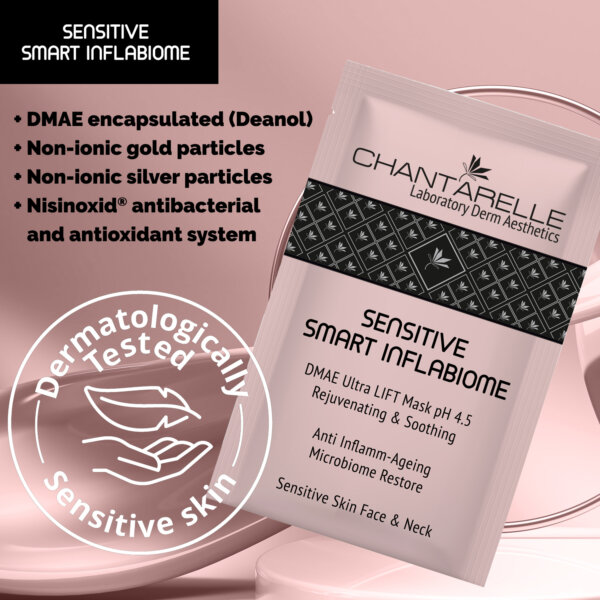
Sensitive Smart Inflabiome
Lifting mask for sensitive skin, rejuvenating and soothing pH 4.5