Try our novelties and bestsellers!»




-
×
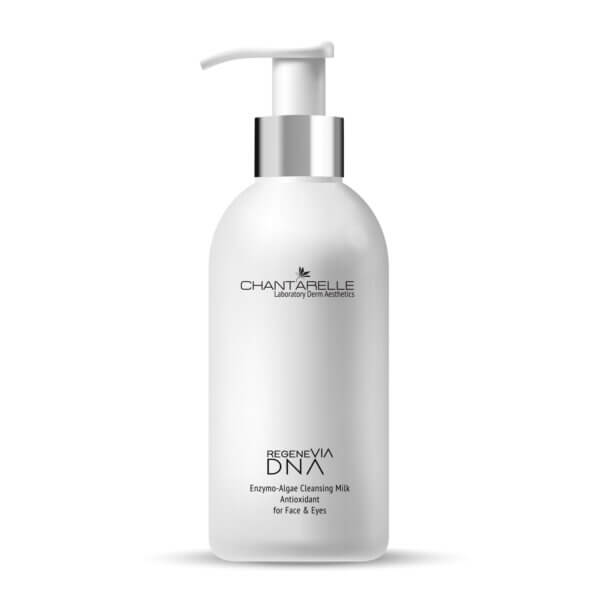 Algae and antioxidant milk
1 × 29,00 £
Algae and antioxidant milk
1 × 29,00 £ -
×
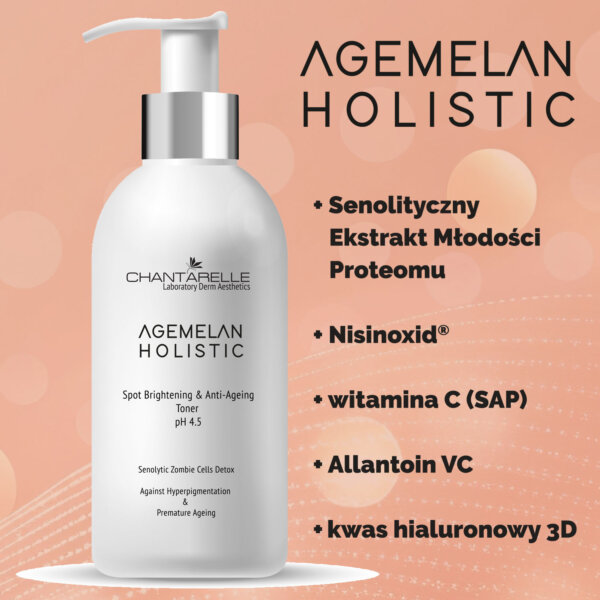
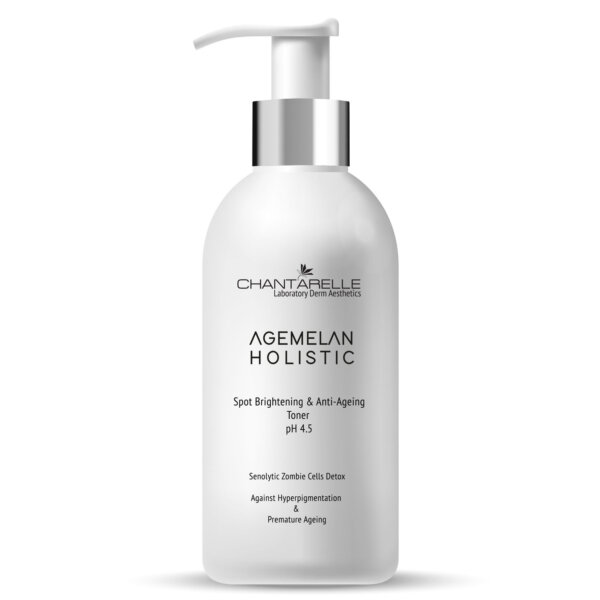 Tonic pH 4.5 to rejuvenate and lighten blemishes
1 × 37,00 £
Tonic pH 4.5 to rejuvenate and lighten blemishes
1 × 37,00 £



Dermatology
What is the natural moisturising factor NMF?

15
Jun
Jun
Natural Moisturizing Factor (NMF) is a mixture of water-soluble compounds that is responsible for maintaining and retaining moisture in the skin. It is found in the outer (keratinised) layer of the skin, the epidermis. Let’s learn more about NMF and its importance in moisturising our skin.
NMF is formed during the process of skin keratinisation, but also during sweating and sebum secretion by the sebaceous glands. It is an oestrogen-dependent component and therefore decreases with our age. The content of NMF falls rapidly with TEWL, which accompanies pathological conditions when the epidermal barrier is breached.
Functions of natural moisturising factor (NMF)
Intracellular NMF consists of amino acids and metabolites. It provides the ability of the upper parts of the stratum corneum to bind and retain water. The correct hydration level of the stratum corneum has three main functions:
- maintains adequate plasticity of the skin, protecting it from damage
- provides the correct functioning of hydrolytic enzymes involved in the skin cell renewal process, i.e. exfoliation
- maintains the optimal state of the skin barrier
The dermal barrier of the stratum corneum
The development of skin sensitivity and reactivity is inextricably linked to the dysfunction of the skin barrier, which is formed by the following structures:
- NMF
- lipids of the bilipid part of the stratum corneum
- sebum
- pot
Composition of natural moisturising factor (NMF)
The composition of natural moisturising factor is quite complex. It’s not just a few elements, but a rich “cocktail” of ingredients5..:
- 40% – amino acids (amino acids): histidine, glutamine, arginine;
- 18.5% – electrolytes (ions) chlorine (chloride); sodium (sodium), potassium (potassium), calcium (calcium), magnesium (magnesium); phosphate (phosphate);
- 12% – pyrrolidonecarboxylic acid (pyrroglutamic acid) and its salts (pyrrolidonecarboxylic acid, PCA, PCA sodium);
- 12% – lactic acid and its salts (lactic acid, sodium lactate);
- 8.5% – sugars (e.g. glycerol (glycerine), hyaluronic acid (hyaluronic acid) and peptides (peptides);
- 7% – urea (urea);
- 1.5% – organic acids (creatinine (creatine), urocanic acid (urocanic acid) – natural sunscreen and others);
- 0.5% – salts of citric acid and formic acid (citrate, formate);
Factors promoting dry skin and low NMF
| Czynniki | Manifestacja |
| genetic predisposition | Filargin (FLG) deficiency, SCCE serine (KLK7) LEKTI lymphoepithelial. Kazal-type inhibitor (SPINK5) and cysteine A serine protease inhibitor CSTA etc. |
| Age-related factors | dry skin in newborns susceptibility to dryness in childhood old age (senile xerosis) |
| dermatoses | atopic dermatitis simple dermatitis allergic dermatitis eczema psoriasis aureus skin infection |
| somatic disease | thyroid insufficiency, cancer, etc. |
| somatic disease | |
| impact of physical factors | UV, wind, cold, ionising radiation, air-conditioning Air discharge, heating, etc. |
The components of the NMF are therefore essential for the maintenance of the epidermis’ hydration level. The skin’s ability to produce natural moisturising factor depends primarily on age. Over the years, the amount of these substances produced by our skin decreases. It also decreases gradually due to the effects of various negative factors, especially UV radiation. Fortunately, cosmetic manufacturers, thanks to their knowledge of NMF composition, are able to reproduce this substance and incorporate it into skincare preparations. Chantarelle brand experts recommend the Absolute Rich Moisture line for dry skin where NMF support is particularly important.
 dr Khrystyna Shekhovtsova
Chantarelle expert, dermatologist and aesthetic physician
Cosmetics to support NMF in the skin
New
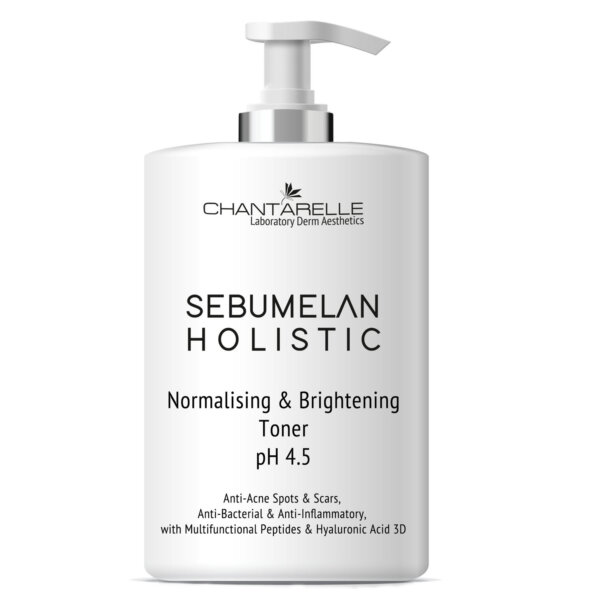
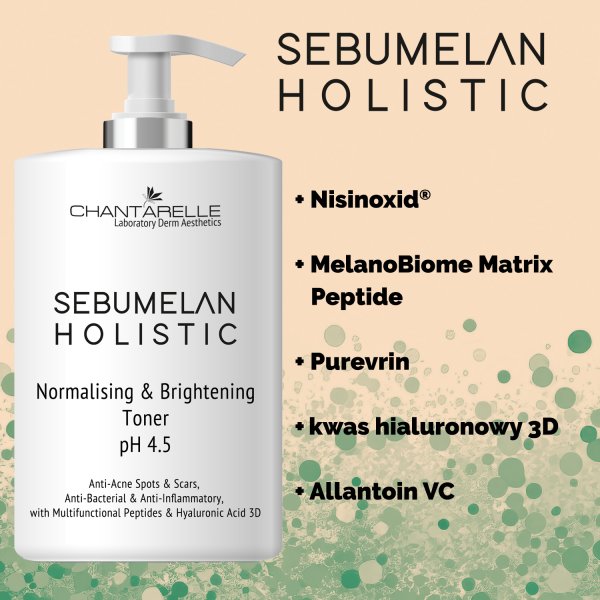
Sebumelan Holistic
New
New
New
New
For professionals only
New
For professionals only
New
New