Try our novelties and bestsellers!»






Active ingredients in cosmetics, Cosmetic treatments, Aesthetic cosmetology, Skin care at home
Retinol for intensive skin renewal
Aug
Retinol is an ingredient well known in cosmetology. Effective in many epidermal renewal treatments, it increases skin firmness and elasticity by stimulating collagen synthesis, promotes microcirculation, and reduces spots and hyperpigmentation. Let’s learn more about its valuable properties.
What are retinoids?
Retinoids are one of the most important groups of substances used in rejuvenation therapies, and include vitamin A and its derivatives, both natural and synthetic. The term ‘vitamin A’ refers not to one, but to several compounds – retinol, retinal and retinoic acid, as well as derivatives such as esters of, for example, retinol palmitate. In the body, retinoids undergo a transformation in which retinol is formed from carotene and retinol esters, and this can be enzymatically oxidised to retinal and retinoic acid. The therapeutic activity of retinoids differs just as they differ in structure. In order to be able to compare the activity of different substances, units of activity are used, usually given in so-called International Units (IU). It is assumed, with the approval of the European Agency for the Evaluation of Medicinal Products, that for retinol, 1 IU corresponds to 300 ng of the substance. For other forms of vitamin A, the value is converted proportionally. Retinol is a highly active form of vitamin A, hence it is particularly frequently used in skin treatments. In dermatology, the most important applications of retinol and its derivatives include the treatment of acne, psoriasis and fish scales. In cosmetology, retinol is recognised as one of the most effective vitamins with a rejuvenating effect, the use of which increases the level of skin cell proliferation, collagen synthesis, and the normalisation of keratinisation levels.
How does retinol act on the skin?
When applied superficially, retinol influences epidermal renewal as well as keratinocyte differentiation processes and skin regulatory functions. Its effects on processes such as protein synthesis, cell metabolism and cell division are also observed. In the epidermis, retinol influences the secretion of transcription factors and growth factors, which are responsible for the proliferation of the cells of the living layer of the epidermis and the exfoliation of the stratum corneum, leading to a strengthening of the protective function of the epidermis and a reduction in TEWL (transepidermal water loss). In the dermis, retinol increases collagen and elastin synthesis and increases the number and activity of fibroblasts. This has a positive effect on the connective tissue status of the dermis and improves the firmness, elasticity and hydration of the skin. Retinol inhibits the activity of extracellular matrix metalloproteinases, thereby protecting collagen from degradation. Retinol activates the remodelling of reticulin fibres and the formation of new blood vessels in the papillary layer of the dermis (Bojarowicz and Płowiec, 2010). As a result, the application of retinol causes an increase in epidermal thickness. Regular use of cosmetics containing retinol for at least four weeks increases the elasticity, smoothness and softness of the skin and results in a reduction in wrinkles (Kafi et al. 2007). Retinol lightens hyperpigmentation and allows the skin to be better nourished and oxygenated, so it retains its proper colour and a nicer younger appearance.
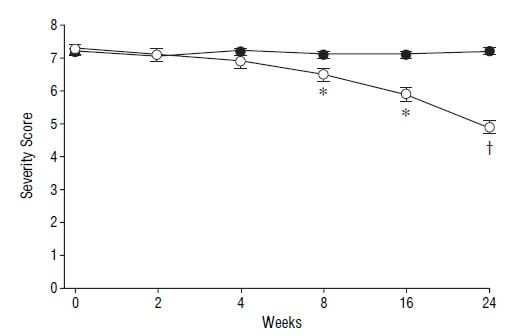
Figure 1. Retinol reduces wrinkles in skin with features of chronological ageing (source Kafi 2007)
In order to achieve the desired effects, it is necessary to use the correct doses of retinol for at least 2-3 months. In European Union countries, the use of a maximum dose of retinol is determined by the Scientific Committee on Consumer Safety (SCCS) and, for retinol, the maximum concentration in cosmetic products can be 0.3% (Zasada et al. 2020).
Microencapsulated retinol in Superior Youth Boost treatment
Retinol is a perishable substance and degrades rapidly. To prevent this, various treatments are used to create a protective coating. Modern science and technology offers microencapsulation technologies, i.e. the creation of miniature carriers that provide the right conditions for the active substances. Microencapsulation also allows easier incorporation into cosmetics, which can be difficult with pure retinol because retinol is very poorly soluble in water. However, the key role of encapsulation technology is to protect and ensure the stability of retinol, which in its pure form is sensitive and easily oxidised and degraded when exposed to air, sunlight, as well as heavy metals and acidic environments. The microcapsules slow down the degradation of retinol by approximately tenfold and, as a result, enable the safe and effective use of retinol treatments and preparations for healthy and beautiful skin.
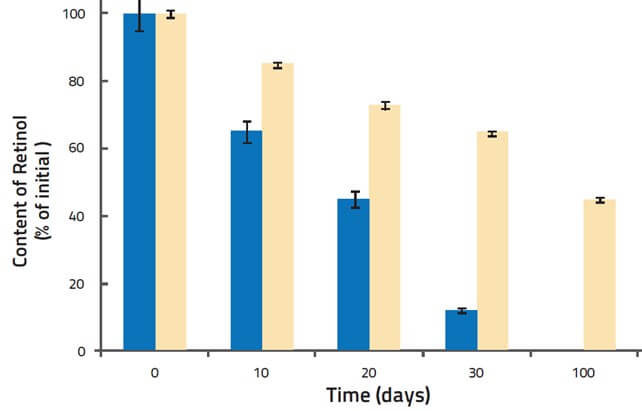
Figure 2. Stability of microencapsulated retinol compared to free retinol. (Source: test results from the active ingredient manufacturer)
Deep skin renewal with pure retinol
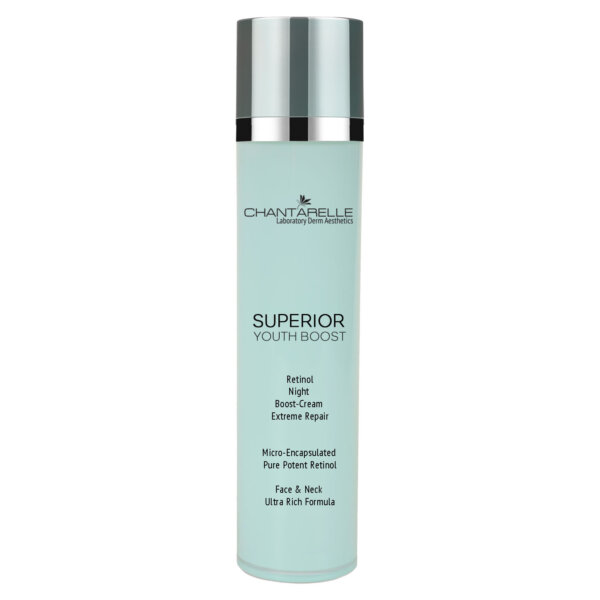
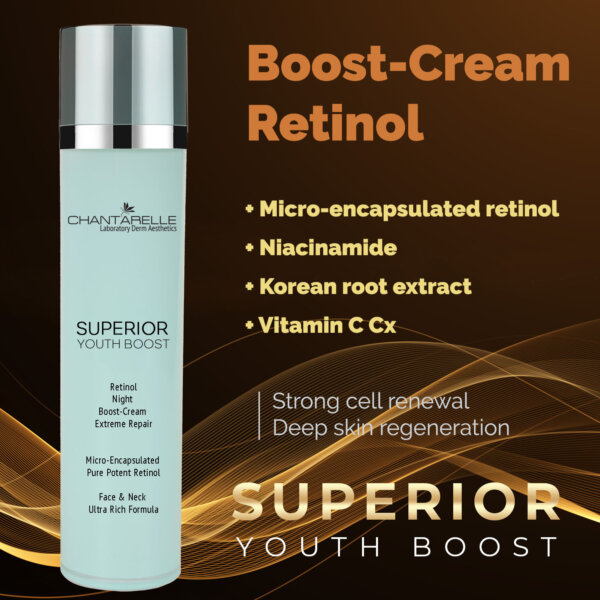
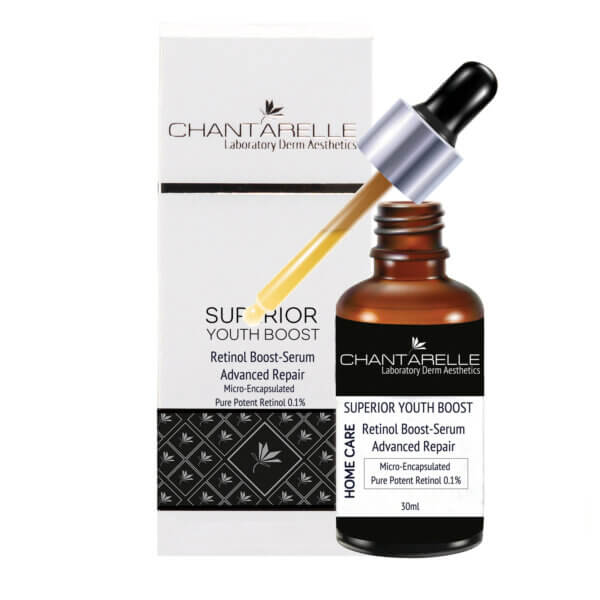
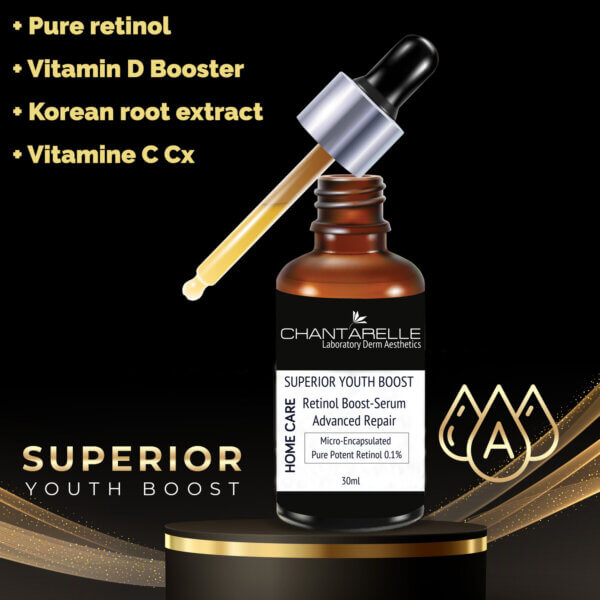
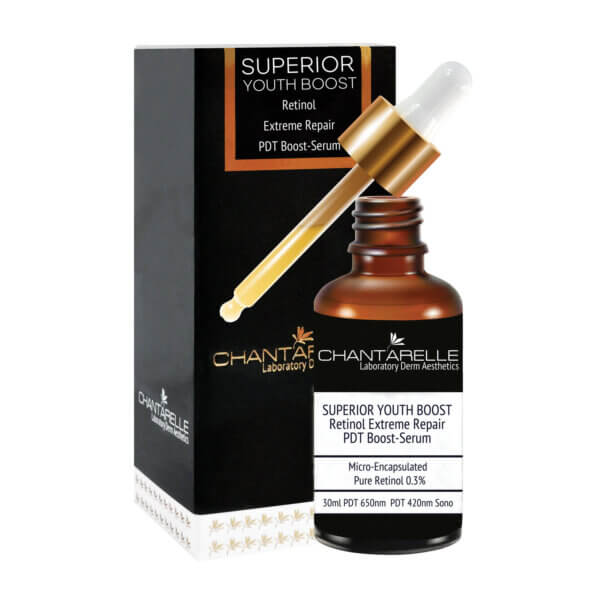
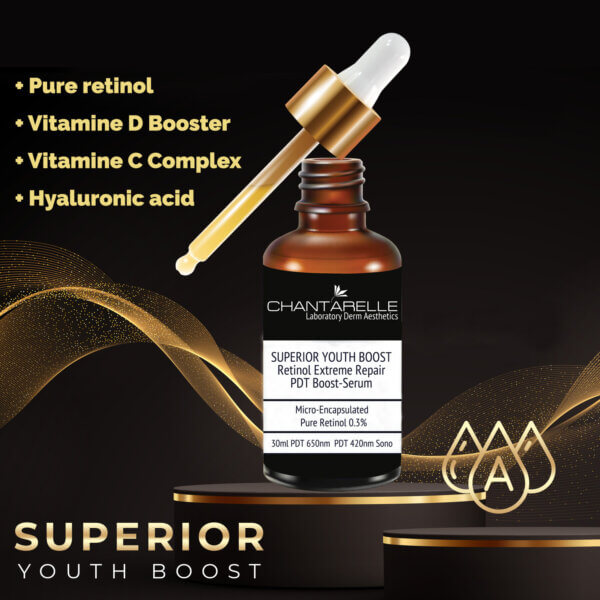
Superior Youth Boost is a professional system for a year-round intensive treatment for cell renewal and skin regeneration. The powerful dermo-cure was developed in the Chantarelle laboratories for the stimulation of collagen synthesis, strengthening of skin structure, reduction of hyperpigmentation and sebum regulation. The formulations contain microencapsulated pure retinol (vitamin A 233310 IU/g), encapsulated in unique ultra-small molecule microcapsules, which is released upon direct application to the skin by massaging. This ensures that it retains its properties. Within the microcapsule, it is protected from light, temperature, pH and oxidation. The stimulating effects of the Superior treatment with retinol are multiplied by the PDT laser application.
 Dr Marcin Wasylewski
Chantarelle expert, biotechnologist and university lecturer
Literature
- Bojarowicz, H., & Płowiec, A. (2010). Effect of vitamin A on skin condition. Probl. Hig. Epidemiol, 91(3), 352-356. Kafi, R., Kwak, H. S. R., Schumacher, W. E., Cho, S., Hanft, V. N., Hamilton, T. A., … & Kang, S. (2007). Improvement of naturally aged skin with vitamin A (retinol). Archives of dermatology, 143(5), 606-612.
- Zasada, M., Budzisz, E., Erkiert-Polguj, A. (2020). A Clinical Anti-Ageing Comparative Study of 0.3 and 0.5% Retinol Serums: A Clinically Controlled Trial. Skin Pharmacology and Physiology, 33(2), 102-116.
Pure retinol in Chantarelle cosmetics