Try our novelties and bestsellers!»






Dermatology
Keepers of skin hydration
Jun
Why do many people have dry, flaky and very dehydrated skin? Why does our skin become dry? Sometimes it is a periodic symptom and sometimes it is chronic. There are many reasons for dryness and they are all quite varied.
Causes can include illness, including hormonal imbalances (e.g. diabetics have chronic dry skin), digestive problems, diseases of the genitourinary tract, as well as dermatological diseases such as atopic dermatitis or fish scales. On the other hand, the skin of a healthy person can dry out due to external factors such as a dry climate, skin coming into contact with chemicals, being in air-conditioned rooms or stress. What then happens to the stratum corneum? Why does it cease to be able to retain water?
What holds water in the stratum corneum?
Recall the main components of the skin responsible for holding water in it:
- Sebum – forms a thin layer of water-lipid emulsion
- Lipid structures (lipid barrier) – consist of cholesterol, ceramides and unsaturated fatty acids, the amount of which is strictly defined in a certain proportion to each other. If the corneocyte contains only 3% lipids, the intercellular cement contains 80%.
- Components of the natural moisturising factor NMF – free amino acids, urea, lactic acid, sodium pyroglutamate
- Keratin is the final life product of the epidermis, characterised by its resistance to mechanical, physical and chemical factors. According to some authors – keratin, like all proteins, is a colloid – it swells in water and binds water molecules.
The stratum corneum – ‘living matter’
In the mid-1990s, it was successfully demonstrated that the stratum corneum is the main permeability barrier of our skin. This idea was put forward in the 1970s by Albert Kligman. The space between corneocytes is filled with the lipid barrier of the stratum corneum, otherwise known as the ‘permeability barrier’. The lipid barrier is formed by alternating layers of lipids and water. Lipids (ceramides, fatty acids, cholesterol) together with the water layer form a lamellar liquid crystalline system. It is the lipids that form an effective barrier to water-soluble substances, so destruction of the lipid barrier by aggressive detergents leads to moisture loss and increased peeling.
Lipids of the stratum corneum vs. sebum
Sebum differs significantly from the lipids of the stratum corneum:
- The lipids of the stratum corneum are not formed in the sebaceous glands, but in the cells of the epidermis.
- The lipids of the stratum corneum are not formed in the sebaceous glands, but in the cells of the epidermis.
- They are not “smeared” between the keratinised scales, but are organised in a certain structure.
- They are not “smeared” between the keratinised scales, but are organised in a certain structure.
- They differ from sebum lipids in their chemical composition.
Proper care is the key to healthy skin
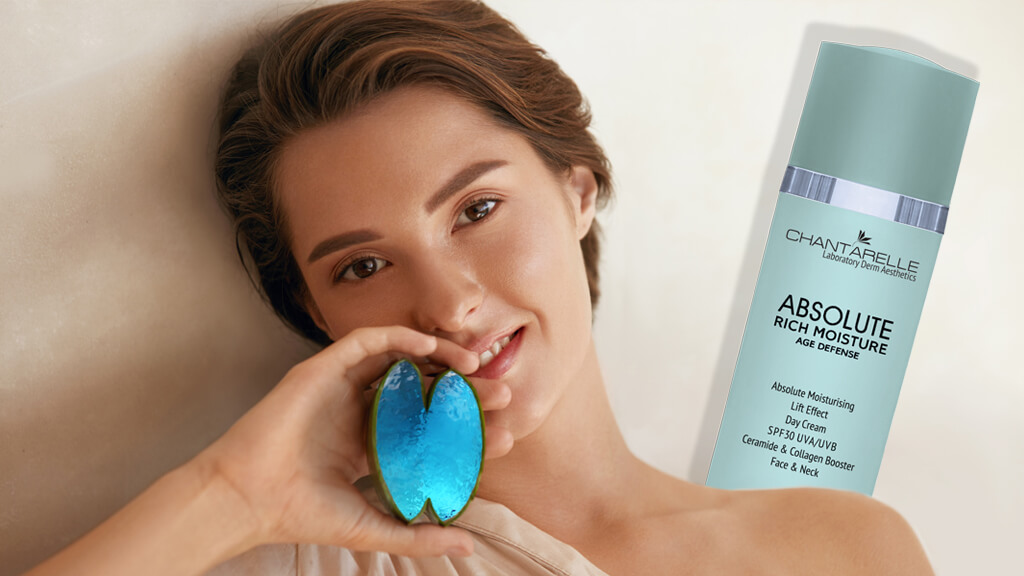
Dry skin is a big problem, but you can reduce it significantly if you approach it competently and use effective methods of action. It is important to avoid factors that increase dryness, such as heavy air conditioning or sunbathing on the skin. Professional cosmetics like Chantarelle’s Absolute Rich Moisture line will also help. Dryness should not be underestimated, as it reduces quality of life and attractiveness, and consequently contributes to faster skin ageing or susceptibility to dermatoses. All it takes is some effort and you can definitely improve the condition of your skin.
 dr Khrystyna Shekhovtsova
Chantarelle expert, dermatologist and aesthetic physician
Literature:
- Coderck L., Lopez O Maza A., Parra J.L Ceramides and skin function/ Am J Clin Dermatol 107-129
- Role of ceramides in barrier function of healthy and diseased skin. Choi MJ, Maibach HI.Am J Clin Dermatol. 2005;6(4):215-23.
- The microstructure of the stratum corneum lipid barrier: mid-infrared spectroscopic studies of hydrated ceramide: palmitic acid:cholesterol model systems.
- Garidel P, Fölting B, Schaller I, Kerth A.Biophys Chem. 2010 Aug;150(1-3):144-56.
- Barrel A., Paye M., Maibach H.I (eds.) Handbook of Cosmetic Science and Technology. Marcel Dekker AG., Basel., 2005