Try our novelties and bestsellers!»






Active ingredients in cosmetics
Papaya – plants in cosmetics
Aug
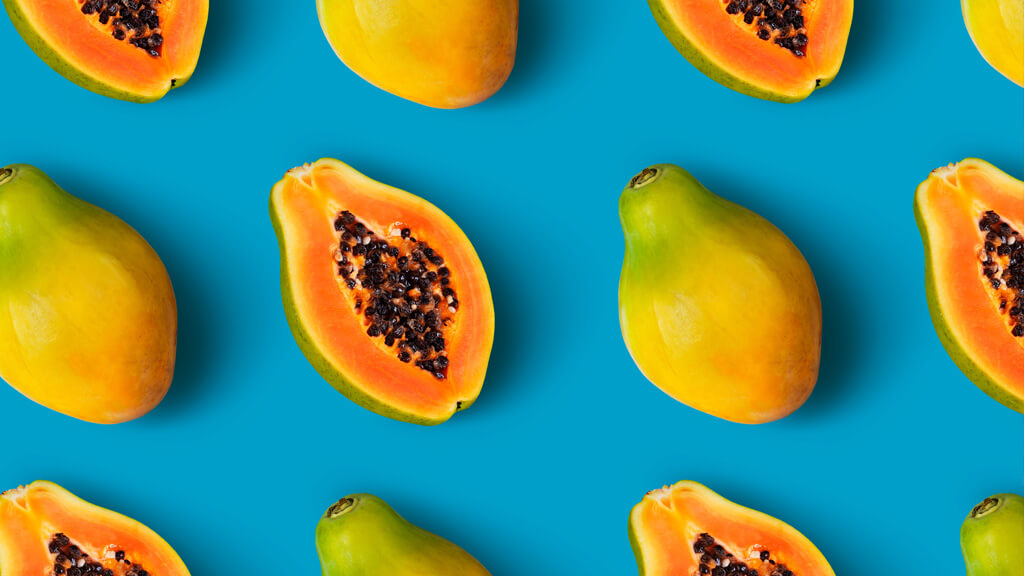
Papaya (Carica papaya) belongs to the melon family. Due to its rapid growth (up to 10 m) and relatively short life span (7 to 15 years), it should be considered a giant herbaceous plant rather than a tree. It only bears fruit for the first five years and its weight varies from 0.5 to 8 kg. The papaya pulp has a butter-like consistency, is orange-yellow, juicy, aromatic, sweet and very tasty.
Papaya grows in tropical and humid climates. It is indigenous to Central America, where it can be found on the low slopes of the Andes and in the Amazon basin – as far south as Argentina. Today, papaya is also grown, on an industrial scale, in Europe. The papaya enzyme papain is used to tenderise meat, clarify beer, on wool and silk before they are dyed, as an aid in the manufacture of oilcloth, an ingredient in toothpaste, a detergent and in contact lens cleaning solutions. Papaya consists mostly of water, sugars, enzymes, most notably the enzyme papain. It also contains vitamins (including vitamin C) and minerals (calcium, nitrogen, phosphorus, potassium, magnesium). The fruit is eaten raw or as preparations, including marmalade, alcoholic beverage, as candied fruit or canned fruit.
Medicinal uses of papaya
Papaya juice is consumed to improve digestion, to regulate intestinal movements, to relieve respiratory disorders (asthma, bronchitis, rhinitis, tuberculosis), fever, hypertension, osteoarthritis and swelling. Crushed papaya fruit is used for boils. Dried and ground seeds and papaya milk, on the other hand, to fight parasites. Grated with water, unripe papaya fruit was administered orally for hypertension. Topical application of papaya milk (pure or dissolved in alcohol) helps treat eczema, rubella, freckles, ringworm and warts.
Papaya in cosmetology and cosmetics
In studies, papaya extract has shown antimicrobial and antioxidant effects – vitamin C, malic acid, citric acid and glucose are responsible for the latter. Papaya also has exfoliating properties, as its enzyme, papain, degrades the cells of the surface layer of the skin, thus improving skin tone and overall condition. Papaya extract is also used in moisturising cosmetics for its ability to absorb and bind water in the epidermis. It is also used in formulations that stimulate cell regeneration, due to its content of α-hydroxy acids (AHA). Papaya extract is therefore used in cosmetics with an exfoliating and smoothing effect on the skin. Papaya extract also has a weakening effect on facial and body hair regrowth. The degradation of keratin in the hair bulb results in a reduction in the diameter of the hair fibre, which consequently facilitates its removal. Papaya extract is therefore used in depilatory preparations.
Papaya in Chantarelle cosmetics