Try our novelties and bestsellers!»






Dermatology, Aesthetic cosmetology, Skin care at home
Discolouration, spots, freckles …
Sep
Is hyperpigmentation your skin’s biggest problem? You are probably a fair-skinned woman with phototype I or II. However, hyperpigmentation also occurs in people with darker skin and has many causes. These include genetic heritage, susceptibility to skin inflammation, excessive tanning, photoallergies, hormonal disorders or chronological ageing.
What we know about hyperpigmentation
To begin with, a few definitions to give an idea of the process of pigment formation in our skin. Its colour is responsible for melanin, a pigment that is produced by skin cells – melanocytes. Melanin can be yellowish-red or golden brown. It occurs in different proportions in each person, e.g. skin that turns red quickly under the influence of the sun contains more yellow-red pigment. The production of melanocytes is supervised by hormones, mainly by the hormone that stimulates pigment production and accelerates tanning – melanotropin. This hormone interacts with the amino acid tyrosine, which is precisely converted into melanin by reaction with the enzyme tyrosinase. The process of conversion of tyrosine to melanin is called melanogenesis and occurs under the influence of a selected stimulus, such as sunlight. If the melanogenesis process occurring in a certain area of the skin is increased (e.g. by increasing the production of melanocytes or accelerating the melanogenesis process itself), the accumulation of melanin pigments will be greater in this area than in the surrounding other skin cells. This area of skin is what we call pigmentation (hyperpigmentation). If, on the other hand, the production of melanin is considerably lower on a given patch of skin – it will become much lighter than its surroundings, and this phenomenon is called discolouration (hyperpigmentation). This is associated with some skin diseases, such as vitiligo acquired or albinism involving hyperpigmentation of the entire body surface. Skin hyperpigmentation takes the form of light brown, brown or even black spots of various sizes and shapes. We divide them into superficial – located in the epidermis and deep – involving the dermis. They can occur in various parts of the body, but most commonly form on the surface of skin that is exposed and exposed to sunlight.
Factors of hyperpigmentation
- Light – UV rays that give a tan, if skin is exposed to the sun too much and too often, can lead to the formation of hyperpigmentation.
- Pigmentation is the most common cause of hyperpigmentation.
- Heat – prolonged, direct heating of the skin can also lead to pigmentation spots.
- Inflammatory – inflammation caused by a skin disease (e.g. acne vulgaris, psoriasis, lichen) can cause a spike in melanin production or the destruction of melanocytes and the release of too much pigment from them.
- Mechanical – arise from chronic mechanical trauma or irritation of the skin (e.g. by constant scratching), which often has the effect of accelerating melanogenesis and increasing pigmentation.
- Chemical – the irritant is the chemical agent that causes inflammation and the formation of pigmentation. Such an agent may be, for example, bergamot oil, which can cause contact allergy symptoms.
Typopigmentation types
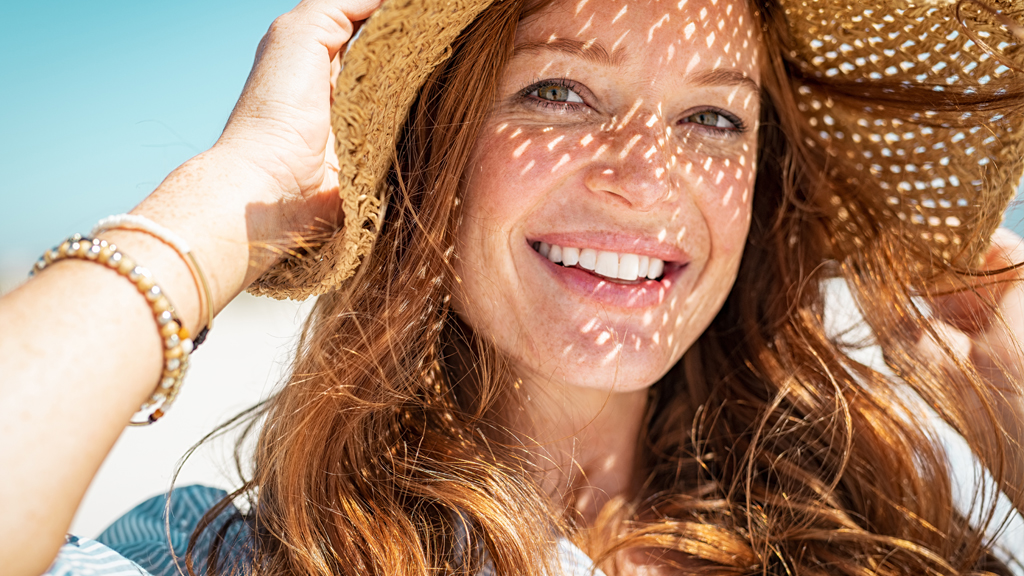
Pigmentation (ephelides) – small spots (1-5 mm) of light or dark brown that may merge together to form larger areas of hyperpigmentation. They are usually numerous and occur on the face, décolleté, backs of the hands, forearm, back and chest. They become more visible when exposed to the sun, but also tend to recede with age. They most often affect young, fair- or red-haired and fair-skinned people (phototype I). Their owners are more prone to sunburn and often wish to remove them for aesthetic reasons. It is very difficult to remove them permanently. Exfoliating and bleaching treatments are the most common, and it is also important to protect the skin from the sun with high factor creams.
Pigmentation Sun spots – are usually light or dark brown in colour and occur most commonly on the face, décolleté and arms. They develop after overexposure to sunlight (often after a burn) or in a tanning bed. In summer and early autumn, they become darker and thus more visible. In people with a tendency to such hyperpigmentation, it is necessary, regardless of the season, to use creams with a high sunscreen, at least SPF20 UVA/UVB.
Pigmentation due to photoallergy – that is, the use of certain cosmetic preparations and perfumes that contain alcohol or photosensitising substances. They can also appear after taking certain medications and herbs (especially St. John’s wort). They take the form of irregular brown-purple patches and usually occur on the face, neck and upper chest. Previously, these areas of skin often have a transient inflammation. Harmful cosmetics should be discontinued immediately and the skin should be given maximum protection from UVA/UVB rays.
Post-inflammatory hyperpigmentation – occurs at the site of inflammation, with eczema-prone skin and adult acne problems, but also with psoriasis, chickenpox, among others. They are the result of increased pigment production by increased melanocyte activity. They often disappear spontaneously after a shorter or longer period. To lighten this type of discolouration and to soothe the skin after inflammation, suitable home care preparations are recommended.
Ostephthalmia (melasma) – occurs in the form of irregular, yellow-brown patches, most commonly in people with dark skin. Osteoporosis is mainly located on the face. It may be caused by hormonal imbalance: during pregnancy (second and third trimester), in the case of thyroid disease, liver disease (liver spots), adrenal glands, during the use of oral contraceptives or other hormonal drugs, e.g. during menopause. Osteoporosis can also result from a photoallergic reaction that occurs after skin exposure to UV radiation and application of photosensitive cosmetics or medications. Osteoma symptoms are usually exacerbated by exposure to sunlight. Treatment is chosen depending on whether the hyperpigmentation covers the epidermis or extends to the dermis. And above all, once it has been established what is the main factor causing the osteoma.
Lentiginous spots (lentigines) – take the form of round, yellowish-brown spots that darken and become more numerous when exposed to the sun. They are similar to freckles, but of a much larger size. They mainly cover the face, cleavage and hands, but can also affect the arms, abdomen, back and legs. They occur most often in elderly people and are called senile lentigines spots. If their main cause is long-term exposure of unprotected skin to sunlight, they are referred to as solar lentigines. The recommended treatment is usually lightening treatments (cryotherapy, laser) and the use of lightening preparations during home care.
Office treatments for hyperpigmentation
At the beginning of any treatment for hyperpigmentation, the beautician or doctor determines the causes, type and depth of hyperpigmentation. Depending on the nature of the problem, one or a series of in-office treatments and systematic home care with appropriately selected preparations are recommended. Chantarelle recommends the following treatments: Agemelan Holistic, Sebumelan Holistic , C’Modular Age, acid peels, laser peels and PDT photodynamic treatments.
Home care for skin with hyperpigmentation
Anti-Pigmentation is all about protecting the skin from UV rays all year round. In spring and summer, UVA/UVB sunscreens with a minimum of SPF30 should be used, while in autumn and winter a minimum of SPF20 should be used. Prolonged exposure to the sun and tanning beds should also be avoided. It is also important to read the list of active ingredients in skin care and colour cosmetics and perfumes so that they do not contain sensitising substances. Selected Chantarelle home care lines work actively against hyperpigmentation:Agemelan Holistic, Sebumelan Holistic and C’Modular Age.