Try our novelties and bestsellers!»





Active ingredients in cosmetics
Azelogycin to brighten and soothe skin problems
Jan
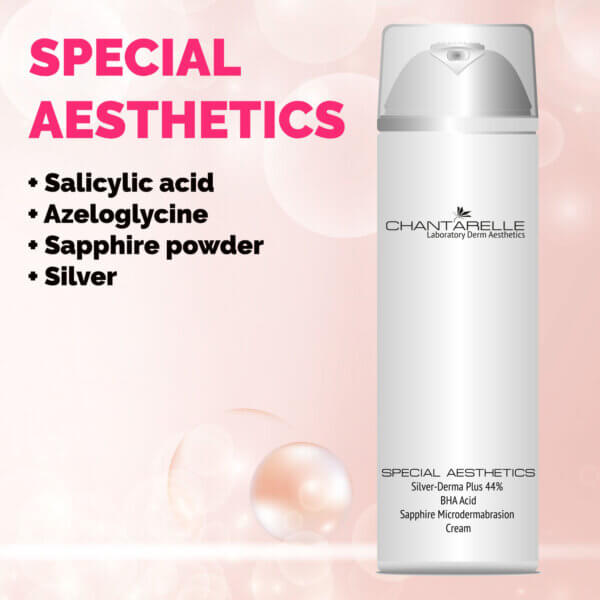
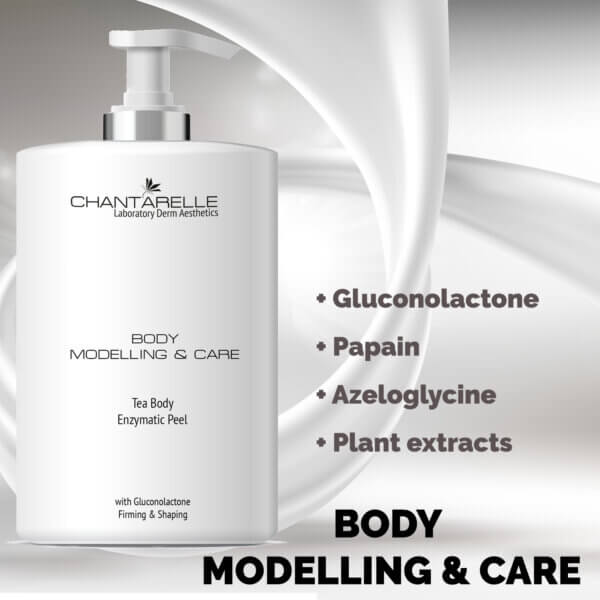
Azeloglycine is used in many Chantarelle cosmetics. It lightens hyperpigmentation, normalises sebum production and secretion, has anti-epidermal, antibacterial, anti-inflammatory, moisturising and elasticising effects. You may find it in preparations for oily skin, seborrhoeic skin, skin with symptoms of acne vulgaris, vascular skin, skin with symptoms of rosacea, skin with erythema, dehydrated skin, skin with hyperpigmentation.
Anti-inflammatory and antibacterial azelaic acid
Active ingredients used in cosmetic preparations can exhibit many different properties for our skin. An example of such a substance is Azelaic acid. It has anti-inflammatory and antibacterial properties, but also has a gentle exfoliating effect. Azelaic acid thus has a keratolytic effect, thereby reducing the formation of sebaceous suppositories. It also inhibits the growth of bacteria responsible for acne formation (Mazurek and Pierzchała 2016). Azelaic acid requires relatively high concentrations to achieve these effects. At the same time, it is poorly soluble in water. These two characteristics make the application of azelaic acid not always an easy task. A compound was sought that would retain the properties of azelaic acid while obtaining physicochemical characteristics that would facilitate its use in cosmetic preparations. Such a compound is Azeloglycine which is a derivative of azelaic acid and an amino acid naturally found in peptides and proteins – glycine. This compound is well soluble in water. Its activity is high even when low concentrations are used (Rigano and Cucchiara 2003).
Azeloglycine for hyperpigmentation
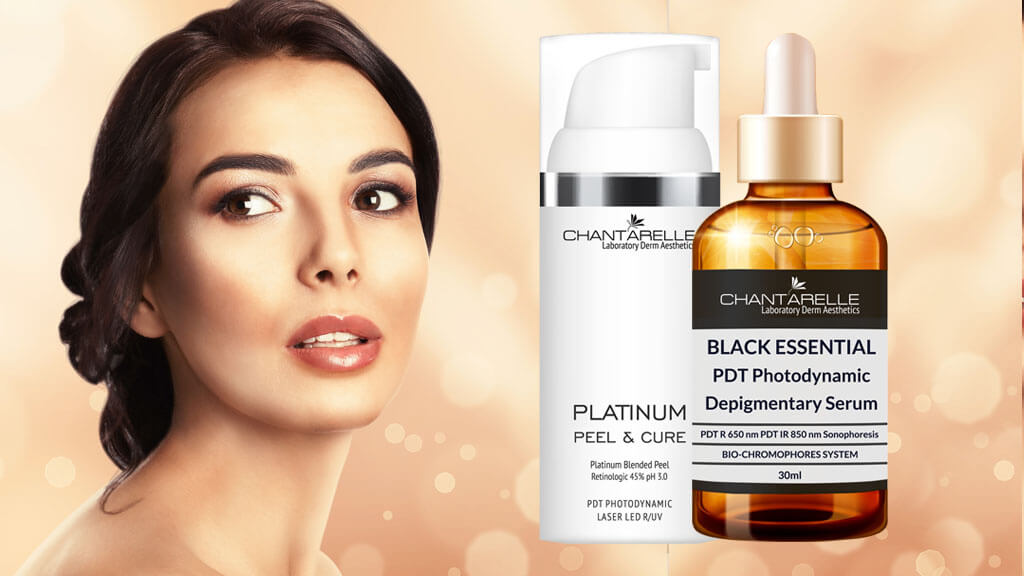
The action ofAzeloglycine is similar to that of azelaic acid. Azeloglycine is used in the presence of pigmentation disorders. Preparations containing this substance have been shown to be effective in people who have developed chloasma. Azeloglycine also has an anti-inflammatory effect. When applied in the form of a cream containing 5% of this compound, it is effective against rosacea (Berardesca et al. 2012). In addition to its anti-inflammatory effects, Azeloglycine has a moisturising effect and also helps to control sebum secretion. Azeloglycine has a broad spectrum of activity and is a cosmetic ingredient that can be used in preparations intended for the treatment of hyperpigmentation (of the oily type and post-acne, post-sun, post-inflammatory type), seborrhoea and rosacea. Thanks to these properties, preparations containing Azeloglycine have a brightening, sebostatic and anti-ageing effect. Azeloglycine has been used in Chantarelle’s Platinum Peel&Cure, Ideal Pure, PDT Black Essential, Special Aesthetics and Thermo-Modelling. product lines.
 Dr Marcin Wasylewski CHANTARELLE
Laboratory Derm Aesthetics expert
Literature
– Berardesca E, Iorizzo M, Abril E, Guglielmini G, Caserini M, Palmieri R, Piérard GE. Clinical and instrumental assessment of the effects of a new product based on hydroxypropyl chitosan and potassium azeloyl diglycinate in the management of rosacea. Journal of cosmetic dermatology. 2012 Mar 1;11(1):37-41. – Mazurek K, Pierzchała E. Comparison of efficacy of products containing azelaic acid in melasma treatment. Journal of cosmetic dermatology. 2016 Sep 1;15(3):269-82. – Rigano L, Cucchiara M. Azeloyl-Glycine: a new active in skin disequilibrium. Journal of applied cosmetology. 2003 Oct;21(4):177-88. – Viyoch, J., Tengamnuay, I., Phetdee, K., Tuntijarukorn, P. and Waranuch, N., 2010. Effects of trans-4-(aminomethyl) cyclohexanecarboxylic acid/potassium azeloyl diglycinate/niacinamide topical emulsion in Thai adults with melasma: a single-center, randomized, double-blind, controlled study. Current Therapeutic Research, 71(6), pp.345-359.
Azeloglycine in Chantarelle cosmetics