Try our novelties and bestsellers!»





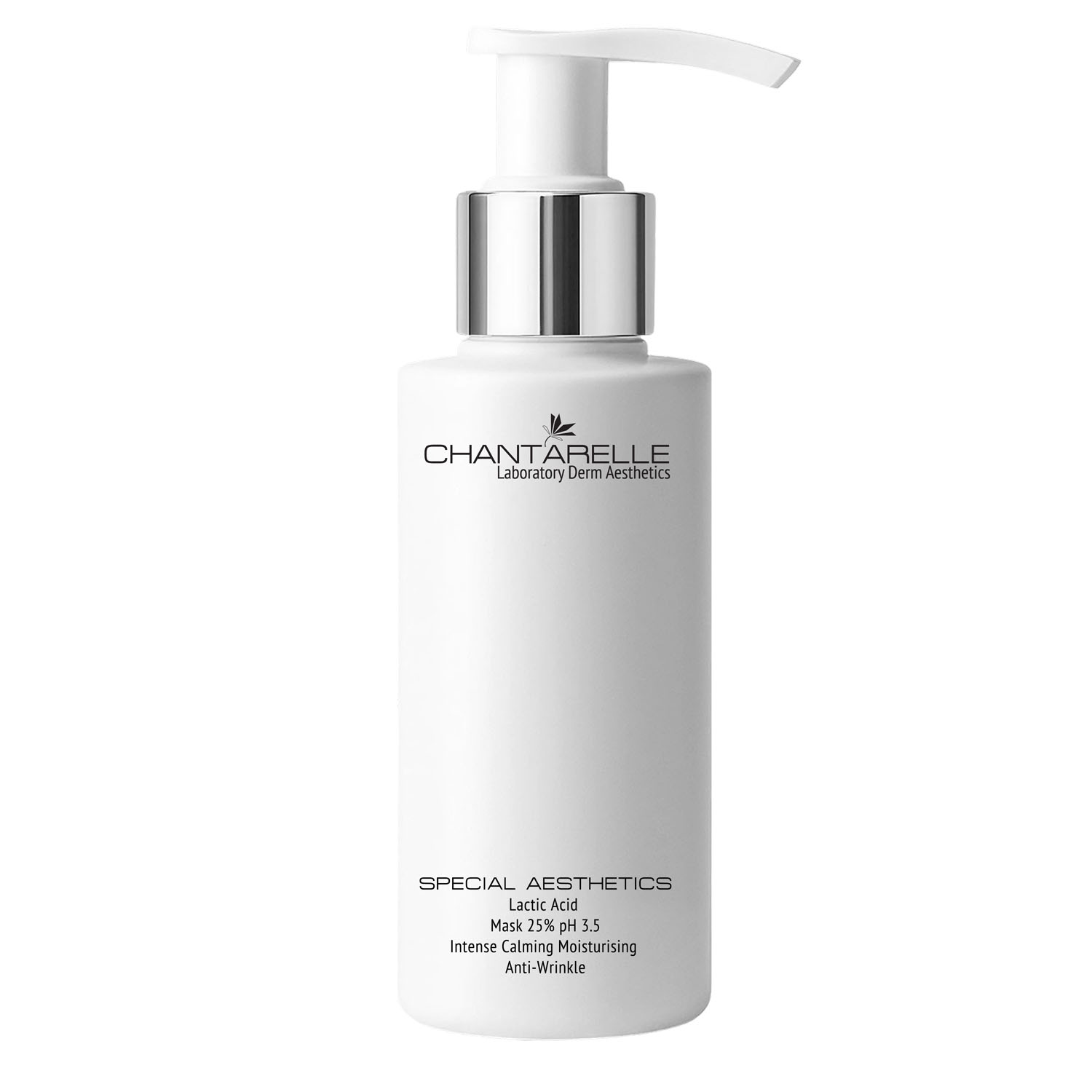
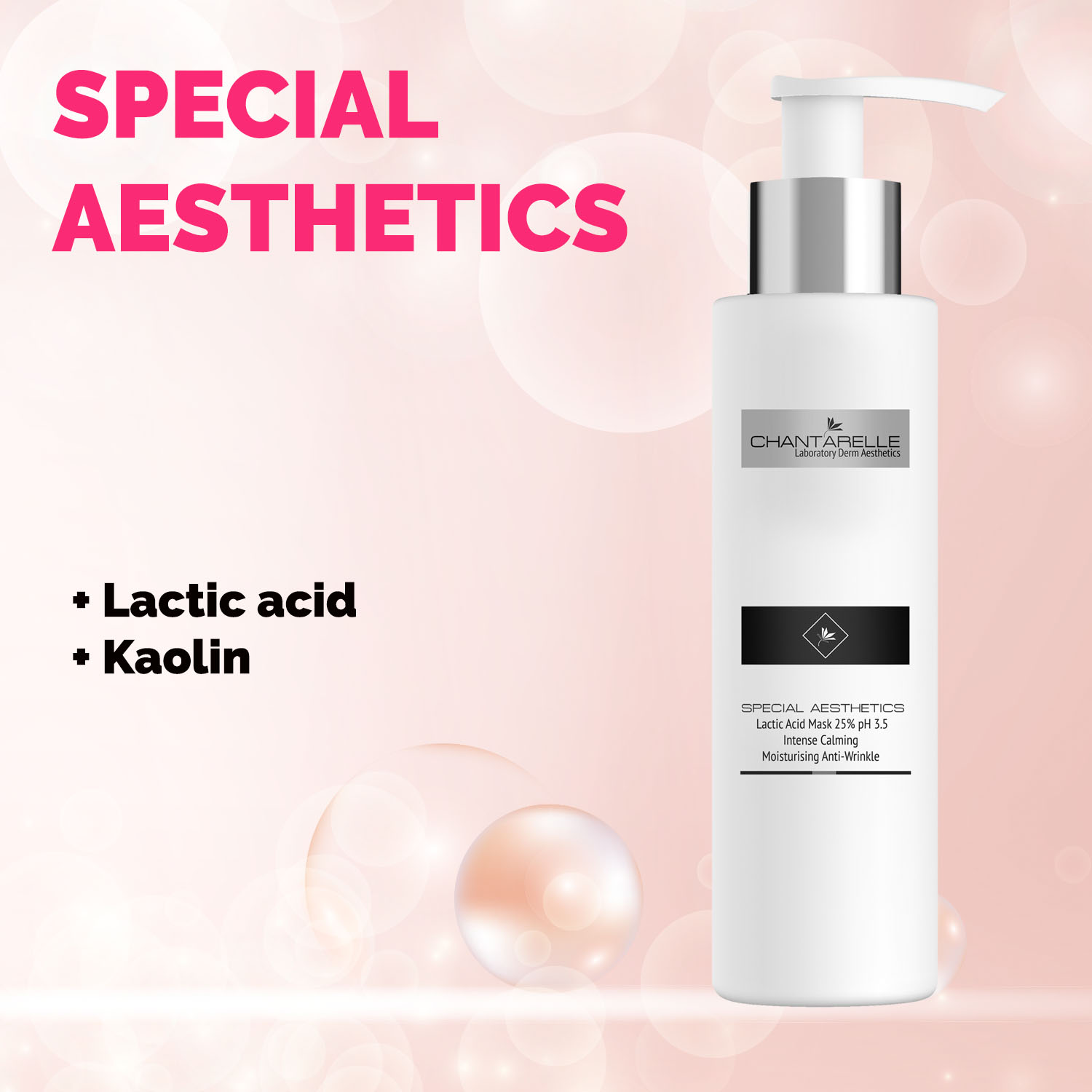
Lactic Acid Mask 25% pH 3.5 Intense Calming Moisturising Anti-Wrinkle – Professional
Special Aesthetics
Mask with lactic acid 25% pH 3.5. Anti-wrinkle, moisturising and smoothing. Rejuvenates, soothes and evens out skin tone.
Cap.:
100mlLactic acid mask 25% pH 3.5, anti-wrinkle, moisturising and smoothing.
The formula contains 25% lactic acid and soothing kaolin. The exfoliating mask rejuvenates, moisturises, smooths, soothes and evens skin tone. Removes dead skin cells and impurities. Stimulates collagen and elastin production to increase skin elasticity and density. Reduces wrinkles, stimulates hydration, stimulates keratinisation. It lightens spots and discolouration and evens out small scars. Any mask with acids is excellent as a peel prior to skin rejuvenation treatments.
The mask is especially recommended for flabby, thinning skin without elasticity, with wrinkles and age pigmentation spots, as well as for skin sensitive to chemical peelings.
Recommendations and indications
- mature skin with wrinkles
- dry skin in need of hydration and renewal
- dry skin in need of hydration and renewal
- keratosis disorders
- flagging, thinning skin, lack of elasticity
- skin in need of hydration
- photographic signs of ageing, skin ageing prematurely
- pigmentation, sun and age spots
- with imperfections – scars and bumps
- also for skin sensitive to chemical peels
Effects
- removal of dead skin cells and impurities
- stimulation of keratinisation
- inducing collagen and elastin production
- increase in skin elasticity and density
- reduction of wrinkles
- stimulation of hydration
- brightening of spots and hyperpigmentation
- improving skin tone
- smoothing of fine scars
- Perfect as a peel
- perfect as a peel prior to skin rejuvenation treatments
Major active ingredients
✓ Lactic acid (AHA) – a natural moisturising ingredient. It is one of the basic components of NMF (Natural Moisturizing Factor) natural moisturizing factor. By reducing transepidermal water loss (TEWL) and evaporation of water from the epidermis, it binds water in the epidermis and restores barrier integrity. It activates the renewal and regeneration mechanisms of collagen and elastin fibres. Cleanses the skin, softens, evens out colour, improves elasticity and firmness. Provides excellent hydration also to the deeper layers of the skin.
✓ Caolin – a cosmetic ingredient of mineral origin. It is one of the most delicate clays and contains many trace elements (including silicon, aluminium, iron, magnesium, zinc and calcium) and mineral salts. It has light covering and brightening properties.
PRESTIGIOUS AWARD
MERCURIUS GEDANENSIS 2013 AWARD


What do we know about lactic acid?
✓ Lactic acid is an alpha hydroxy acid (AHA) of moderate potency. It plays an important role in biochemical processes. It is produced by lactic acid bacteria of the Lactobacteriaceae family. It is also formed during intense exercise in our muscles and its presence causes acidification of the muscles, which results in a decrease in their performance.
✓ In low concentrations (up to 10%), lactic acid has a moisturising effect. It is one of the main components of NMF, or natural moisturising factor. It therefore influences the hydration and moisturisation of the skin and allows the epidermis to maintain a normal moisture level.
✓ In higher concentrations (above 20%), it exhibits an exfoliating effect. Peelings containing lactic acid , in addition to its ability to exfoliate the epidermis, improve the pigmentation of the skin, for example in facial acne and hyperpigmentation.
✓ Furthermore, lactic acid also shows the ability to increase epidermal thickness by increasing levels of procollagen I and collagen I. Thanks to these properties, it is considered suitable for use in rejuvenating skin with photodamage.
✓ Lactic acid is therefore used very frequently in cosmetic and medical treatments because it effectively stimulates collagen and elastin production. It therefore stimulates skin hydration and elasticity, smoothes wrinkles, lightens spots and discolouration, smoothes scars and stretch marks, and additionally regulates keratinisation, cleanses and shrinks skin pores. To conclude, lactic acid is a mildly effective agent to achieve an all-round improvement in skin condition: hydration, firmness and colour.
| 02. Cap. | 100ml |
|---|---|
| 03. Linia | Special Aesthethics |
| 05. Kosmetyka profesjonalna | acids, masks, peels |
| 07. Wiek i płeć | age 20-30, age 30-40, age 40-50, age 50+, male |
| 08. Typ skóry | all skin types, mature skin |
| 09. Problem skóry | loss of firmness, deep wrinkles and furrows, facial wrinkles, photo-aging, discolourations, acne scars |
| 10. Efekt działania | exfoliation, rejuvenation, firming, regeneration, reduction of discolouration |
| 11. Składniki aktywne |
Active ingredients
lactic acid, kaolin, allantoin, beeswax
DESCRIPTION:
Lactic acid (AHA) – a natural moisturising ingredient. It is one of the primary components of NMF (Natural Moisturizing Factor) natural moisturizing factor. By reducing transepidermal water loss (TEWL, Trans Epidermal Water Loss) and evaporation of water from the epidermis, it binds water in the epidermis and restores barrier integrity. It activates the renewal and regeneration mechanisms of collagen and elastin fibres. Cleanses the skin, softens, evens out colour, improves elasticity and firmness. Provides excellent hydration also to the deeper layers of the skin.
Caolin – is a cosmetic ingredient of mineral origin. It is one of the most delicate clays and contains many trace elements (including silicon, aluminium, iron, magnesium, zinc and calcium) and mineral salts. It has light covering and brightening properties.
Alanthoin (pro-vitamin A) – counteracts hypersensitivity and excessive reaction to the sun. Has antioxidant properties. Protects against free radicals, which are the cause of faster skin ageing.
Beeswax (Cera Alba) – has antibacterial, smoothing and moisturising effects. Thanks to its highly nourishing substances, it lubricates the skin and protects it from drying out. Products enriched with beeswax also help skin sores to heal faster.
Directions for use
Apply to the skin for 10-15 minutes avoiding the area around the eyes and mucous membranes, wash off with water, tonify.
Line
Special Aesthetics are special, multifunctional preparations for use in various skincare procedures. Among them are preparations for make-up removal, skin cleansing, scrubs, acid masks, soothing masks after dermoesthetic procedures, algae plastic masks, massage lotions, specialty creams.
You may also like…
Related products