Try our novelties and bestsellers!»




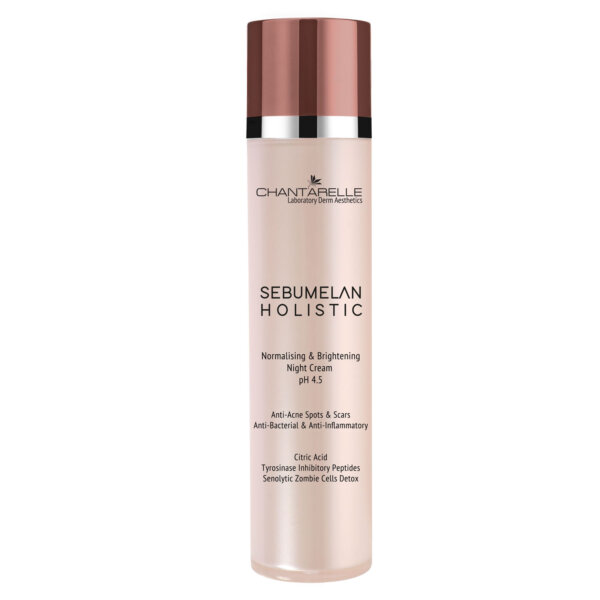 Normalising & Brightening Night Cream with Senolytics and Peptides

Active ingredients in cosmetics, Aesthetic cosmetology
Aquatide 2-Peptide – a biomimetic peptide with multifunctional action
Jan
Even if we don’t like it, our skin does not get younger with age. The processes that determine this are both intrinsic and caused by external factors: environmental pollution or sun exposure. What can we do to protect our skin?
The obvious thing is to constantly remind yourself to moisturise your skin properly. We should also not forget about UV protection. We can provide our skin with antioxidants to neutralise oxidative stress and active ingredients to create protection against the effects of pollution. But can we do even better to help our skin?
Factors affecting skin ageing
This seems difficult because over time, regenerative processes lose their dynamism and the skin loses its youthful appearance. The expression of genes related to lipid biosynthesis, the synthesis of structural proteins or components of the horny envelope is reduced. It is the deficiency of regenerative processes that underlies the impairment of barrier and mechanical function in skin undergoing ageing processes. Collagen-degrading metalloproteinases are activated and, at the same time, the biosynthesis of procollagen decreases, resulting in a thinning of the skin and the appearance of wrinkles. Inflammatory processes involving elastin degradation and decreased tissue elasticity are also activated (Farris, 2011).
The rejuvenating properties of sirtuins
Can we not only counteract the effects of ageing, but also influence the underlying mechanisms? The answer is yes, and such a mechanism is gene modification similar to the action of a switch that activates or deactivates a particular gene. Among others, enzymes called ‘sir proteins’, sirtuins or longevity proteins are responsible for this mechanism (Siedlecka and Boguslawski, 2005). Sirtuins are involved in DNA repair, lipid metabolism, stress response and ageing processes. Sirtuins are activated during reduced caloric intake, and several scientific studies indicate that a low-calorie diet slows down ageing. It is also known that substances such as polyphenols, which are components of red wine, for example resveratrol, activate sirtuins similarly to a low-calorie diet.
Are sirtuins longevity enzymes?
Can we alter sirtuin activity and counteract age-related conditions?
The autophagy process
It is worth recalling that the 2016 Nobel Prize in Medicine or Physiology was awarded to Yoshinori Ohsumi for his discoveries on the mechanisms of autophagy. The word ‘autophagy’ comes from the Greek and can be translated as ‘self-eating’. The process of autophagy otherwise known as autophagocytosis leads to the planned degradation of unnecessary cellular components. Autophagy is triggered by stress factors such as infections, oxidative stress or caloric deficit.
Aquatide biomimetic peptide
Can we influence autophagy processes other than long-term starvation? Scientific reports indicate that autophagy processes can be triggered by a biomimetic peptide called Aquatide. Research published in 2019 (Lim et al. 2019) demonstrates that Aquatide has the ability to activate autophagy and is an antioxidant, so it can improve skin elasticity and, as a result, counteract skin ageing. In clinical studies, significant improvements in skin elasticity were observed within four to eight weeks of using Aquatide surface peptide. The conclusion of these studies is that autophagy plays an important role in skin ageing processes and that cosmetic ingredients can be activators of autophagy. The Aquatide peptide increases collagen synthesis in human fibroblasts and also significantly increases skin hydration, protects the hydro-lipid barrier from damage due to intrinsic and extrinsic factors (free radicals, UV radiation, smog – environmental pollutants PM 2.5 and PM 10, pollen). Aquatide activates SIRT 1 sirtuins and detoxifying proteins that stimulate cellular cleansing of pollutants. It effectively rejuvenates, remodels the dermal-epidermal junction, regenerates barrier components such as ceramides and NMF and prevents transepidermal water loss. Importantly, these actions involve the activation of natural repair processes in our skin.
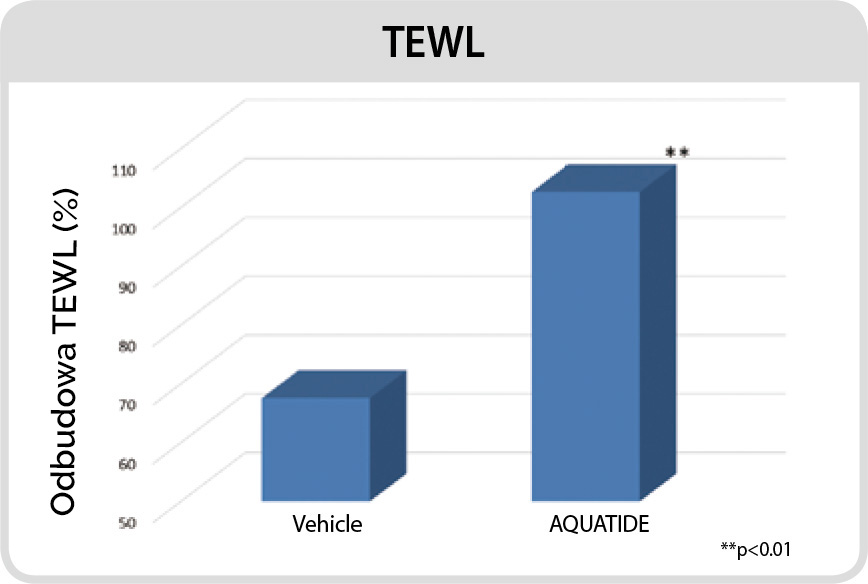
Aquatide prevents transepidermal water loss (TEWL)
(source: test results from the active ingredient manufacturer).
Aquatide in Chantarelle cosmetics
We need to take care of our skin, and with the help of cosmetics containing advanced active ingredients such as Aquatide, we can effectively rejuvenate our appearance. Aquatide peptide has been used in the following Chantarelle brand lines:
- Agemelan Holistic – a rejuvenation and repair programme to lighten hyperpigmentation and colour, for the renewal of collagen and skin structure, whose damage causes and exacerbates pigmentary changes.
- Sebumelan Holistic – a normalising and brightening programme with a pH of 4.5, for oily, acne-prone, combination skin; for the reduction of post-inflammatory hyperpigmentation and scarring.
 Dr Marcin Wasylewski
Chantarelle expert, biotechnologist and university lecturer
Literature:
- Lim, J., Lim, C. J., Kim, S., Nam, G., Chang, M., Park, K., … & Jeong, S. (2019). Antiaging and antioxidant effects of topical autophagy activator: A randomized, placebo-controlled, double-blinded study. Journal of cosmetic dermatology, 18(1), 197-203.
- Farris, P. K. (2011). Innovative cosmeceuticals: sirtuin activators and anti-glycation compounds. In Seminars in cutaneous medicine and surgery (Vol. 30, No. 3, p. 163).
- Siedlecka, K., & Boguslawski, W. (2005). Sirtuins-enzymes of longevity? Gerontologia Polska, 13(3), 147-152.