Try our novelties and bestsellers!»






Cosmetic treatments, Aesthetic cosmetology, Tips
Facial peeling – exfoliates and what else? Learn about the types and indications.
Nov
There is a constant process of cell formation and death in our skin. New cells move towards the surface of the epidermis and there form a protective layer for the skin against dryness and harmful external factors.
These cells then die and flake off, and are replaced by new cells. This cycle of cell replacement lasts about 28 days. As the years go by, it is slower and the skin increasingly appears grey, rough and dry. This is why we help the skin with various exfoliation treatments – both in beauty salons and during home care. The first peelings were used as far back as ancient Egypt, when dead skin was exfoliated with salt and honey or finely grated plants and oil while bathing. However, the popularity of scrubs dates back to the 20th century, when they became one of the staple treatments in the beauty parlours of Europe and North America.
Peeling = exfoliation = peeling
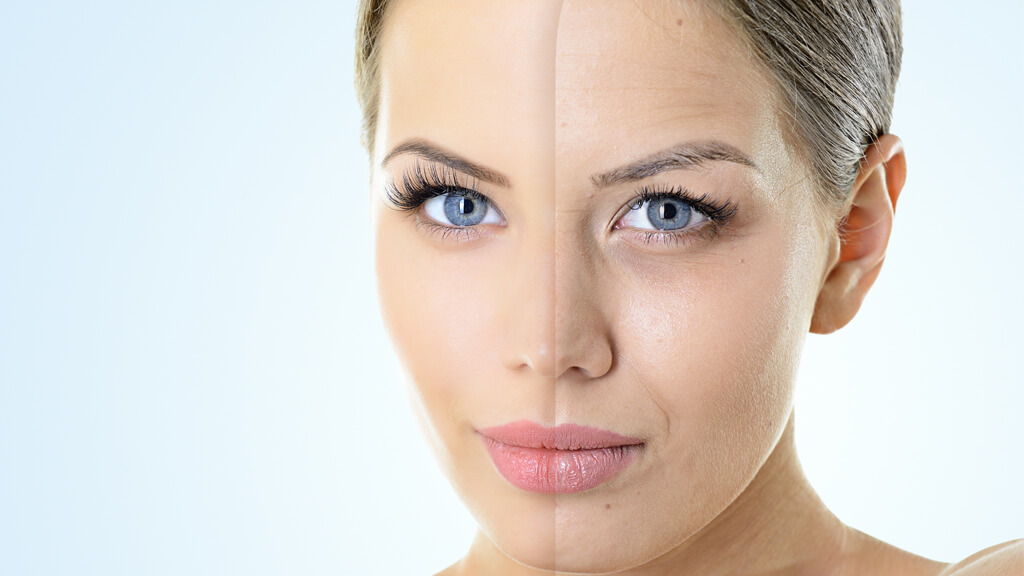
Peeling (peel – to exfoliate) is the forced and controlled exfoliation of the top layers of skin to remove the dead layer of keratinised epidermis. This is because dead cells prevent the skin from functioning normally and impede the penetration of cosmetic ingredients. Their action is important in problems of oily, polluted, dry and mature skin. The exfoliation of the outer layer of the skin also stimulates its regenerative mechanisms, which has the effect of smoothing wrinkles, lightening discolouration, reducing scars, making the skin firmer and more elastic.
Peelings can be performed by oneself on the basis of home care preparations at a frequency appropriately selected for the skin type (after diagnosis by a beautician). It is recommended to carry out an appropriately selected peeling once a week for normal oily, combination or mature skin. The peel should be applied regardless of the season, but during the cold days of winter or the hot days of summer, it should not be applied immediately before going out into the fresh air. In case of high sun exposure, high skin protection against UV rays with a minimum factor SPF20 is recommended.
Facial scrubs – popular types
Among the scrubs, there are 4 different types, which you can read about in detail on our blog:
- enzymatic peels – the most versatile and gentle
- mechanical scrubs – for some skin types, but with an instantly smooth skin effect
- chemical and medical peelings popularly known as cosmetic acids including AHA, BHA and many others
- microdermabrasion – in cream, diamond, alumina, oxybrasion
Facial peels – what effects can be achieved?
Depending on their types, peels have a really broad spectrum of action. They not only cleanse the skin, but also stimulate improvements in the main skin parameters such as density, elasticity or collagen reproduction capacity. The effects we obtain with all peels:
-
- removal of keratinised, dead skin
- stimulation of the skin to produce new cells
- improve skin hydration
- facilitate the penetration of cosmetic ingredients into the skin
- improve blood supply to the skin
If we opt for chemical peels, medical peels and microdermabrasion, the potential results are:
- brightening of hyperpigmentation and spots
- juvenation of skin tone
- reduction of sun damage
- smoothing of fine lines and deep wrinkles
- improving skin elasticity
- improvement in skin elasticity and firmness
- improvement in skin firmness and elasticity
- improvement in skin elasticity
- removal of stretch marks
The benefits of various peels for oily, combination, acne-prone skin are:
- unblocking and regulation of the sebaceous glands
- clearing out blackheads
- alleviating acne lesions
- neutralisation of scars, including acne scars
General contraindications to the use of peels
- epidermal abrasions and open wounds
- herpes
- dermatophytosis
- purulent eruptions
- infections
- fever
- skin warts