Try our novelties and bestsellers!»




 AGE Collagen Regeneration night cream, anti-glycation, rejuvenating, antioxidant


Active ingredients in cosmetics, Dermatology, Skin care at home
Glycation – one of the mechanisms of skin ageing
Sep
A number of mechanisms influence ageing. Ageing progresses with age, photo-aging is a change in skin structure caused by exposure to sunlight. In contrast, another type of ageing is the glycation of proteins by sugars, i.e. the deterioration of the skin due to the accumulation of end products of the glycation process.
“The accumulation of cross-linked proteins damages cells and tissues, slowing down the processes in the body that lead to ageing.” Johan Bjorksten (ageing theory)
What is glycation?
Glycation is a common non-enzymatic reaction between proteins and sugars that leads to the formation of advanced glycation end products (AGEs) in the human body. The formation of advanced glycation end products takes place in three stages – early, intermediate and late stages (AGEs). In the early stages, the sugar reacts with the free amino group to form the Schiff base, which regroups into a more stable product known as the Amadori product. AGE products can bind to proteins and denature or convert them into non-functional cross-linked collagens, causing skin stiffness. Because of this, the structure of collagen fibres is disrupted, they lose elasticity and deformed proteins accumulate in the skin. In addition, glycation prevents the breakdown of damaged collagen and the synthesis of new collagen, as dermal collagen has a long half-life and such cross-linked forms do not disappear; nor are they currently fully reversible. All this leads to the appearance of more and more wrinkles and furrows, the skin loses hydration, turgor, elasticity and, in addition, cannot regenerate.
Interesting fact: Glycation is also an important aspect of frying and baking bread, as it is responsible for the browning process (Maillard reaction).
The vicious circle of chronic inflammation
- AgEs bind to the specific receptor for advanced glycation end products (RAGE), which is found on the surface of many cell types, including the cells of our skin.
- The AGEs bind to the specific receptor for advanced glycation end products (RAGE).
- It is the binding of AGEs to RAGE that causes the inflammatory response.
- The AGEs also induce the formation of free radicals, leading to a further increase in RAGE levels, and UV exposure further promotes RAGE production. A vicious cycle with chronic inflammation and tissue damage ensues.
- The result is a vicious cycle with chronic inflammation and tissue damage.
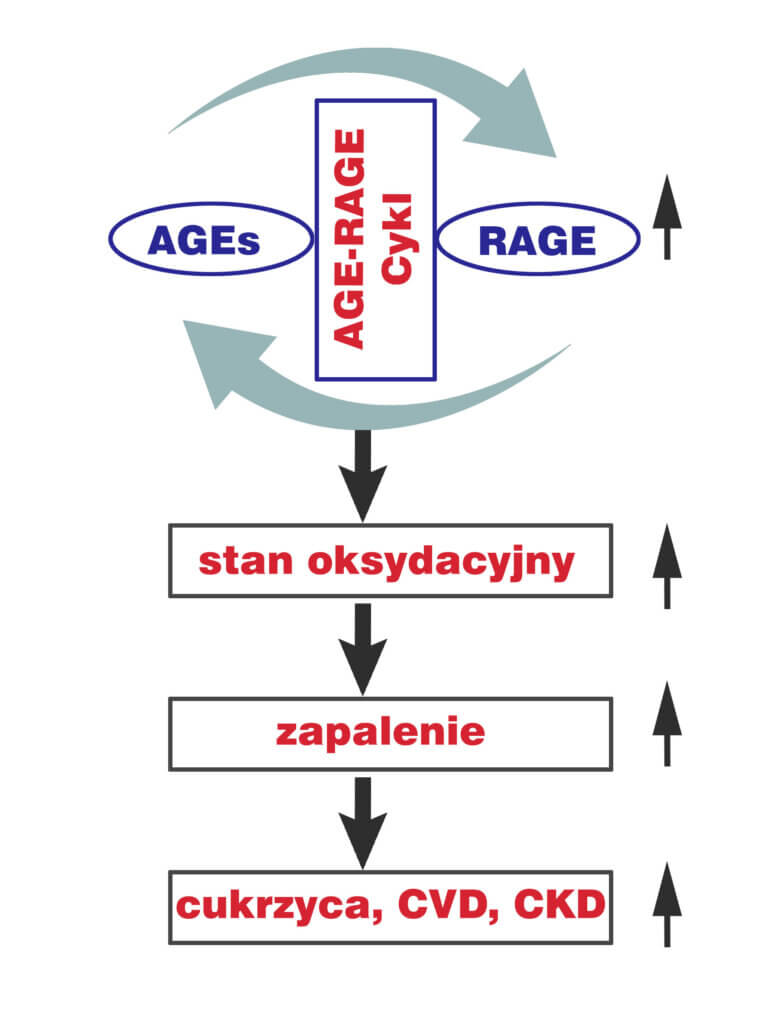
Processes occurring in the skin during glycation
Accumulation of AGEs in the skin is observed in both diabetes and chronological ageing. Low-renewal-rate proteins such as collagen types I and IV, as well as long-lived proteins such as fibronectin, are the main targets of glycation reactions in the skin. Comprehensive studies have shown that AGE not only reduces skin elasticity, accumulates pigment and deepens wrinkles. At the same time, it damages the skin barrier, causes skin cell apoptosis and induces inflammation. AGE accumulation in the skin has been detected in both the epidermis and the dermis. In the epidermis, glycated keratin leads to a change to a yellowish skin tone. In addition, it reduces the water content of the stratum corneum, leading to dry skin. In addition, glycation of the collagen and elastic fibres in the dermis contributes to the stiffness and loss of elasticity of the skin and consequently creates wrinkles.
The skin doesn’t like sweets – the anti-glycation diet
Research has shown that harmful AGEs can have a profound effect on metabolic health – regardless of our body weight. Carbohydrates are essential for proper brain function, in addition to being a source of energy for the body, but not all carbohydrates are equally useful. Carbohydrates from vegetables and whole grain products are much more valuable than carbohydrates from sweets and white flour. Foods that are subjected to high temperatures, such as grilling or deep-frying, tend to be high in AGEs. The most effective way to reduce AGE consumption is to choose healthier cooking methods, such as steaming. Additionally, cooking meat with acidic ingredients such as vinegar, tomato or lemon juice can reduce AGE production by 50%. Animal products also have high levels of AGEs. These include meat (especially red meat), some cheeses, scrambled eggs, butter, cream cheese, margarine, mayonnaise and oils. You should limit such products and instead choose foods that are low in AGEs. Fruits, vegetables and whole grain products, for example, have lower levels of them even when cooked. Antioxidants like curcumin and resveratrol, which can be found in the skins of dark fruits like grapes, blueberries and raspberries, can help lower AGE levels. In addition to a poor diet, a sedentary lifestyle can also lead to a dramatic increase in AGE levels. Conversely, regular exercise and an active lifestyle have been shown to reduce AGEs in the body.
Cosmetics for skin with glycation processes and symptoms
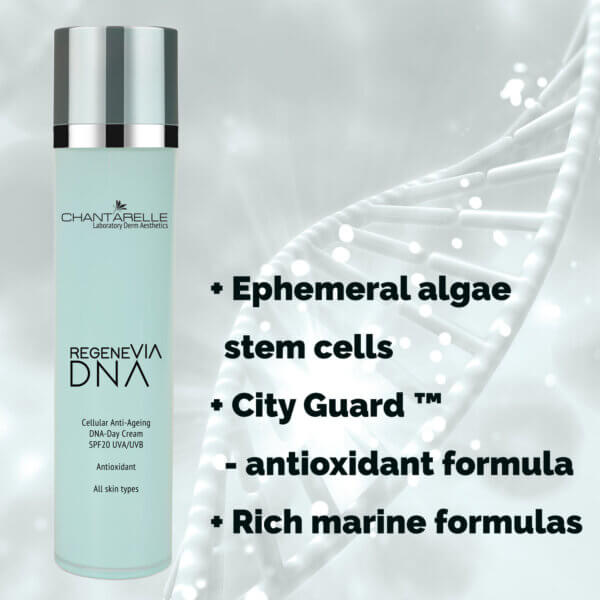
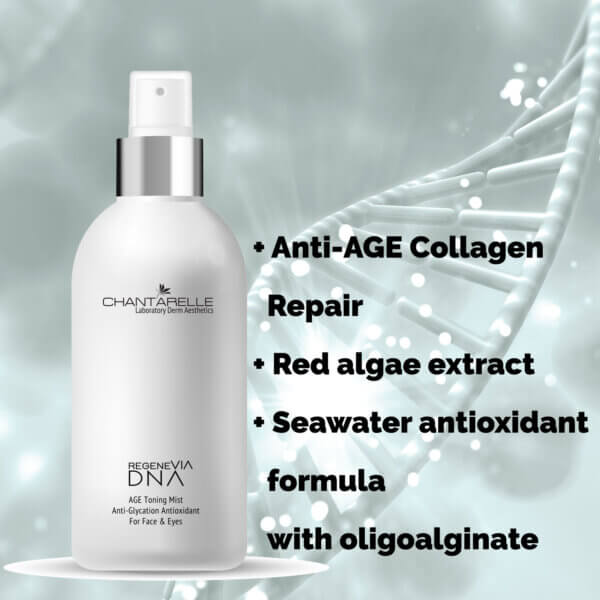
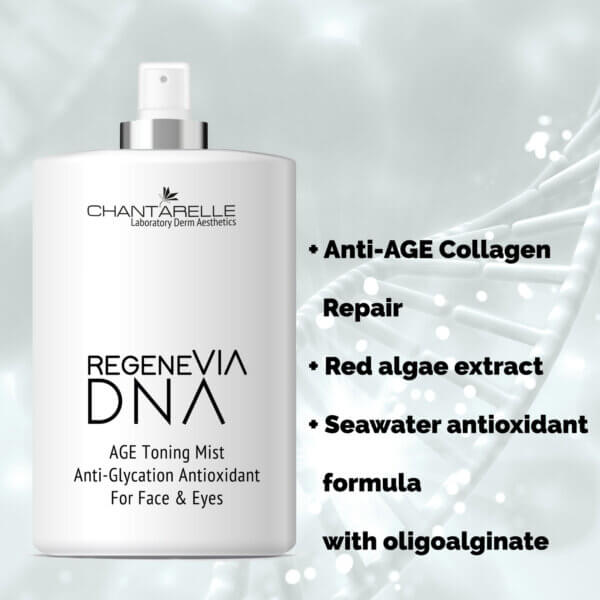
Modern professional cosmetics are a reliable support in the fight against glycation. Since glycation interacts with and reinforces photo-ageing, the optimum solution would be to use sunscreen preparations with anti-glycation and antioxidant effects. Such is the cosmetic line Regenevia DNA. It is a programme for cellular antioxidant regeneration, designed to counteract glycation and oxidation processes. The advanced ingredient in this line is Anti-AGE Collagen Repair – a complex of the peptide carnosine, vitamin B₃ (niacin) and u extract from the exotic quinoa plant. Carnosine is a dipeptide that counteracts the formation of AGE products in the skin. It thus protects the dermis fibres from glycation and premature loss of elasticity and firmness. Vitamin B₃ (niacin) reduces TEWL (transepidermal water loss through the epidermis), enhances collagen production and benefits skin microcirculation. Quinoa extract strongly moisturises and regenerates the skin. Anti-AGE Collagen Repair reduces 20 years of glycation in just 4 months of regular use, destroys embedded intracellular and extracellular CPG, inhibits ROS (reactive oxygen species), restores the protective skin barrier, increases elasticity, restoring fibroblasts to their normal shape and thus their functionality.
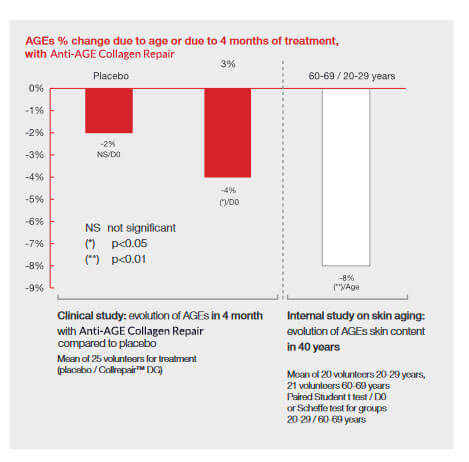
Figure 2. Comparison of the ability of the Anti-AGE Collagen Repair formulation to lower AGEs compared to placebo and natural AGE accumulation in young and elderly volunteers (source: results from the active ingredient manufacturer).
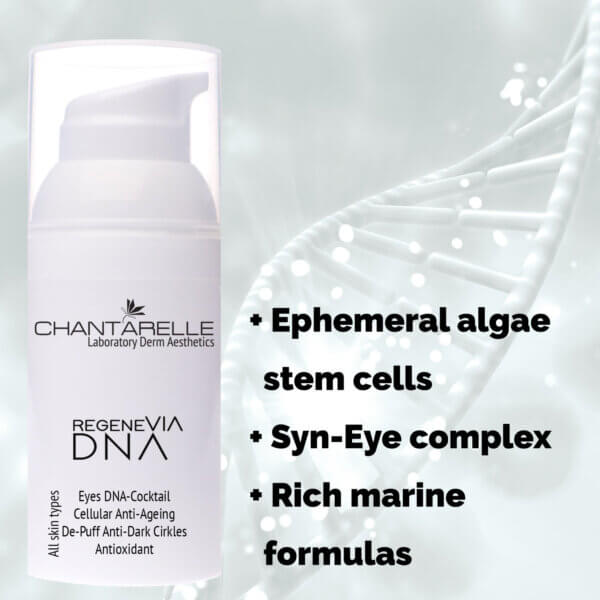
Regenevia DNA formulations also contain Ephemer™ algal stem cells, which protect the integrity of endothelial cells from the effects of high glucose levels and have direct antioxidant capacity to support DNA function. Topical retinol-based formulations also help with glycation problems. To avoid premature signs of ageing, ensure a balanced diet, an active lifestyle, optimal sleeping hours and proper facial skin care with Chantarelle cosmetics.
 dr Khrystyna Shekhovtsova
Chantarelle expert, dermatologist and aesthetic physician
Anti-glycation cosmetics
Regenevia DNA