Try our novelties and bestsellers!»






Cosmetic treatments, Aesthetic cosmetology
PDT photodynamic therapy – non-invasive LLLT laser treatment for aesthetic problems
Aug
LLLT lasers (so-called cold lasers, low-energy lasers) used for minimally invasive photodynamic PDT treatments are increasingly appearing in cosmetic surgeries, mainly to improve the appearance of the skin, to eliminate signs of ageing or other defects such as scars, stretch marks, uneven colour, visible vascular network.
Photodynamic therapy (PDT)
Photodynamic therapy (PDT) is a non-invasive medical method that is widely used in the prevention and treatment of non-melanoma skin cancer. Until recently, the main indications for it were solar keratosis, nodular and superficial basal cell carcinoma. However, researchers discovered that treating non-melanoma skin cancer with photodynamic therapy also led to a reduction in depigmentation and wrinkles. This led to the term ‘photorejuvenation’ and the development of special techniques for cosmetic treatments. This therapeutic method is therefore increasingly used in dermatology and cosmetology. However, studies on the use of PDT therapy in the treatment of photodamaged skin have shown significant histological and clinical improvements, including increased collagen, smoother skin texture and reduced wrinkles. Today, photodynamic therapy plays an important role in anti-ageing therapy, acne treatment, acne scarring, rosacea treatment and many other skin problems.
Mechanism of action of the LLLT laser
The LLLT laser uses a reaction between light and a photoactivator to produce reactive oxygen species (ROS). Singlet oxygen (a type of ROS) is highly reactive, destroying old collagen fibres and influencing the formation of new collagen fibres, which in turn leads to skin rejuvenation. Intrinsic skin ageing is associated with a decrease in the proliferative activity of keratinocytes (in the epidermis), melanocytes and fibroblast cells (in the dermis). With overexposure to UVA radiation, there is a more rapid outward atrophy of the skin, leading to photodamage and premature skin ageing. Wrinkles, hyperpigmentation, erythema and hypertrophy of the sebaceous glands appear.
Chantarelle LLLT lasers
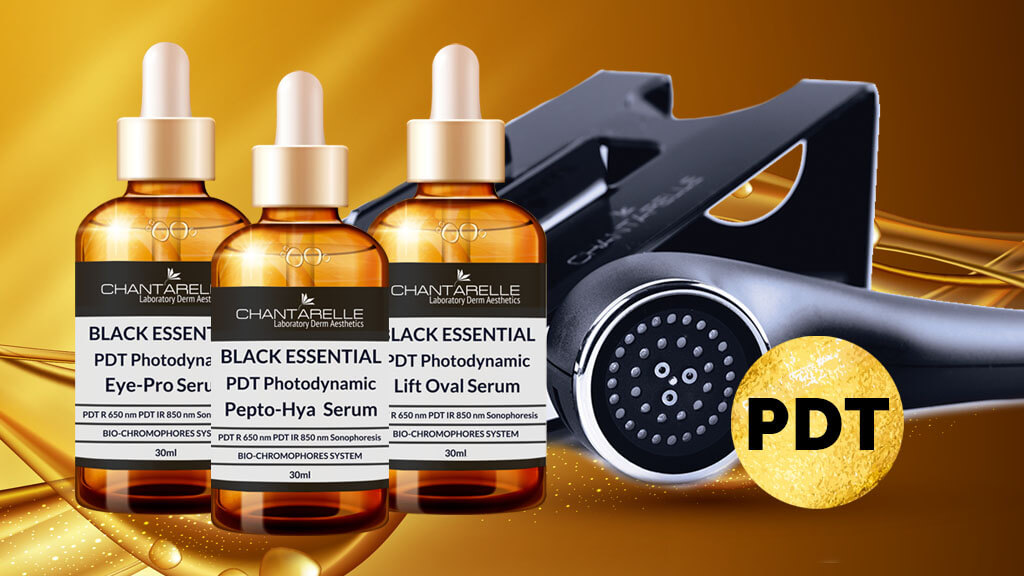
Chantarelle’s Photo-Dynamiq® and PDT Master® devices are examples of LLLT (Low Level Laser Therapy LLLT) lasers. They combine the action of a low-intensity laser with magnetic field activity and photodynamic therapy. Photo-Dynamiq® is a device that incorporates the action of lasers:
-
- LASER LIGHT R (Red, red) 650 nm
- IR LASER LIGHT (InfraRed, infrared) 850 nm
- IR LASER LIGHT (InfraRed, infrared) 808 nm
- UV LASER LIGHT (Blue Light, blue) 420 nm
- PULSING MAGNETIC FIELD 10mT
PDT Master® combines the following technologies:
-
- LASER LIGHT R (Red, red) 635 nm
- LED LIGHT – 36 LEDs in 4 colours:
– UV-violet 395 nm – blue 470 nm – green 525 nm – red 650 nm
- PULSING MAGNETIC FIELD 10mT
- Laser therapy LLLT laser therapy relies on the action of red and infrared radiation on elements of the mitochondrial respiratory chain, leading to an increase in ATP in the cell and activation of transcription factors. Red light also stimulates wound healing processes through the activation of the copper-containing tripeptide glycyl-L-histidyl-L-lysine. This is a signalling molecule capable of rebuilding tissue by activating the removal of damaged proteins and replacing them with normal structural elements. Red light therapy stimulates the skin and promotes the production of an energy source for cells called adenosine triphosphate (ATP). Due to the increase in ATP, the production of elastin and collagen also increases and normal cell function and function is restored. Numerous studies also confirm wound healing, anti-inflammatory, immunomodulatory and lipolytic effects. This therapy is used to stimulate the structures of the epidermis and dermis.
Photo-sensitive agents
Three factors are required for PDT therapy to work effectively: tissue oxygen, a photoactivator (chromophore) and a laser beam. Depending on which part of the face or body is being treated, a photoactivating serum with chromophores is applied to that part of the skin. Laser light is then applied to the treated area. The light causes the active ingredients to penetrate the skin more easily and thus act more intensively, improving the effectiveness of the therapy. There are different active ingredients in Chantarelle’s preparations, selected according to the skin problem and the area being treated.
PDT Black Essential concentrates
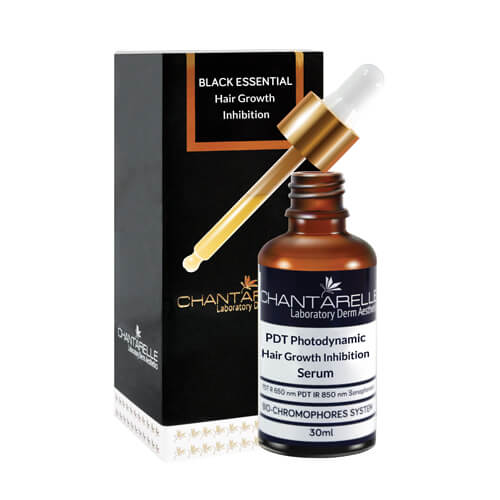
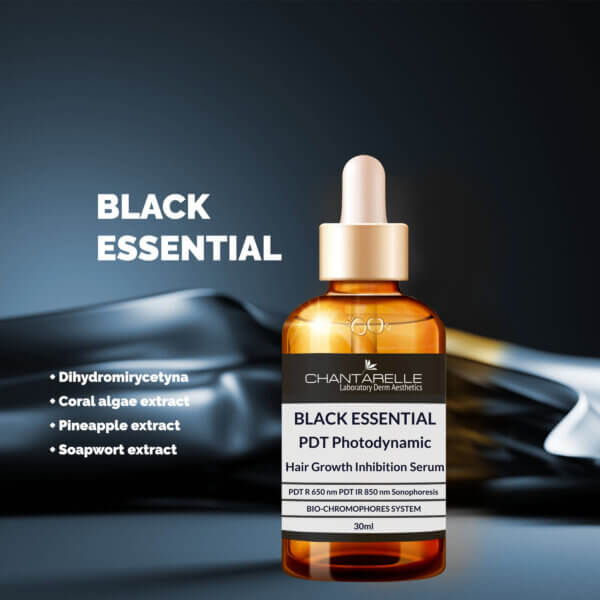
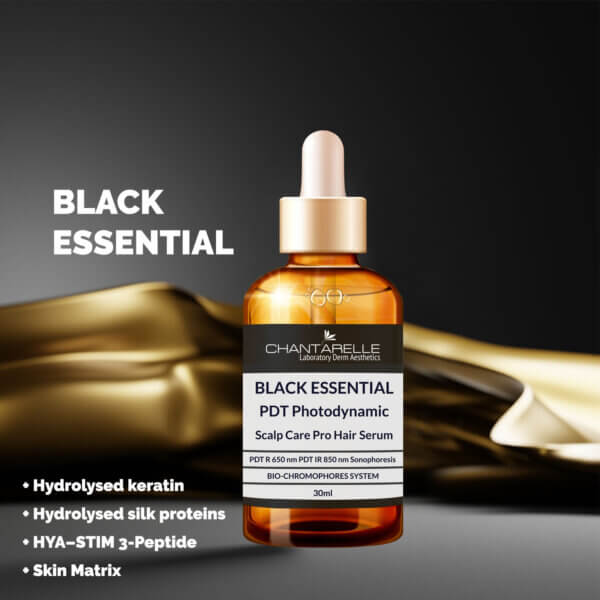
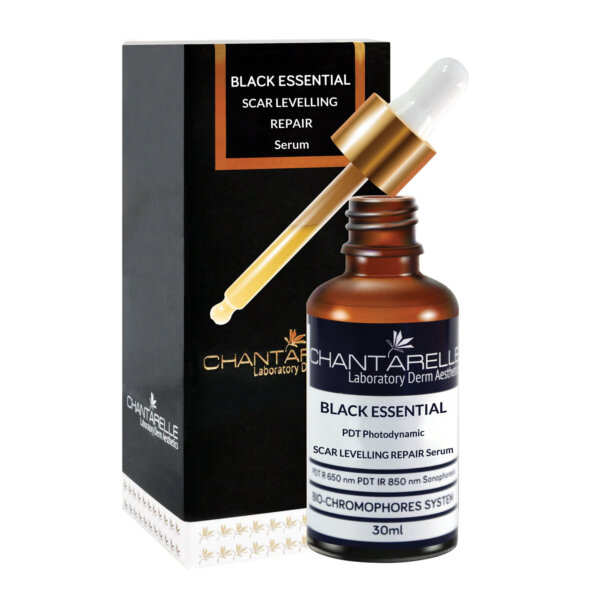
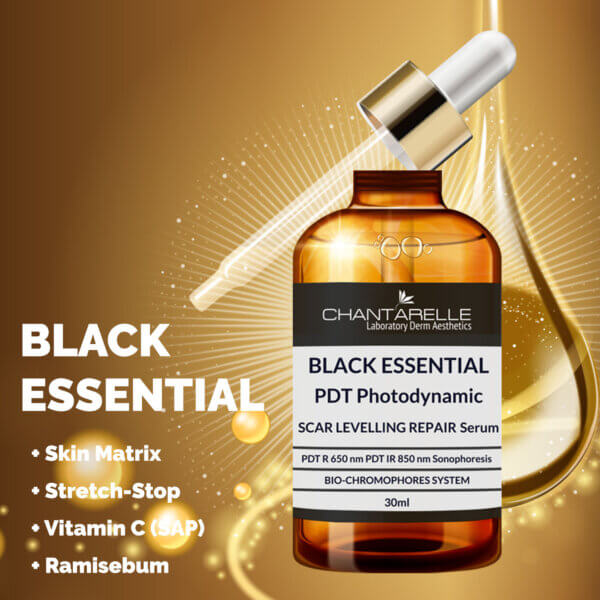
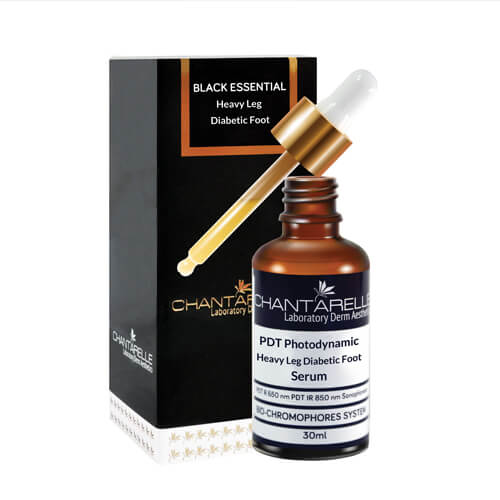
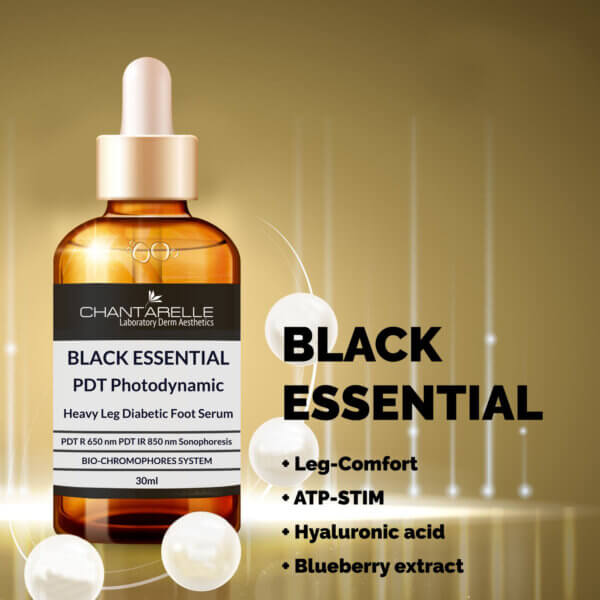
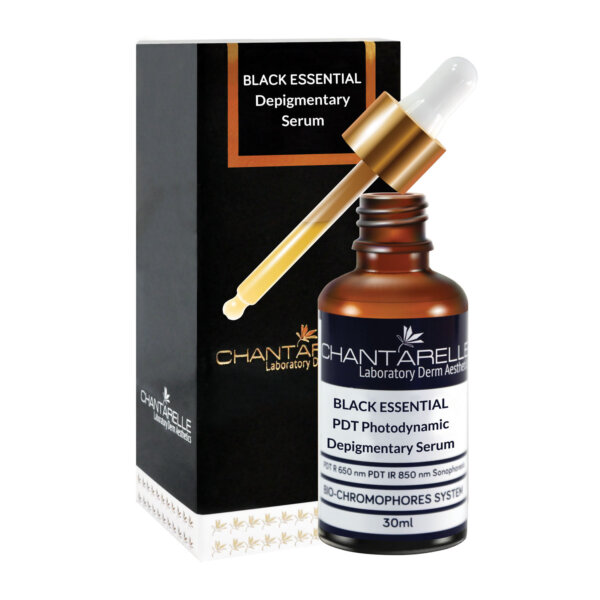
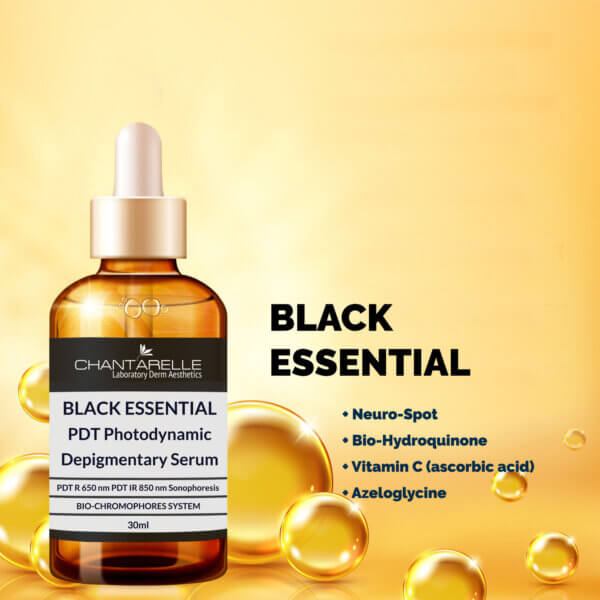
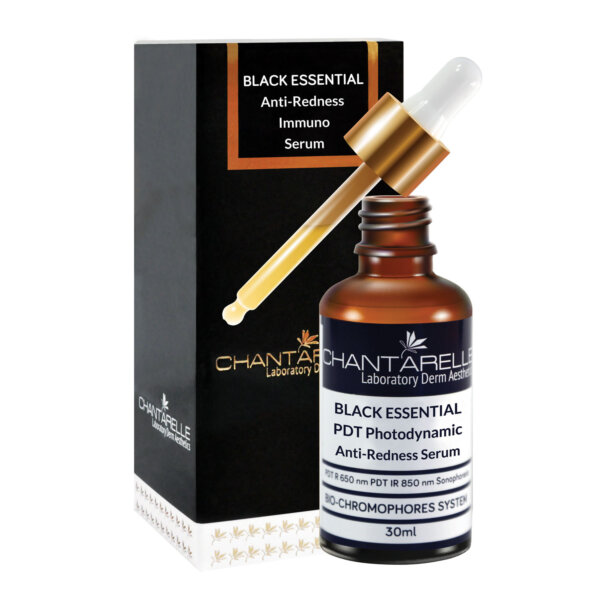
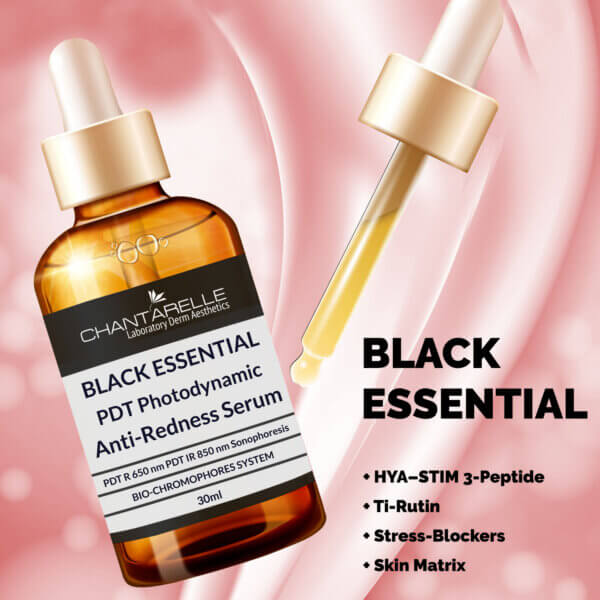
The following is the PDT Black Essential line of products – a group of photoactive concentrates for PDT therapy with the LLLT laser. This is a line of innovative, specialised photosensitive formulations with unique bio-chromophores and active ingredients for photodynamic PDT treatments with LLLT laser or LED light. The active formula of each preparation is individually tailored to the skin problem and the arrangement of the bio-chromophores is adapted to the wavelength of the laser or LED light. The preparations can also be introduced by sonophoresis.
Hard skin with acne and rosacea symptoms
These concentrates regulate the skin microbiome and have anti-seborrhoea and anti-bacterial effects. The formula for oily and acne-prone skin contains sebum and pore-reducing and anti-seborrhoea ingredients, such as the liposome anti-acne complex with zinc PCA, among others. The serum for vascular and sensitive skin, on the other hand, contains an antioxidant flavonoid to strengthen blood vessels, skin-soothing ingredients and numerous anti-inflammatory and strengthening plant extracts. . .
| PDT Black Essential treatments |
| Regulation and reduction of sebum secretion of oily skin with dilated pores and blackheads |
| Reduction of symptoms of erythema and redness and inflammation |
Photostaging / anti-ageing / photorejuvenation
Non-invasive skin rejuvenation is made possible through the use of cutting-edge solutions from Chantarelle. These are ambitious goals that require a series of treatments, which is why Chantarelle’s range includes a number of formulations that work in multiple levels on mature skin. Skin remodelling therapies use advanced peptides and phytoestrogens. All this strengthens collagen fibres, i.e. destroys old protein structures and stimulates the formation of new ones. Neuropeptide ingredients correct dynamic wrinkles and prevent the formation of new furrows. The skin around the eyes and the skin of the hands and nail plate are also important in the rejuvenation programme. Therefore, we have also taken care of photorejuvenation of these areas. . . .
| Zabiegi PDT Black Essential |
| Volumetric facelift and chin lift |
| Peptide-hyaluronan wrinkle filler |
| Collagen reconstruction: peptide rejuvenation and wrinkle filler |
| Fundamental skin rejuvenation for the face and bust of mature women |
| Reduction of wrinkles and dark circles under the eyes |
| Hand and nail plate renewal |
| Hand and nail plate renewal. |
Boostery witaminowe
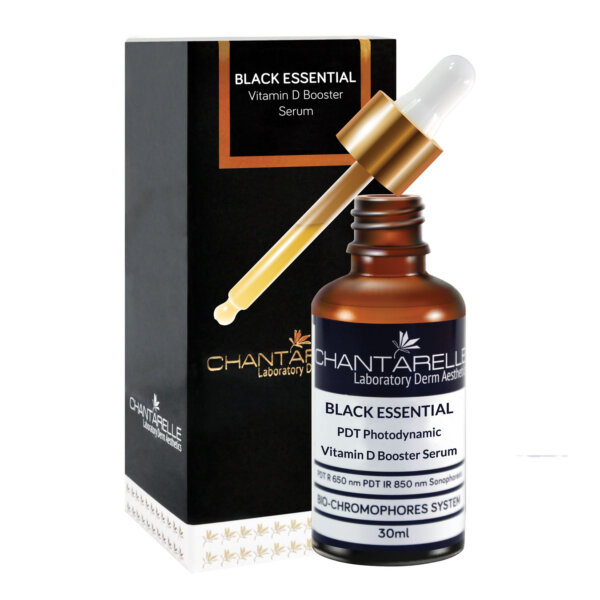
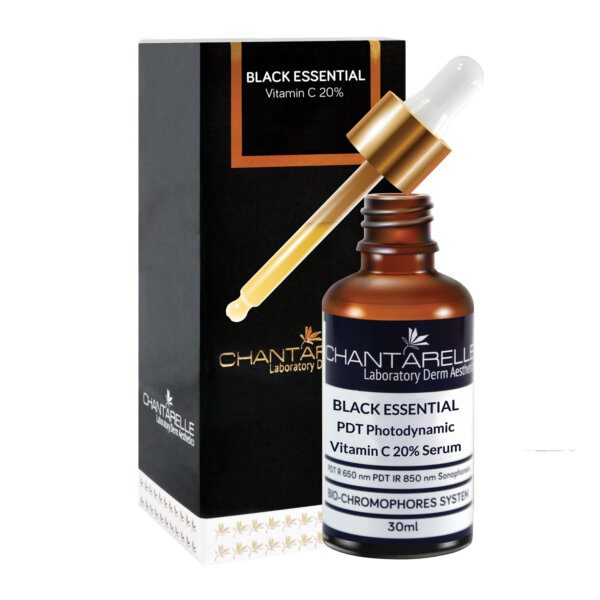
Vitamins are essential for the proper functioning of skin processes, regardless of skin type or problems. They force cells to divide properly, exfoliate at the right time and are an essential ingredient in many vital skin transformations. Vitamin-enriched serums improve receptor sensitivity and thus improve skin condition. Vitamin C improves skin stimulation and lightens the skin slightly. Vitamin D is responsible for the rapid exfoliation of the skin, thus correcting excessive keratosis. . . .
| PDT Black Essential treatments |
| Vitamin C 20% |
| Vitamin D promoter |
Correction of discolorations
An even colour is an indicator of healthy and youthful skin. Interference with the melanogenesis process negatively affects skin tone, making it dull and not radiant. Chantarelle treatments influence the normalisation of pigment through PDT laser therapy combined with whitening photosensitive ingredients. Treatments to even out skin tone also include a treatment to lighten dark circles under the eyes. . . .
| PDT Black Essential treatments | |
| Depigmentation and reduction of hyperpigmentation including post-sun and age spots | |
| Reduction of wrinkles and dark circles under the eyes | |
| Vitamin C 20% | |
| Vitamin C 20%. |
Reduction of scars and stretch marks
Further aesthetic treatments using non-invasive stimulation to even skin tone and texture, improve elastic and collagen structures. . . .
| PDT Black Essential treatments |
| Stretch mark reduction |
| Reduction of scars of various origins, firming, smoothing |
Preparations for special tasks
Three treatments targeting a specific specialised action. The first is designed to treat the diabetic foot, eliminating glycation processes, but also to reduce the discomfort of “heavy legs” and swelling, improving the efficiency of the lymphatic and vascular systems. Another treatment aims to stimulate hair follicles on the scalp. And the last is a dermocoagulation to weaken the hair follicles to reduce the growth of unwanted hair on the face and body. . . . .
| PDT Black Essential treatments |
| Reduction of “heavy legs” discomfort, also for “diabetic foot” |
| Scalp care – against hair loss |
| Hair regrowth inhibition for face and body |
Today, PDT photodynamic treatments play an important role in cosmetic and aesthetic medicine therapies, and anti-ageing and wellness clinics offer a selection of treatments with Chantarelle devices. Use modern and proven methods in your work, and Chantarelle experts will help you choose the best solutions for your practice.
 dr Khrystyna Shekhovtsova
Chantarelle expert, dermatologist and aesthetic physician
Literature:
- Gold MH (2002) The evolving role of aminolevulinic acid hydrochloride with photodynamic therapy in photoaging. Cutis 69(6 Suppl):8-13
- Issa MC, Pineiro-Maceira J, Vieira MT et al (2010) Photorejuvenation with topical methyl aminolevulinate and red light: a randomized, prospective, clinical, histopathologic, and morphometric study. Dermatol Surg 36(1):39-48
- Lubart R, Friedmann H, Lavie R et al (2007) A reasonable mechanism for visible light-induced skin rejuvenation. Lasers Med Sci 22(1):1-3
- Wang B, Shi L, Zhang YF et al (2017) Gain with no pain? Pain management in dermatological photodynamic therapy. Br J Dermatol 177(3):656-665
Black Essential concentrates for photodynamic PDT therapy