Try our novelties and bestsellers!»






Active ingredients in cosmetics
Shikimic acid for skin protection and rejuvenation
Mar
Shikimic acid is primarily used in the pharmaceutical industry for the production of drugs, but more recently it has also found its way into the world of cosmetology. Sikimic acid (3,4,5-trihydroxy-1-cyclohexeno-1-carboxylic acid; SA) can be produced by chemical synthesis, microbial fermentation and extraction from certain plants. Let us learn more about its properties and effects on the skin.
Shikimic acid in medicine
Sikimic acid is a key intermediate in the synthesis of the antiviral drug oseltamivir (Tamiflu, Ebilfumin). This shows how important a role, this acid plays in the pharmaceutical industry. It is also a precursor to several other drugs.
Shikimic acid in cosmetology
In the cosmetic industry, shikimic acid is a natural polyhydroxy acid (PHA) obtained from star anise (Illicium Verum). This acid does not increase the skin’s sensitivity to sunlight. It can therefore be used in a comprehensive dermo-cure all year round, like other polyhydroxy acids.
Shikimic acid promotes skin regeneration
Shikimic acid can enhance remodelling in the dermis, creating a niche for stem cells. It is therefore used as a skin regeneration biotherapy. Shikimic acid promotes cellular and epidermal renewal. It improves the appearance of the skin thanks to its gentle exfoliating action without irritating properties (natural peeling effect). Removes dead, dull and pigmented cells from the skin’s surface, giving the skin a fresher, younger and more radiant appearance.
Antioxidant properties
Another important regenerative property is its antioxidant action. Thanks to its polyphenols, shikimic acid has a chemical structure that can neutralise free radicals. At the same time, it is stable on its own, avoiding uncontrolled reactions with skin biomolecules.
Hydrating, anti-inflammatory and antibacterial effects
Shikimic acid increases hydration and reduces transepidermal water loss TEWL. It also has anti-inflammatory and antibacterial properties, inhibiting the proliferation of yeast Malassezia furfur and bacteria Propionibacterium acnes – characteristic of inflammation with redness, atopic irritation and dermatoses.
Main effects of shikimic acid
Shikimic acid has a variety of effects on the skin, namely:
-
- accelerates the renewal of the cellular composition of the epidermis
- stimulates fibroblasts in the dermis
- induces skin stem cells
- thickens the collagen structure
- improves wound healing
- has the ability to neutralise free radicals
- has antiviral activity
- has moisturising properties
- highlights and brightens the skin
- has an antibacterial effect
- effectively prevents excessive sweating
The cosmetic industry often sources active ingredients previously proven in medicine and pharmacy. In vivo tests have shown that the exfoliating effect of 5 % shikimic acid is comparable to that of 50 % glycolic acid, but without the adverse effects accompanying the use of such a high concentration of glycolic acid, such as irritation, redness and excessive dryness. Shikimic acid is a compound with antioxidant properties, which is why it is used in cosmetic preparations with protective and skin-rejuvenating properties. It can be used all year round with appropriate sun protection.
 dr Khrystyna Shekhovtsova
Chantarelle expert, dermatologist and aesthetic physician
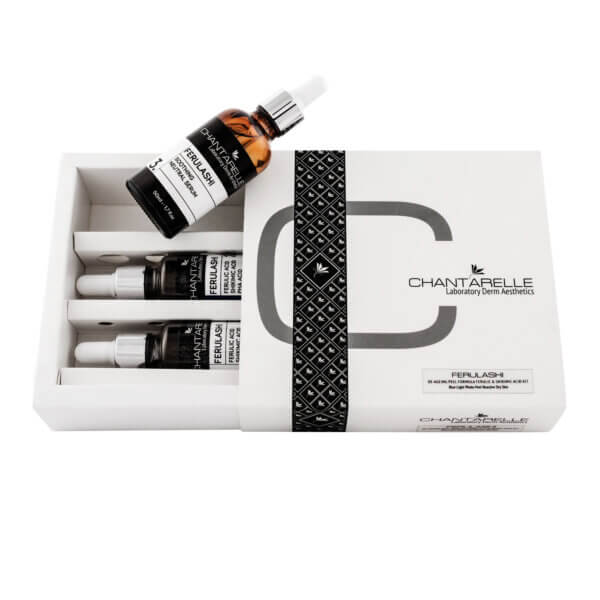
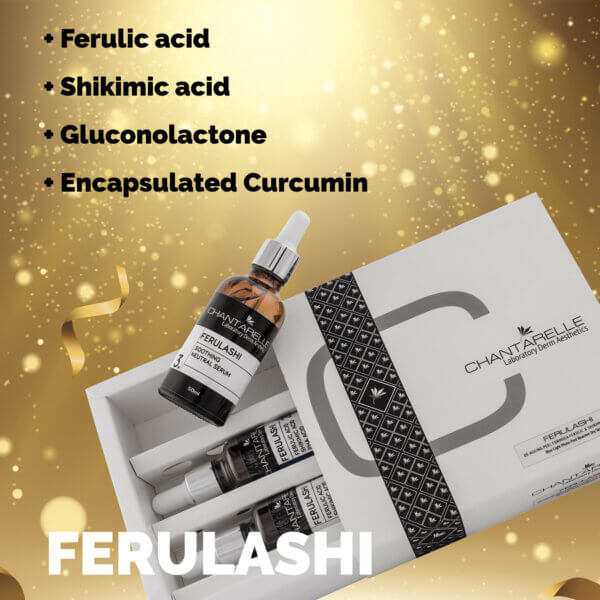
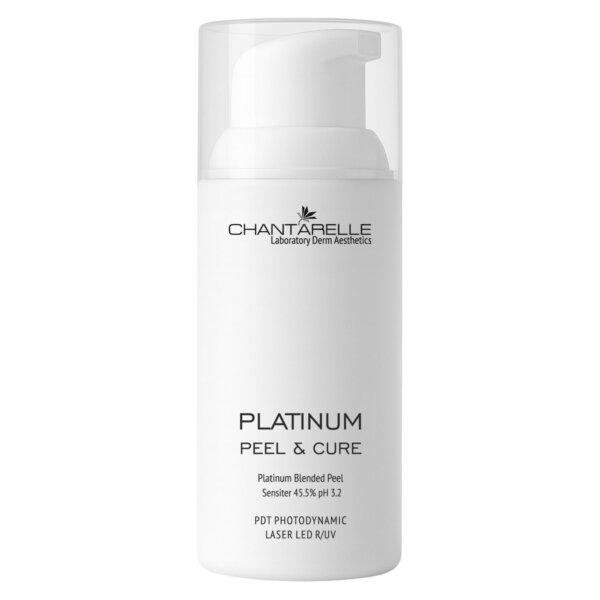
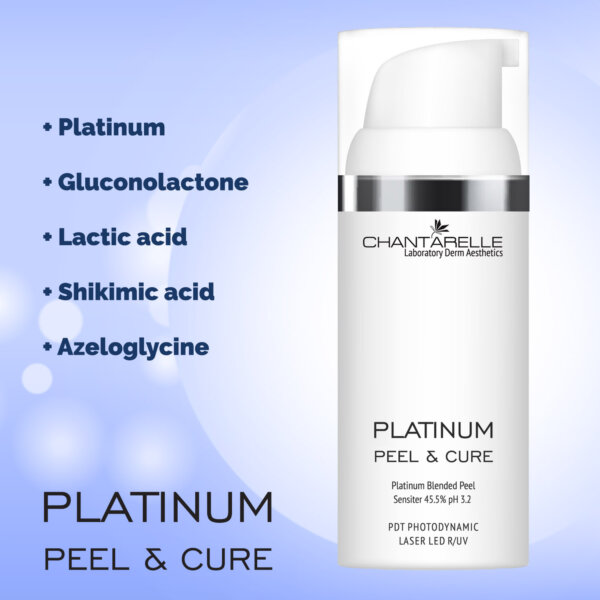
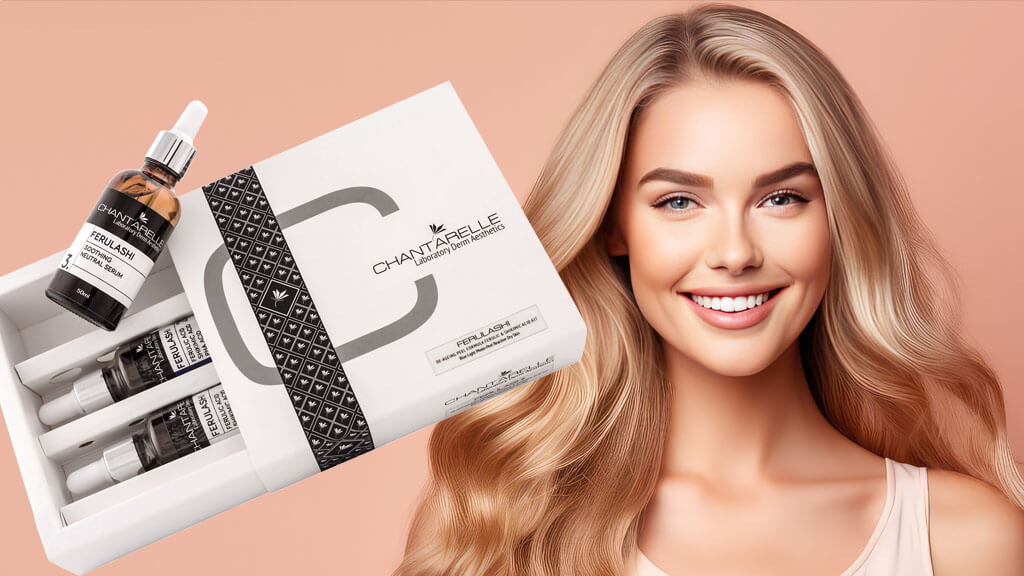
Shikimic acid in Chantarelle cosmetics