Try our novelties and bestsellers!»




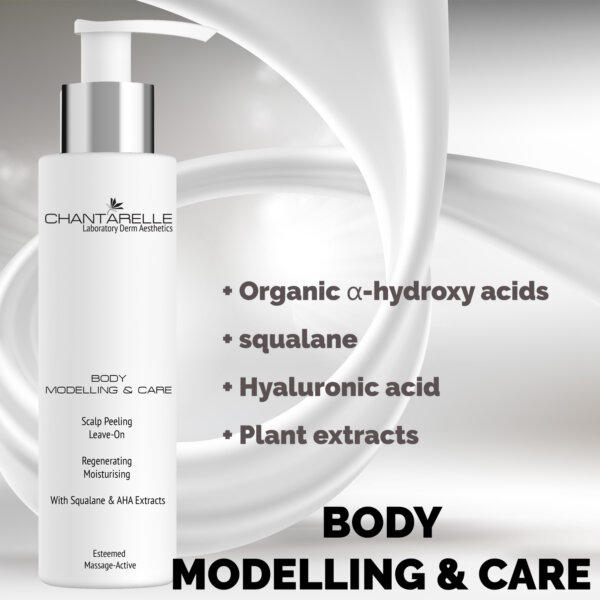
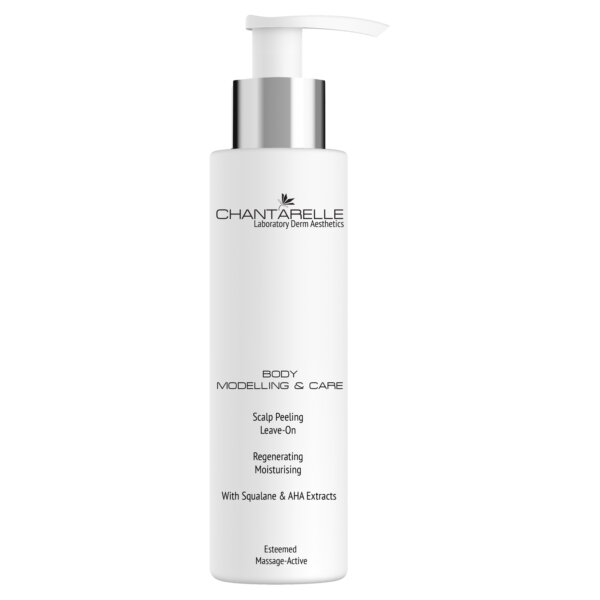 Scalp Peel with Squalane and Organic AHA Acids

Active ingredients in cosmetics
Squalane for face and hair in cosmetics – properties and uses
Jan
Squalane in Chantarelle cosmetics is a biocompatible emollient extracted from Brazilian sugar cane. It is a natural component of the skin’s lipid barrier and is therefore ideal for replenishing epidermal lipid deficiencies. What is the difference between Squalene and Squalane? How does it work on the face and body, and how on the hair? Is it suitable for all skin types?
What is squalene?
Squalene is one of the lipids produced by our sebaceous glands to moisturise and protect the skin. From the age of 30 onwards, the squalene content of the skin begins to decrease, which has a negative effect on its barrier function in particular. Squalene deficiency causes phenomena such as:
- dryness
- dehydration
- increased sensitivity
- sharpness
- formation of fine wrinkles
- pigmentation
Squalene vs. squalane?
Squalene (with an ‘e’) is a lipid naturally produced by skin cells. Squalene of animal and plant origin is too unstable to be used in skin care products. When exposed to oxygen, it can go rancid and deteriorate quickly. Squalene must be hydrogenated to squalane (with an ‘a’) before it can be used in skin care products.
Squalane is the hydrogenation of squalene to a stable molecular form. Hydrogenation is the process of converting squalene from an unsaturated oil to a saturated oil (squalane). Hydrogenation makes the oil more skin-friendly and helps prolong its shelf life.
Squalane for hair
Moisturising your hair will help increase shine and prevent breakage. Hair has natural substances in the form of oils. However, weather, age, diet and heat exposure can cause them to dry out. Squalane can regenerate strands and protect hair from further damage.
Benefits of squalane for the skin
Because squalane has a very similar structure to the skin’s lipids, it absorbs it with great ease. The result is very good hydration, which is the basis of healthy skin. Thus, when applied topically, squalane has great benefits:
-
- retains moisture in the skin
- protects against negative environmental influences
- softens the skin
- Prevents dullness and roughness
- prevents premature ageing through antioxidant action
- Regular use can also increase collagen production, resulting in firmer skin
Squalane is also suitable for oily skin and is generally safe for all skin types. Although it is an oil, it is lightweight and non-comedogenic, meaning that it does not clog pores or form blackheads. Squalane penetrates the pores and improves the condition of the skin at a cellular level, without leaving a heavy feeling. In addition, according to research, squalane has anti-inflammatory properties that can reduce redness and swelling. As the body produces less and less squalene, dry skin and hair can become the norm. However, skincare ingredients such as squalane, which mimics the body’s natural sebum, can increase hydration and water balance in the skin.
Squalane in Chantarelle cosmetics
Chantarelle squalane, as I mentioned earlier, is a biocompatible emollient extracted from Brazilian sugar cane. As a natural component of the lipid barrier, it perfectly replenishes lipid deficiencies in the skin. It has the ability to penetrate deep into the skin and thus helps deliver active ingredients to the skin. It improves the water balance in the skin, has remarkable moisturising properties and prevents moisture loss from the cells. In addition, it is excellent at softening and smoothing the skin, leaving it silky smooth and free of a sticky film. Clinical studies conducted with 40 women (age range: 37-60 years) have shown that it is non-comedogenic, improves skin firmness and elasticity, and levels stretch marks and evens out skin tone.
 dr Khrystyna Shekhovtsova
Chantarelle expert, dermatologist and aesthetic physician