Try our novelties and bestsellers!»




Cosmetic treatments
Types of Chantarelle facial cosmetic acids
Mar
Chantarelle’s types of facial acids is a post-guide to the in-office treatments and at-home acid preparations found in Chantarelle’s extensive range. The in-office and at-home preparations contain appropriately selected acids dedicated to the skin type and its problems: lactic acid, mandelic acid, lactobionic acid, gluconolactone, azelaic acid, salicylic acid, ferulic acid, shikimic acid, phytic acid, glycolic acid, kojic acid and tartaric, malic, citric acids.
Lactic acid
Alpha-hydroxy acid AHA
Alpha-hydroxy acid AHA Lactic acid is obtained by natural fermentation of milk. As one of the basic components of the NMF, in low concentrations (up to 10%) it is a natural moisturising ingredient. By reducing water evaporation, it binds water in the epidermis and restores the tightness of the skin’s hydro-lipid barrier. At concentrations above 5%, lactic acid removes dead epidermal cells and activates the mechanisms of renewal and regeneration of collagen and elastin fibres. At higher concentrations of 20-40%, it lightens spots and discolouration, smoothes small scars and has a smoothing effect on wrinkles.
Recommended treatments at the cosmetic surgery:
M-lactic acid 30% pH 3.5
M-lactic acid 40% pH 3.5
M-lactic acid 20% pH 1.7
M-lactic acid 40% pH 1.6
M-lactic acid 55% pH 0.9
M-lactic acid 80% pH 0.3
M-lactic and glycolic acid 40% pH 1.6
M-lactic and glycolic acid 70% pH 0.5
M-lactic and lactic acid 35% pH 1.6
M-lactic and mandelic acid 33% pH 1.4
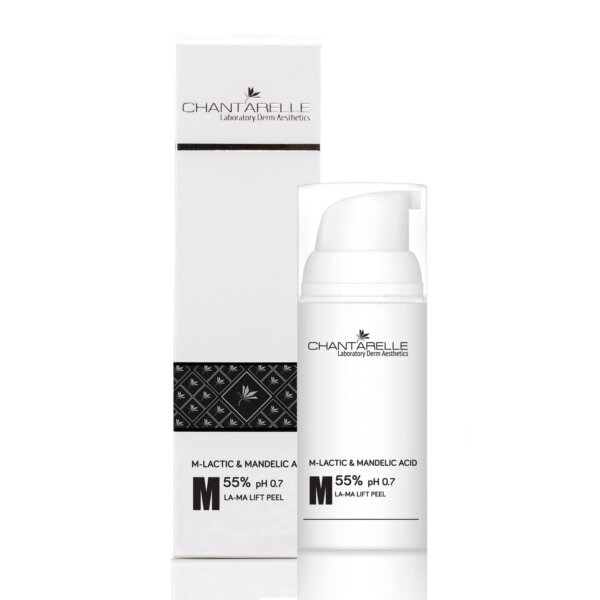
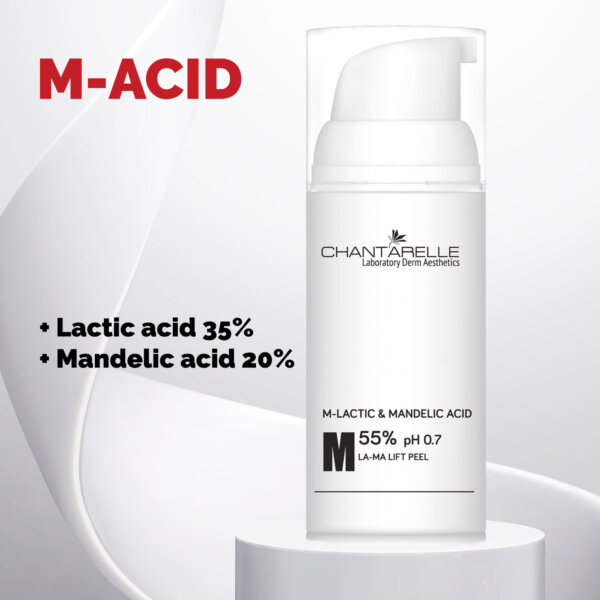
M-lactic and mandelic acid 55% pH 0.7
Glycolic acid and lactic acid complex stimulates cell renewal, synthesis of elastic fibres and smooths wrinkles. The complex reduces the horny layer and normalises keratinisation processes. Regulates sebaceous glands, cleanses pores, removes dead skin cells and impurities.
Recommended treatments at the cosmetic surgery:
M-lactic and glycolic acid 40% pH 1.6
M-lactic and glycolic acid 70% pH 0.5
Migdalic acid and lactic acid complex for intensive rejuvenation treatment, enhancing skin elasticity and firmness, regulating the hydro-lipid balance, effectively moisturising and smoothing the skin. It has an effective anti-wrinkle effect, reducing especially the network of fine wrinkles. Treatments with a complex of mandelic and lactic acids are intended for mature, flabby skin with clear signs of ageing, very dry skin.
Recommended treatments at the cosmetic surgery:
M-lactic and mandelic acid 33% pH 1.4
M-lactic and mandelic acid 55% pH 0.7
Complex of kojic acid and lactic acid designed for whitening treatments, removing hyperpigmentation and spots, evening out the overall skin tone. Provides a long-lasting effect of removing spots, discolouration and colour changes on the skin. Excellent for achieving rapid skin colour levelling effects after uneven tanning and sun damage (photo-ageing). Particularly recommended if there are a large number of yellowish (to light brown) spots and blotches across the skin’s surface
Recommended treatments in the cosmetic surgery:
M-kojic and lactic acid 35% pH 1.6
Glycolic acid
Alpha-hydroxy acid AHA
Alpha-hydroxy acid AHA Glycolic acid is obtained from sugar cane. It has the smallest molecule among the AHAs, so it easily penetrates deep into the skin. It stimulates the living cells of the epidermis, stimulates fibroplasts and collagen and elastin synthesis. It normalises the keratinisation processes of the epidermis and unclogs the follicle outlets, thus preventing the first non-inflammatory symptoms of acne. In addition to its action against acne vulgaris, glycolic acid has other, very broad applications: it eliminates wrinkles, discolouration, scars, keratosis disorders, makes the skin more elastic and firm, evens out its colour. In small concentrations, up to 10%, it has moisturising properties.
Glycolic acid and lactic acid complex stimulates cell renewal, synthesis of elastic fibres and smooths wrinkles. The complex reduces the horny layer and normalises keratinisation processes. It regulates the sebaceous glands, cleanses pores, removes dead skin cells and impurities.
Recommended treatments at the cosmetic surgery:
M-lactic and glycolic acid 40% pH 1.6
M-lactic and glycolic acid 70% pH 0.5
Kojic acid
Kojic acid is extracted from a fungus of the Aspergillus species that grows on corn kernels in Japan. It has a very small molecule, so it shows an easy ability to penetrate the stratum corneum barrier of the skin. It is one of the more well-known depigmenting ingredients used in cosmeceuticals and cosmetics with clinically proven effects. It effectively lightens existing hyperpigmentation and prevents the formation of new ones by inhibiting the activity of tyrosinase (the enzyme responsible for melanin formation). In Asian countries, it is very often used to lighten dark complexions. Kojic acid also has antibacterial and antimicrobial properties and prevents the formation of free radicals. Preparations containing this ingredient not only lighten discolouration, but also have an anti-ageing and moisturising effect. Complex of kojic and lactic acids designed for whitening treatments, removing discolouration and spots, evening out the overall skin tone. Gives a lasting effect of removing spots, discolouration and colour changes on the skin. Excellent for achieving rapid skin colour levelling effects after uneven tanning and sun damage (photo-ageing). Particularly recommended if there are a large number of yellowish (to light brown) spots and blotches all over the skin.
Recommended treatments in the cosmetic surgery:
M-cojic and lactic acid 35% pH 1.6
M-cojic and citric acid 50% pH 1.7
Azelaic acid
Is a naturally occurring acid and is derived from cereal grains. It is recommended for irritated skin with erythema, as well as oily skin. It has antibacterial, anti-inflammatory and anti-epidermal effects and normalises the keratinisation process. Acts as a “scavenger” of free radicals that activate inflammatory processes. Reduces skin hyperpigmentation (mainly osteoids and post-inflammatory hyperpigmentation) and that resulting from rosacea lesions. It thus achieves a significant reduction in inflammation (papules and pustules) and redness and erythema. It does not cause phototoxic or photoallergic reactions, so it can also be used in summer. Does not cause phototoxic or photoallergic reactions, so can be used in summer with adequate UVA/UVB protection.
Recommended treatments in the cosmetic surgery:
RED STOP Couperose
RED STOP Rosacea
M-Azelaic acid 40% pH 2.8
Lactobionic acid
Poly-hydroxy acid PHA
Is a new generation acid derived from naturally occurring lactose. Like other hydroxy acids, it has exfoliating properties without irritating properties. Thanks to its minimised irritant properties, it can be used for sensitive and dry skin, including vascular skin with symptoms of erythema. It has important properties in the topical treatment of dilated blood vessels (telangiectasia) and symptoms of rosacea. Prevents the formation of wrinkles, telangiectasias and skin sagging. Supports the epidermal barrier, has a moisturising and anti-ageing effect. Enhances repair mechanisms by stimulating collagen synthesis. It is an effective antioxidant and increases protection against the effects of UV rays. It can be used all year round with UVA/UVB protection.
Recommended treatments at the beauty salon:
RED STOP Couperose
RED STOP Rosacea
M-lactobionic acid 50% pH 1.7
Gluconolactone
Poly-hydroxy acid PHA
It is formed naturally by the fermentation of corn grain or the oxidation of glucose. It has no irritant properties and can therefore be used on very sensitive skin. Recommended for hypersensitive skin (prone to allergies), excessively dehydrated skin and skin with rosacea-like lesions, as well as acne vulgaris (with very dry and sensitive skin). Increases the barrier function of the stratum corneum, accelerates cell regeneration and regulates metabolism. It has a moisturising effect, reduces transepidermal water loss and skin sensitivity to irritation, thus inhibiting skin ageing processes. Improves skin texture, firmness and smoothness. Strengthens the skin’s resistance to external irritants. It also increases protection against the effects of UV rays – it is an antioxidant. Can be used all year round with UVA/UVB protection.
Recommended treatments at the beauty salon:
RED STOP Couperose
RED STOP Rosacea
IDEAL PURE
Ferulic acid
Ferulic acid is found in rice, corn, wheat and rye. It is a very powerful antioxidant with anti-ageing effects. It has a photoprotective effect and shows anti-inflammatory activity. It has depigmenting properties, rebuilds the skin matrix, stimulates collagen and elastin synthesis, and strongly moisturises. IMPORTANT: Effectively absorbs radiation in the full UVA/UVB range up to high ultraviolet 450nm. Ferulic acid treatments can be used all year round with UVA/UVB protection.
Recommended treatments in the cosmetic surgery:
FERULASHI Lipid Repair
M-ferulic acid 40% pH 2.2
M-ferulic acid 50% pH 1.8
Shikimic acid
Shikimic acid from star anise (Illicum verum) has an exfoliating action without irritant properties. In Chantarelle treatments, it is dedicated to very dry, sensitive skins, with symptoms of irritation, prone to allergies, with symptoms of AD. Increases hydration, reduces transepidermal water loss (TEWL). Perfectly regulates epidermal proliferation disorders – continuously, evenly, without irritation, redness or excessive dryness. It also does not leave a rough feeling and regulates the thickness of the epidermal layer. Shkimic acid also has anti-inflammatory and antibacterial properties. It inhibits the proliferation of yeasts and bacteria (including against Propionibacterium acnes and Malassezia furfur), characteristic of inflammatory conditions with redness and atopic irritations and dermatoses. It can be used all year round with appropriate UVA/UVB sun protection.
Recommended treatments in the cosmetic surgery:
FERULASHI
Phytic acid
Phytic acid is a powerful antioxidant extracted from rice. Suitable for all skin types, including sensitive skin. Recommended for skin for which AHA acids are too irritating. Thanks to its unique structure, it ensures gentle exfoliation of the epidermis, accelerating cell renewal, restoring the skin’s natural radiance. It has a keratolytic effect, strongly whitens the skin (comparable to the effect of hydroquinone), brightens the skin tone. It is a powerful antioxidant (chelates heavy metals), protects DNA from damage and promotes its repair. The acid is self-neutralising (no neutraliser required).
Recommended treatments in the cosmetic surgery:
EXO LIFT Stem Cell Code
Citric acid
Alpha-hydroxy acid AHA
It is mainly found in citrus fruits (8% by dry weight), but also in kiwi, strawberries, black and red currants, blueberries, raspberries, blueberries or vegetables such as sugar beet and tomatoes, among others. Citric acid treatments stimulate the production of protocollagen (the basic structure of collagen), as well as the growth of the dermis and living layers of the epidermis. They improve firmness by stimulating an increase in the skin’s GAG (glycosaminoglycan) content: chondroitin sulphate and hyaluronic acid. Citric acid has a beneficial effect on the collagen of blood vessels (they become less fragile and more elastic). The effects of citric acid peels include: normalisation of keratinocyte proliferation (proliferation), deep cleansing of the skin, smoothing of wrinkles and fine lines, reduction of discolouration and brightening of the skin, as well as skin regeneration and reconstruction. Kojic and citric acid complex – has the following effects: deep skin cleansing, smoothing of wrinkles and fine lines, reduction of discolouration, stimulation of dermis growth, stimulation of protocollagen production (basic collagen structure), skin regeneration, reconstruction and brightening.
Recommended treatments at the cosmetic surgery:
M-citric acid 55% pH 0.3
M-citric and kojic acid 50% pH 1.7
Pyruvic acid
α-keto acids
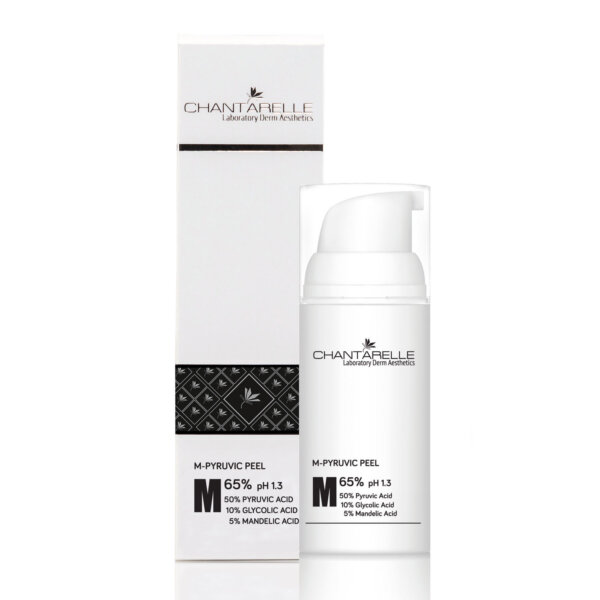
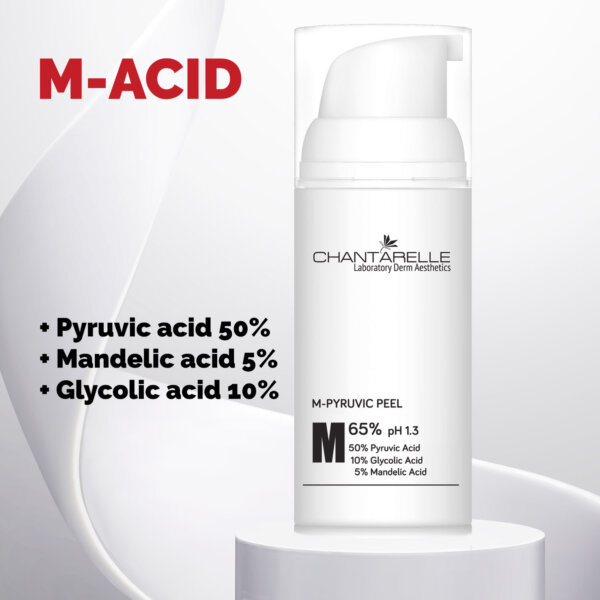
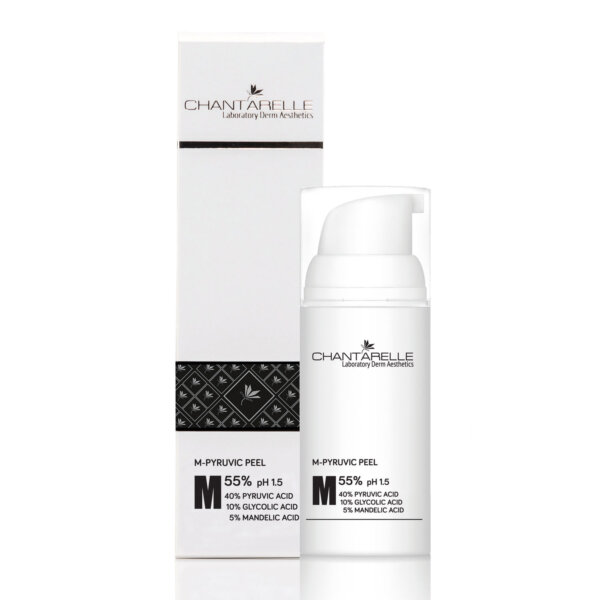
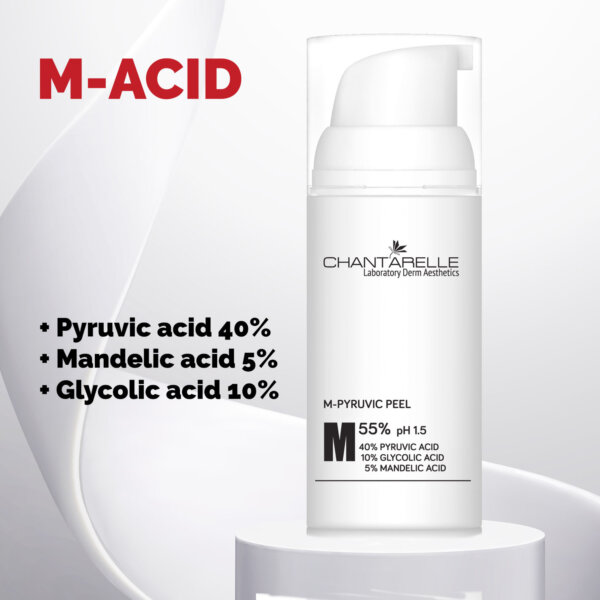
Pyruvic acid present naturally in apples, fermented fruits, vinegar. It has strong sebostatic and antibacterial properties. Thanks to its ability to penetrate quickly into the dermis, it allows for excellent dermo-aesthetic results. Pyruvic acid treatments are also safe and painless. At the epidermal level, pyruvic acid has an anti-epidermal effect, brightens, improves skin colour, has an antibacterial effect and reduces the thickness of the horny layer. At the level of the dermis, it stimulates the production of collagen and elastin, the fibres responsible for the skin’s youthful appearance. Pyruvic acid inhibits excess sebum secretion, also has an antibacterial effect, significantly lowers the pH of the skin thanks to which it helps to treat acne and thoroughly removes impurities. It is therefore especially dedicated to those with combination, oily and acne-prone skin. In addition, the acid makes the skin smooth, evens out skin tone and makes spots and blemishes less visible.
Recommended treatments at the cosmetic surgery:
Salicylic acid
Beta-hydroxy acids BHA
It is obtained from the bark of the white willow tree (Latin: Salix Alba). Antibacterial and anti-inflammatory, salicylic acid unclogs the sebaceous ducts blocked by unabsorbed sebum. As a result, it reduces blackheads and signs of inflammation, and reduces the formation of new ones. It also stimulates skin cell renewal, has an exfoliating effect by loosening intercellular connections and removes layers of dead keratinised epidermal cells. Salicylic acid has no drying properties and is also effective in cleansing dry skin with numerous blackheads. Caution: may exhibit allergenic properties – therefore a thorough interview prior to treatment is essential.
Recommended treatments in the beauty parlour:
IDEAL PURE
Mandelic acid
Mandelic acid is obtained by hydrolysis of bitter almond extract. It has a high potency, although it is one of the milder acids. It is recommended for all skin types, even sensitive and irritated skin. It is exceptionally well tolerated and does not cause erythema, only a little redness during treatment. Treatments with mandelic acid are recommended above all for mixed skin and oily skin with the problem of seborrhoea, with symptoms of acne vulgaris and adult acne. It shows the strongest antibacterial action among AHAs. Regulates sebum secretion and acts against irritation. Rejuvenates, stimulates fibrobalastes, lightens hyperpigmentation, moisturises and restores the water-lipid balance. Does not sensitise the skin to UV rays.
Recommended treatments at the beauty salon:
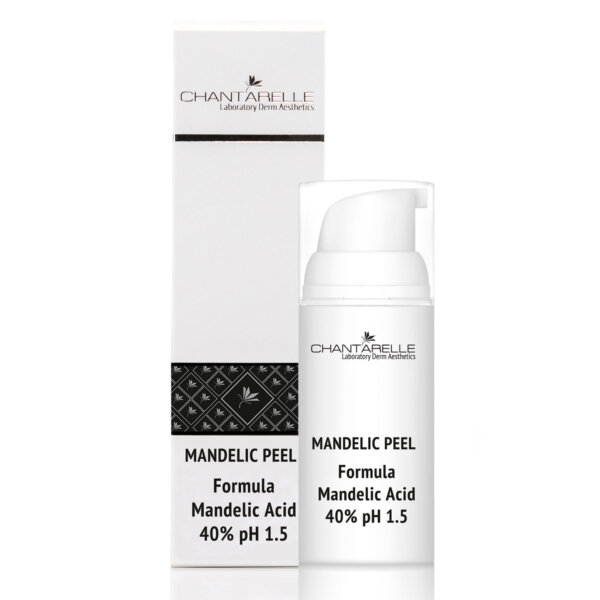
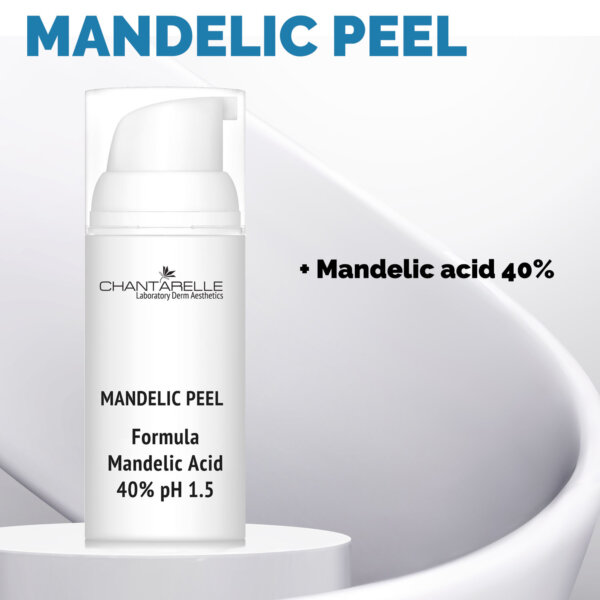
Mandelic acid 40% pH 1.5
Chantarelle acids