Try our novelties and bestsellers!»



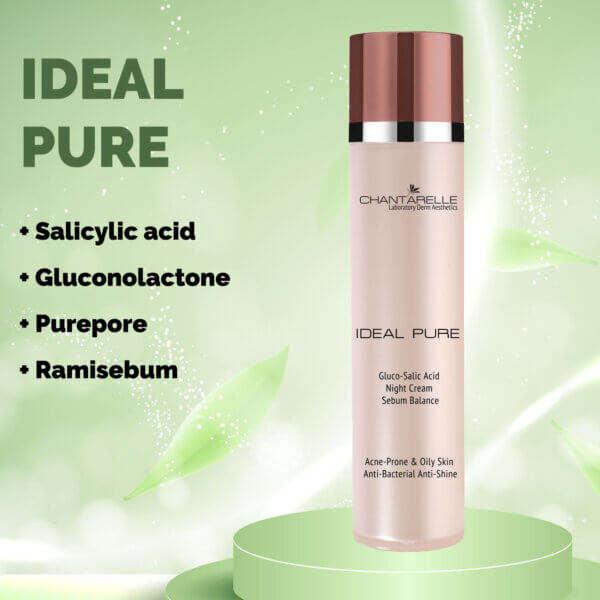
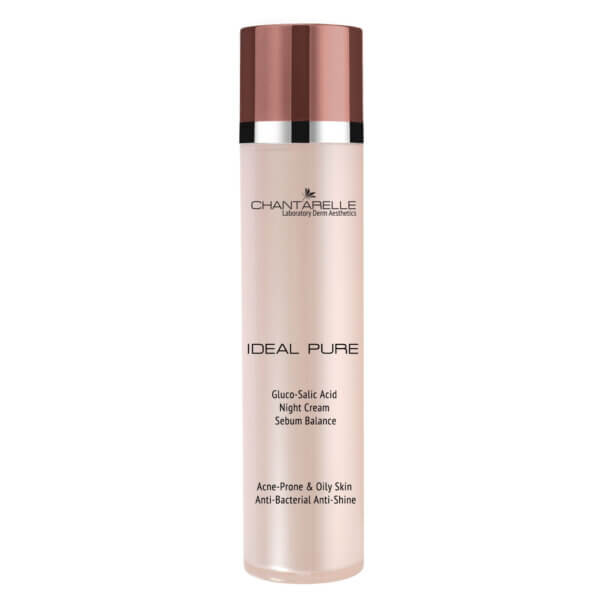 Antibacterial Gluco-Salic Acid Night Cream Oily & Acne-Prone Skin

Active ingredients in cosmetics, Cosmetic treatments, Aesthetic cosmetology
Salicylic acid for problematic oily, seborrhoeic skin
Sep
Salicylic acid is an aromatic beta-hydroxy acid (BHA), but at the same time can be considered a compound belonging to the phenolic group. It has an affinity for lipids providing the ability to penetrate the lipid layer of the skin to a much greater extent than hydroxy acids such as glycolic acid used in skin exfoliation treatments.
Use of salicylic acid
Salicylic acid is extracted from the bark of the willow tree and from the Latin name of this tree (salix) comes the name of the acid. From the mid-19th century onwards, a method of chemical synthesis was known and, due to its availability, it was increasingly widely used. Salicylic acid is used as a disinfectant and keratolytic agent and as a substrate for the production of acetylsalicylic acid known by the trade name aspirin. The exfoliating effect of salicylic acid was described as early as 1882 by the German dermatologist P.G. Unne (Brody et al 2000). Today, it has been shown to have keratolytic, anti-epidermal and sebum-reducing effects (Arif 2015), as well as anti-acne and anti-aging effects on the skin (Kligman and Kligman 1998). Indications for treatments also include wrinkles and other changes in skin texture and pigmentary changes: freckles, chloasma and hyper pigmented post-inflammatory lesions. The photoprotective effects of salicylic acid have also been demonstrated. Salicylic acid is most commonly used in concentrations ranging from 0.5 to 50% in alcoholic or polyethylene glycol solutions, as well as with other carriers. There are reports comparing the effects of salicylic acid peels and LED and laser light treatments. A combination of these methods is potentially promising (Alba et al. 2017).
Cosmetic treatments with salicylic acid
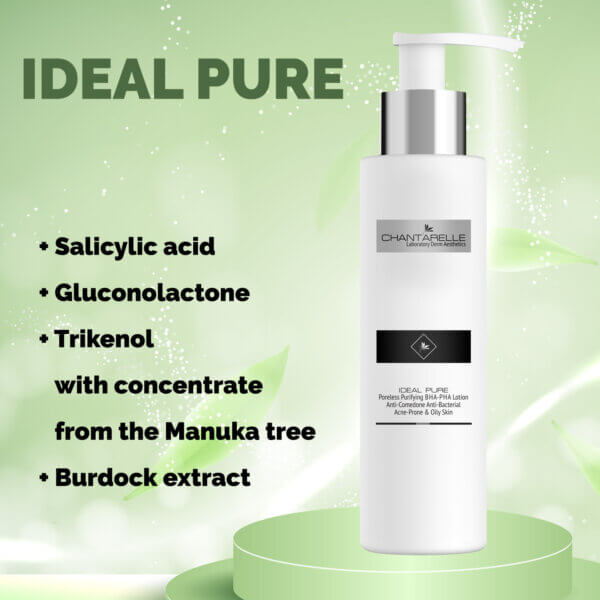
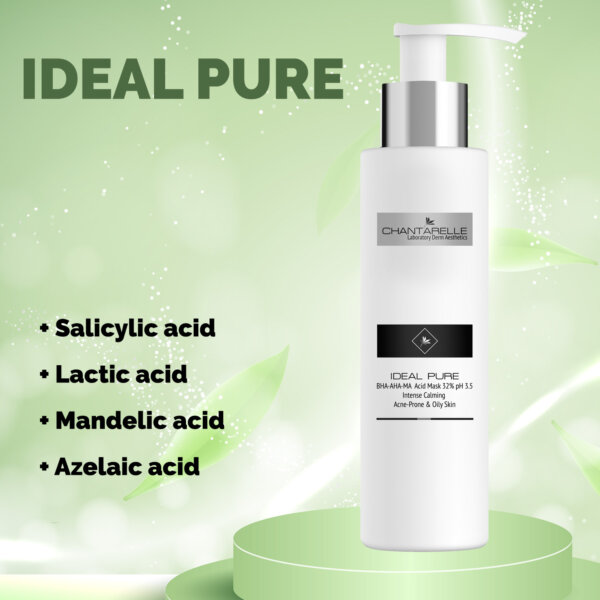
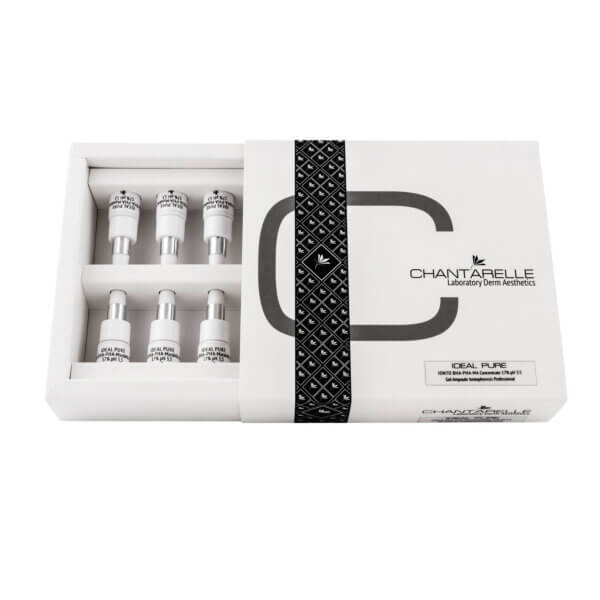
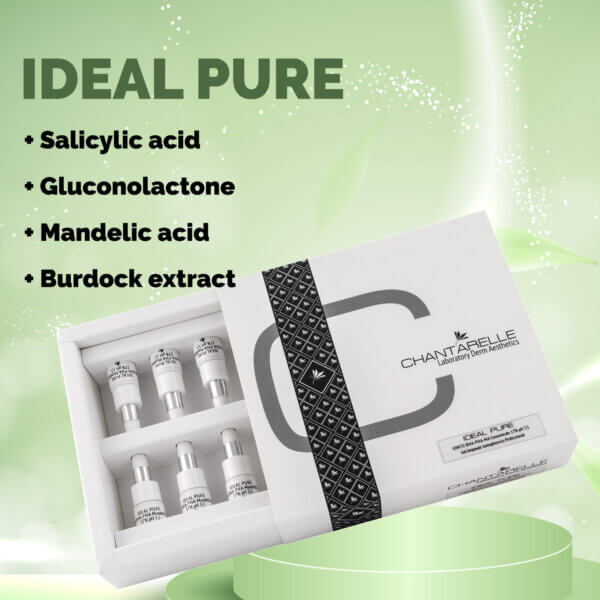
Treatments with salicylic acid are both effective and safe for skin phototypes I to VI. It is important to perform a series of treatments for effectiveness. It is suggested to perform 3 to 6 exfoliation treatments at intervals of 2 to 4 weeks for maximum effect. The skin rejuvenation effect is due to the activation of repair processes resulting in thinning of the stratum corneum with simultaneous activation of the basal layer cells. An increase in collagen synthesis, collagen fibre density and an increase in blood supply to the skin is observed. The repair processes improve the condition as well as the appearance of the skin allowing it to rejuvenate. Although treatments with salicylic acid have been performed for a long time, thanks to the high level of safety of these chemical peels, they still remain attractive and are frequently used in cosmetic and aesthetic medicine surgeries. Salicylic acid is featured in the preparations of the Ideal Pure line designed for oily, seborrhoeic skin with symptoms of juvenile and late-onset acne, blackheads and enlarged pores. It is a year-round line of specialised preparations that reduce excess sebum and symptoms of inflammatory changes, moisturise and antibacterial.
 Dr Marcin Wasylewski Chantarelle brand expert
Literatura:– Alba MN, Gerenutti M, Yoshida VM, Grotto D. Clinical comparison of salicylic acid peel and LED-Laser phototherapy for the treatment of Acne vulgaris in teenagers. Journal of Cosmetic and Laser Therapy. 2017 Jan 2;19(1):49-53. – Arif T. Salicylic acid as a peeling agent: a comprehensive review. Clinical, cosmetic and investigational dermatology. 2015;8:455. – Brody HJ, Monheit GD, Resnik SS, Alt TH. A history of chemical peeling. Dermatologic Surgery. 2000 May 1;26(5):405-9. – Kligman D, Kligman AM. Salicylic acid peels for the treatment of photoaging. Dermatologic Surgery. 1998 Mar 1;24(3):325-8.
Salicylic acid in Chantarelle cosmetics